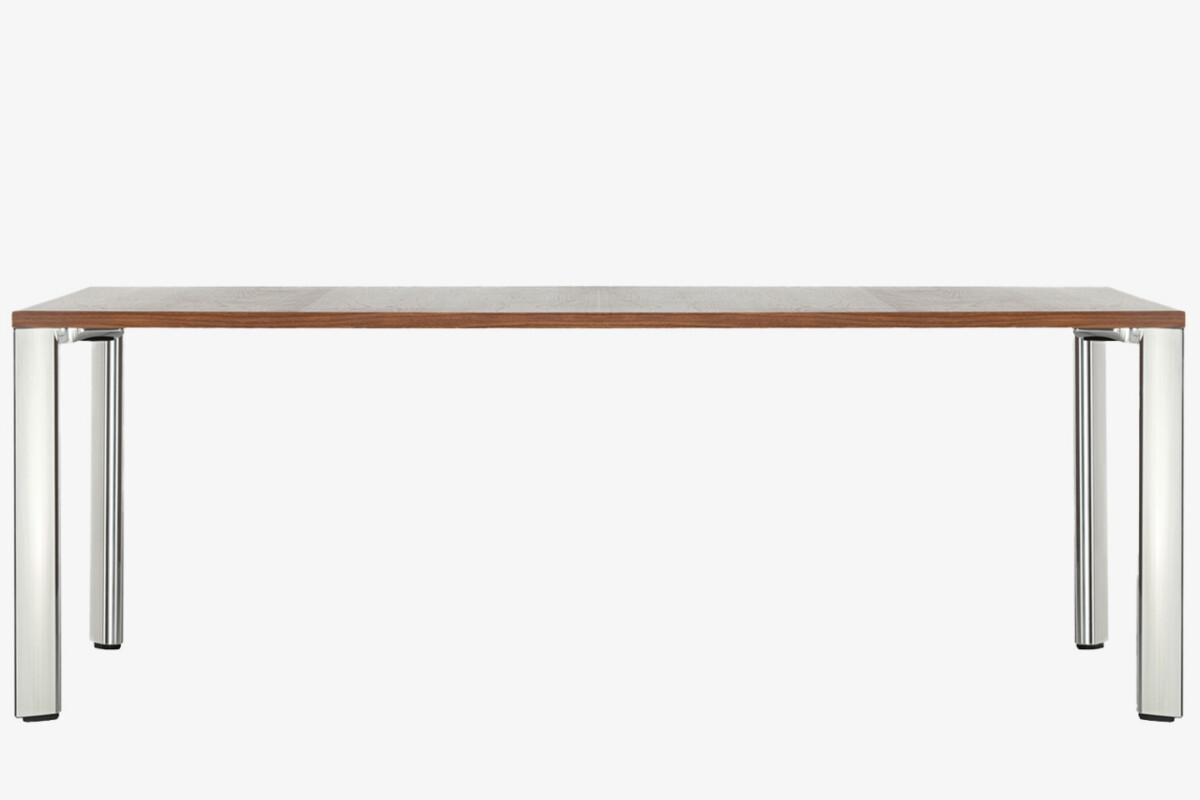
Plan the tabletop around the room
Begin with the available floor area, the meeting format and the table outline you want to create. A 90 cm-deep tabletop gives you a consistent depth to use when checking the footprint against room measurements. Leave enough room around the planned table for chairs and for people to move through the space comfortably.
Think about how the curved component will relate to the rest of your layout. The quarter-circle segment and the other curved tabletop panel are distinct options in this family; do not assume they have identical outlines or join in a particular way. Review the selected item’s dimensions and shape details, and confirm how it is intended to fit your table plan before specifying multiple pieces.
Choose a model and finish
Match the component to the layout
Choose the quarter-circle segment when that specific curved section suits your plan. Consider the other curved panel when its listed shape is the better fit. The collection data also lists a round tabletop shape, but the supplied item descriptions identify curved components. Use the exact model information rather than relying on a general shape label when checking your layout.
Check materials and surface colors
The model details describe lightweight panels with real-wood beech veneer. The segment is specified with clear-lacquered beech veneer, while the other panel has a clear-lacquered beech edge. Collection attributes list HPL and oak as tabletop material options, as well as surface colors including beige, black, blue, brown, grey, white, green, red, wood and yellow. These collection-level options may not apply to every model or finish. Confirm the material, color and edge treatment available for the specific tabletop you plan to lease.
Confirm what is included
Before finalizing a selection, check the tabletop dimensions, shape, finish and the details of the supporting table arrangement. The collection attributes note suitability for a cable tray, but state that a tray is not included. If your meeting setup needs cable management, confirm what additional components are required rather than assuming they come with the tabletop.
It can also help to map the desired table outline, seating positions and any equipment use before choosing. For a business comparing alternatives, these checks make it easier to distinguish a suitable component from one that only appears similar in a broad collection listing. Myntwork offers these products on a monthly lease; confirm the selected model’s specifications and lease details when reviewing your options.
Frequently asked questions about Thonet Conference Tabletop A 1700
What is the difference between the two A 1700 tabletop options?
One listed item is a quarter-circle tabletop segment; the other is described as a curved tabletop panel. Check each model’s dimensions and shape details to see which component suits your planned layout.
How deep are the Thonet A 1700 tabletop pieces?
The collection lists a depth of 90 cm for these pieces. Confirm the selected model’s dimensions before planning the table footprint and surrounding circulation space.
What materials and finishes are available?
The supplied model details describe lightweight panels with real-wood beech veneer, including clear-lacquered beech details. Collection attributes also list HPL and oak, plus several surface colors. Check availability for the exact model you are considering.
Can I use the tabletop with a cable tray?
The collection is listed as suitable for a cable tray, but a tray is not included. Confirm the compatible tray and any other required components for your table arrangement.
What should I check before selecting a tabletop?
Compare the component shape, 90 cm depth, material and finish with your room plan. Also verify how the tabletop fits your intended table arrangement and whether any cable-management components need to be specified separately.