


Chairs without adjustable seat depth include far more than one office-chair style. Meeting chairs, lounge seats, sofas, benches and some task chairs all have a fixed front-to-back seat dimension. The absence of that adjustment does not say whether the seat will fit a particular person. It makes the relationship between seat, back and intended use especially important. Compare the complete sitting position before choosing a chair for a room.
What seat depth changes
Seat depth is the distance from the front edge toward the backrest. If it is too deep for a user, sitting against the back may be difficult without pressure behind the knees. If it is too shallow, the thighs may have limited support. Upholstery shape and the angle of the back also affect how the dimension feels in practice.
Chairs without adjustable seat depth rely on their fixed proportions. A compact meeting seat may allow different people to sit upright for a discussion. A deep lounge seat encourages a more relaxed position. Neither form should be judged with the other’s purpose in mind.
Choose for the activity
At a work desk, people may sit for longer periods while reaching a keyboard and screen. The backrest should be usable without forcing an awkward distance from the work surface. If the task chair has no seat-depth control, review its other adjustments and try it with the intended desk. A chair can have several controls yet still be the wrong size for someone.
A conference chair often supports discussion, writing and occasional laptop work. It may be moved around the table or used for visitors. In these settings, a fixed-depth seat can be simple to use, provided the chair’s proportions suit the participants and session. Consider whether users can turn toward one another without losing support.
Read lounge seating differently
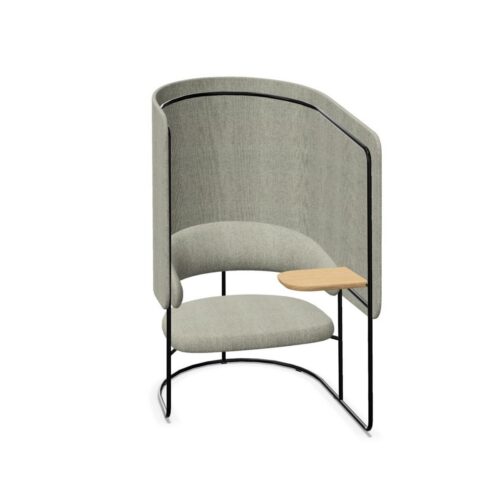
A sofa or armchair is meant for a different posture from an upright desk chair. A deeper seat can be comfortable for conversation or waiting, especially when cushions and back angle are designed together. Check how someone can get in and out of the seat and whether a nearby table remains easy to reach.
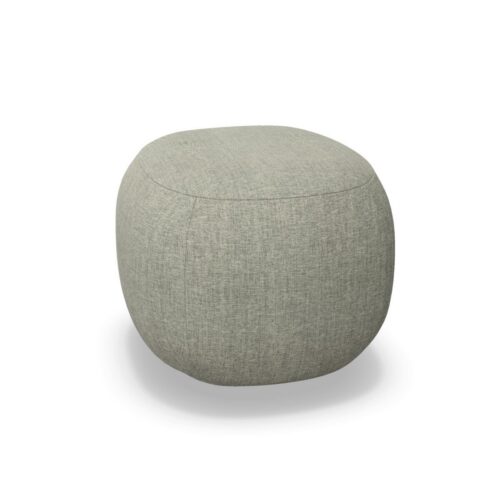
Chairs without adjustable seat depth can also include benches and ottomans. A bench may be approached from more than one side, while an ottoman may serve as a short-term seat or footrest. Look at its intended role and any back support before deciding how its fixed depth will work for users.
Consider the whole seat shape
A straight front edge, rounded waterfall edge and thick cushion can feel different even at similar nominal depths. The usable sitting area may also change when a soft back cushion compresses. Product measurements are useful, but the seat’s construction and upholstery need to be considered alongside them.
Check seat height and width too. A person must be able to place their feet comfortably and use the backrest without crowding the sides. Armrests can further define the usable space. When comparing chairs without adjustable seat depth, assess all these dimensions as a combination, not as isolated numbers.
Plan for varied users
A room shared by many people needs seating that works reasonably across the group. Try representative chairs with users of different builds where possible. For a long-term individual workstation, a chair with a seat that can be adapted may be appropriate if a fixed seat does not fit. In occasional meeting spaces, a thoughtful mix of chair forms can offer choice.
Do not assume an upholstered chair is more suitable simply because it feels soft at first. Support over time depends on shape, posture and the activity. A firm, correctly proportioned seat may serve a brief task well, while a softer lounge seat may be better for a different use.
Set the chair in its room
The surrounding table or furniture changes how the seat is used. A fixed-depth conference chair should let a person approach the table while resting against the back. A lounge chair needs a sensible distance to a side table and space for people to stand. Check these relationships in the room plan rather than judging the chair alone.
Choose chairs without adjustable seat depth when their fixed proportions suit the role. Review seat edge, cushion, back angle and neighbouring furniture together. The most useful comparison is how a person sits and works in the complete setting.





+Halle


