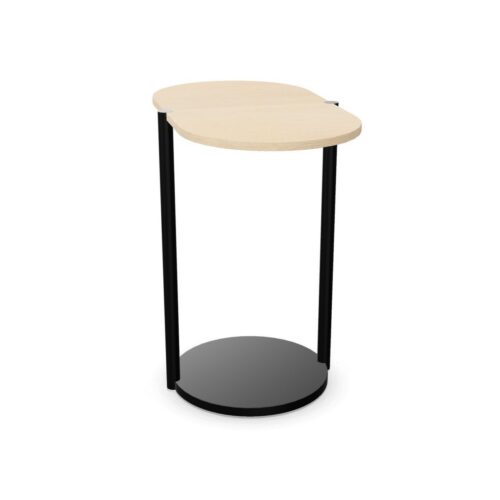
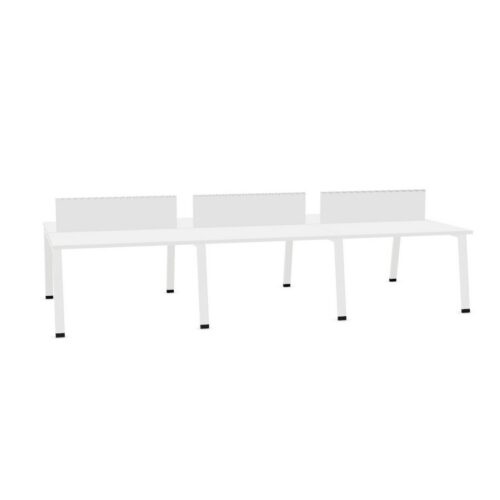
Beige furniture bases place a light, warm-toned finish on the supporting parts of chairs, desks, tables or lounge pieces. The color can be limited to legs or a pedestal even when the seat and top are entirely different. That makes the base easy to overlook in a small image but important in a room with repeated furniture. Check where the finish is applied and how the supports meet the floor.
Trace the base on each piece
On a meeting chair, beige might cover four legs, a sled frame or a central column. On a table it may appear on legs, a trestle or a pedestal. A lounge seat may show only short feet beneath a large upholstered form. These differences determine how much beige is visible and whether it reads as a repeated line through the room.
Beige furniture bases do not tell you the color of the surfaces above them. A chair may have a contrasting upholstered shell, and a table may have a timber or laminate top. Look at the whole configuration so the relationship between support and upper surface is intentional.
Plan chair rows and groups
A row of beige-framed meeting chairs can create a repeated rhythm beneath a conference table. Check whether arms, backs or under-seat details share the frame finish or interrupt it. A lighter base may be more visible against dark flooring, especially when the chairs are pulled out after a meeting.
In a lounge group, short beige feet can echo a nearby side table without drawing attention away from upholstery. Their visibility changes with seat height and the viewing angle. Arrange the seats for conversation first, then inspect the frames from the main approach to the area.
Look beneath the worktop
Desk legs can occupy much of a worker’s lower field of view and define the aisle-facing appearance of a bench. Beige furniture bases may connect several desks while tops vary by team or location. Confirm leg positions, under-desk storage and cable trays; these determine what people see and how much foot room remains.
A light-colored frame can make dust or scuffing more noticeable at floor level. Review the base material and cleaning guidance for the exact finish. Consider how chairs move around desk legs and whether the layout leaves enough room for cleaning between supports.
Select table supports for seating
A four-leg meeting table and a pedestal table give participants different knee and chair space. Base color cannot solve an awkward leg position, so assess the support arrangement with the intended seats. Check where people sit at the ends and whether any structure blocks their feet.
Beige furniture bases on tables can be visually quiet against a pale floor or more distinct against a dark one. Compare the frame with the top edge and nearby chair bases. An exact match is less important than a clear relationship between materials and forms.
Compare finish materials
A beige painted metal frame may have a smooth surface, while a beige plastic or timber component can have another texture. Sheen also changes how the color is seen. Place the actual finishes under the planned lighting, especially when the base sits beside flooring with a similar tone.
Contact points may differ from the main frame. Castors, glides and floor protectors can appear in another color and should suit the flooring. Review the selected product’s components so the final look and movement match what was planned.
Carry the detail through the room
A coherent scheme can repeat beige on chair frames, table legs and desk supports without applying it to every top or seat. The repeated detail may be subtle, particularly beneath large upholstered pieces. Check it in a room view with furniture at its normal positions and chairs pulled back.
Choose beige furniture bases by weighing visible color, support form and everyday use. Confirm the exact frame finish, floor contact and seating clearance. The base should connect with surrounding furniture while doing its structural job well.