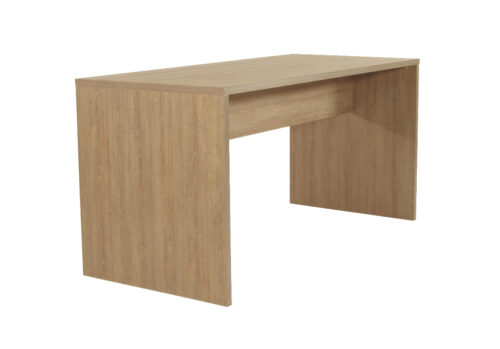
A high table with a dark gray oak base brings a wood-inspired, grey-toned finish to the structure supporting the tabletop. Here the relevant furniture is a bar-height meeting table, so the base should be considered in relation to stools, standing users and the space beneath the top. The finish name describes its appearance; it does not establish whether the base is solid wood, veneer or another material.
See the base in the whole table
A base may be more visible on a high table than on a low meeting table. People can see beneath the top from across the room, and stools leave portions of the support exposed. Look at the selected table from standing and seated viewpoints. The dark gray oak base may read as a clear structural element or as a quieter detail behind the chairs.
Check which parts carry the finish. The support may have legs, a pedestal or several joined members; the top can have its own distinct color and material. Use the exact product configuration to assess the relationship rather than assuming the finish continues across the entire table.
Plan the high meeting position
A bar-height table can support brief conversations, informal work or a change of setting during the day. Decide whether users will stand, use stools or alternate. The selected top should provide enough clear space for the intended activity, while the base leaves room for feet and movement.
With stools, check the distance between seat and tabletop and whether footrests allow a comfortable position. Look at where the base meets the floor relative to each seating place. A dark gray oak base may be visually appealing, but a support placed where knees or feet need to go will make the table less useful.
Allow movement around the table
High tables often sit in shared rooms or near circulation routes. Leave space for a person to approach, pull out a stool and step away while others remain seated. Consider how coats, bags and occasional equipment are handled. The table’s full footprint includes the space people occupy around it, not just the base and top.
If the table sits near a wall, check access from the open sides and whether everyone can see or reach shared materials. A freestanding position may support conversation from several directions, but it requires clearance on each side. The shape of the base can influence those routes.
Coordinate the finish with nearby materials
Dark gray oak suggests a mix of wood-grain character and cooler color. Compare the actual finish beside flooring, stool frames and the tabletop. A similar grey on metal may differ in texture, while another wood-effect surface may differ in grain. A close material comparison can reveal whether the pieces relate naturally.
The base may sit against a light or dark floor. Strong contrast makes its outline more apparent, while a similar-toned floor can quiet it. Review the room lighting too. Grain and grey undertones may appear different near a window and under artificial light.
Check construction and care
The finish appearance does not settle the base material. Ask for the selected table’s construction and finish details before choosing care products. The support may include glides or protective feet that are not the same color as the main base. Confirm their suitability for the flooring.
A high table receives contact from shoes, cleaning tools and people gathering around it. Inspect exposed edges and the area nearest the floor. Follow the manufacturer’s guidance for normal cleaning and for moving the table if the room layout changes.
Make the table work in the room
Set the proposed table and stools in the plan at their used positions. Check the top’s role, the approach routes and the space for legs. Then judge the visible dark gray oak base beside the other materials in the room. The finish can give the table character when the support structure also serves the people around it.
Choose a high table with a dark gray oak base for the combination of usable meeting surface and considered frame finish. Confirm the exact material, top pairing and floor contact for the selected version. That keeps the visual choice connected to everyday use.