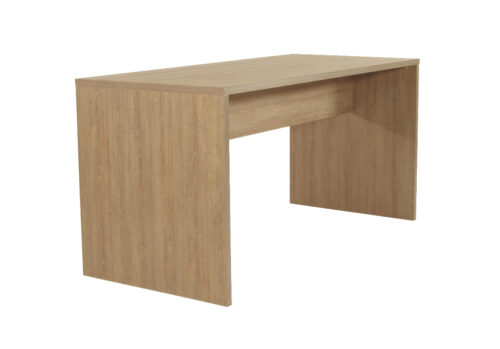
An oak-finish base gives a high meeting table a visible wood-inspired support beneath the top. In this selection, the setting is a bar-height table, which can be used with stools or as a standing gathering point. The oak description refers to the appearance of the base and does not prove that the structure is solid oak. Review the actual material, the top paired with it and the room where people will gather.
Understand the supporting form
The base determines how a high table stands and how people move around it. Its legs or pedestal may be partly concealed when stools are occupied, yet remain visible from elsewhere in the room. Examine the selected version from several angles. The oak-finish base should sit naturally with the tabletop without hiding the structure that supports it.
A table’s support can affect where users put their feet. Check the relationship between base, tabletop and intended stools. A finish choice should not distract from knee clearance, safe approach and the room needed to step away from a high seat.
Choose standing or stool use
A high surface can support a short conversation, a quick review of documents or an informal meeting. If people will stand, consider the space around every side they will use. If stools are planned, assess seat height, foot support and spacing. The table must give participants room for elbows and equipment without crowding the base.
The oak-finish base may be more visible when users stand, because there are no stools to interrupt the view beneath the top. With seating, its finish can connect the table to stool legs or nearby cabinetry. Compare the complete arrangement in both conditions if the room will be used in both ways.
Fit the table into the room
Position the high table where people can approach without obstructing a route. A table near a wall may offer a clear open side but limit access from behind. A freestanding position can invite conversation from several directions and requires more circulation space. Draw the occupied footprint, including stools pulled back.
Check nearby doors, storage and screens. Someone standing at the table should be able to turn and leave without colliding with another piece. The base itself may be compact, yet the gathering around it can occupy a much wider area.
Compare oak with surrounding finishes
Oak-effect surfaces can vary in grain, warmth and sheen. Look at the actual base finish beside flooring, wall materials and the tabletop. A second wood-like surface may have a noticeably different pattern. A deliberate contrast can work well, but an assumed match based only on the word oak is unreliable.
The oak-finish base may be paired with a top in another color or material. That contrast can make the structural support more visible. Inspect the top edge and the connection to the base, since those transition points influence the table’s overall appearance from seated and standing positions.
Review material and floor contact
Ask what the visible oak finish is applied to and how it should be cared for. It may be a wood-effect surface, veneer or another construction depending on the selected product. Cleaning instructions need to follow that actual material. Repeated contact at the lower part of the frame can require different attention from the tabletop.
Check glides or protective feet where the table meets the floor. They can have their own color and material, and they should suit the room’s flooring. If the table will be moved for events, follow the handling guidance so the base and floor remain protected.
Complete the high-table setting
Place the intended stools around the selected table or mark standing positions. Check foot room, reach to the top and circulation. Then assess how the oak-finish base appears within the occupied room, rather than only in an isolated product view.
Choose an oak-finish base when it complements a high table that already works for its users. Confirm the exact finish and construction, pair it with suitable seating and leave room for people to gather. The supporting structure should contribute to both the function and the look of the setting.