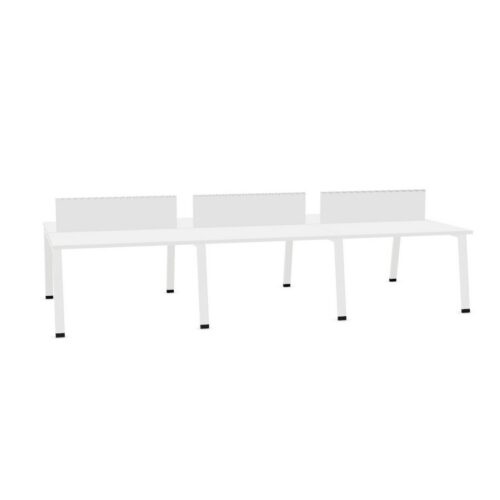
Orange-base office furniture uses a warm accent on the lower frame or supporting structure of a product. Depending on the item, orange may appear on chair legs, desk supports, table frames or a storage plinth. The filter identifies colour only; it does not determine the base material or describe the rest of the furniture. Confirm the shade against the actual room materials before repeating it.
Use orange-base office furniture to narrow the range, then review the finish, component and room context for each product individually.
Orange attracts attention, so first consider how much of the base remains visible. A small chair support can introduce a limited flash of colour. A larger table frame or broad cabinet base may become a defining element in the room. Product photographs and drawings help show this difference better than a colour label alone.
Choose where orange should appear
Orange bases can help distinguish a shared area or carry an accent through selected pieces. Before specifying them, decide whether the colour should be repeated or reserved for one location. Repeating orange on every frame creates a different effect from using it only on a few meeting chairs.
- Use orange on a limited number of supports when the rest of the palette is already strong.
- Repeat it consistently when the furniture should visually connect across zones.
- Compare the shade with neutral surfaces, existing brand colours and room lighting.
- Consider the view from a distance; bright frames can read more strongly across open layouts.
Orange may range from muted rust-like tones to brighter shades, but the exact finish depends on the product. Do not assume that different orange products will match. Check finish references or samples when combining multiple collections.
Review the frame design as well as the colour
The frame geometry affects both appearance and placement. Chair bases, four-leg table frames, desk supports and cabinet plinths occupy different amounts of visual and floor space. Look at the support from the angles people will see and check whether orange covers every structural element.
Practical fit remains essential. Confirm table leg positions against chair locations and circulation routes. Check desk support dimensions for the intended workstation and equipment. For storage, compare the base with door fronts, neighbouring units and floor transitions. These choices determine whether the furniture works before colour coordination is considered.
Read the specification for material information
An orange base may use a material or coating that is not obvious in a photograph. Review the product details for construction, finish, cleaning guidance and available configurations. The colour filter cannot answer questions about strength, maintenance or technical suitability.
Also check whether the orange part is integral to the product or an option selected during configuration. A product image may show one version while the available model has several frame choices. Confirm the correct finish code and configuration when the shade is important to a project.
Balance orange supports within an office scheme
Orange can work with calm surfaces that let the base carry the accent, or it can join a more colourful scheme. Choose which other elements should share its warmth, then avoid adding unrelated accents simply to create variety. Repetition, spacing and the amount of visible frame all influence the final balance.
Shortlist by furniture type and use, compare the exact frame, then verify its finish with product information or a sample. This helps you decide whether orange should be a small detail or a visible part of the workplace design. Confirm material and configuration separately so the colour choice remains accurate.
Check the orange finish in its final position
Orange can look more saturated when several frames sit together or when light falls directly on a coated surface. Think through the number of visible items and their spacing before repeating the colour throughout a room. In a small meeting area, a limited accent may be enough; a larger collaborative zone may use more repetition to connect pieces. Confirm the selected finish and product configuration with the supplier information when a precise orange tone is part of the design brief.