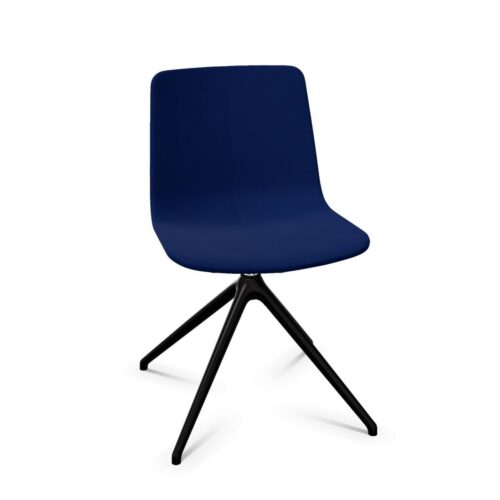
Office chairs with aluminium bases can be considered across task seating, meeting positions and other office seating arrangements. The base forms the lower structure of the chair, supporting a seat whose shape and features may differ considerably between models. A useful comparison looks at the whole chair: how the person sits, how the base meets the floor and how the selected configuration works beside its desk or table.
Start with the type of chair required
A chair for regular desk work has a different role from a visitor seat or a lounge armchair. Define that role before focusing on the base material. Consider the working position, the likely users and the surrounding furniture, then assess whether the complete chair suits that setting.
Office chairs with aluminium bases do not all share one operating format. Check the particular construction, including any swivel function, movement mechanism or adjustment supplied with the model. A similar-looking base is not enough to establish that two chairs move or adjust in the same way.
Relate the base to the seat and back
The lower structure is one part of a larger seating design. Compare the seat, backrest and any armrests alongside it. Notice how the person approaches the chair and where they sit in relation to the back. A seating trial helps connect the visible form with the actual sitting position.
For desk use, include the working surface and equipment in that assessment. The chair needs to approach the desk appropriately and accommodate the user’s normal tasks. Review the exact adjustments where provided, keeping the role of the base separate from the support and movement supplied elsewhere in the chair.
Understand the contact with the floor
Office chairs with aluminium bases may have different components at the floor. Identify whether the selected configuration uses feet, glides, castors or another arrangement, and review their suitability for the intended location. The aluminium structure does not itself specify how every floor-contact component should be used. In rooms with different flooring finishes, confirm the relevant floor-contact specification for each planned seating location.
Think about movement in the occupied room. A workstation chair needs room to move into its working position, while a chair around a meeting table has neighboring bases to consider. Check the actual footprint and how it relates to table legs and circulation. In a lounge setting, review the approach to the seat with nearby furniture in place.
Choose a visible finish deliberately
Aluminium bases are associated with a material rather than one universal finish. Review the selected product’s surface specification and compare it with adjacent furniture. A polished appearance, a darker finish or another treatment can change the relationship between the chair and the room.
When coordinating office chairs with aluminium bases, decide which elements should relate. It might be the finish of a meeting table, a repeated lower frame or a contrast with upholstery. The chair does not need to match every component nearby, but the connection should be intentional within the overall furniture arrangement.
Keep configuration and purpose together
Record the chair version being assessed, especially where the same family offers different backs, armrests or bases. Review which features belong to that version and what is supplied with it. This helps prevent a project decision made around one image or sample being applied to a different configuration.
The wider material selection also reaches into other furniture forms, including tables and desks. Where these share the room with the seating, compare their visible structures without assuming that a common material makes components interchangeable. Each piece still needs to serve its own function in the arrangement.
Choose office chairs with aluminium bases through a complete seating comparison: the intended activity, the user’s position, the structure below the seat and the relationship with the floor. That approach makes the base material a meaningful part of the specification while keeping the usefulness of the chair at the center of the decision.


Arte & D


Artexport

Artexport