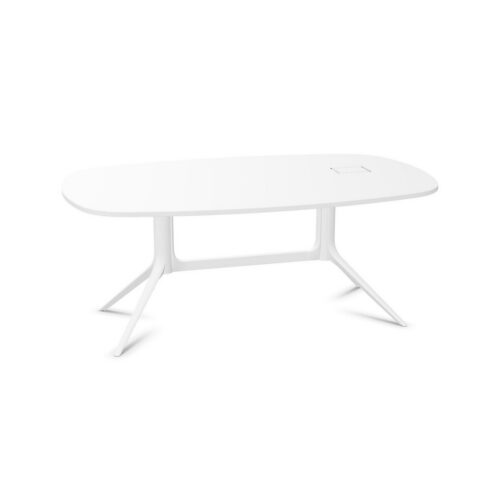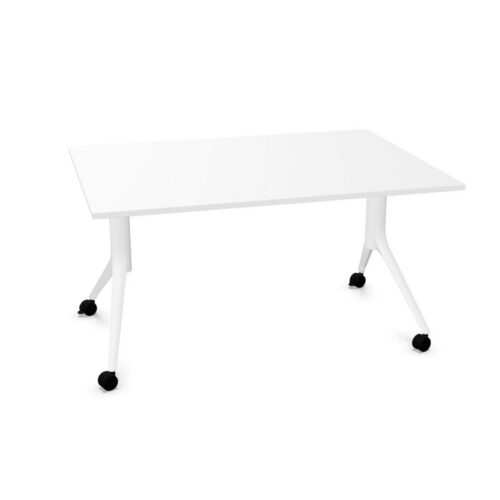


Indoor Air Comfort Gold certified office furniture helps procurement teams identify products assessed against demanding indoor-air-emissions requirements. On this page, the filter brings together furniture that carries the Indoor Air Comfort Gold certification, making it easier to include verified emissions information within workplace specifications.
Indoor air quality is an important consideration whenever offices are furnished, refurbished or reconfigured. Materials, finishes, adhesives, foams and other components can contribute to emissions in an interior. Selecting products with relevant third-party certification can support a more considered approach alongside durability, functionality, budget, aesthetics and circularity.
What does Indoor Air Comfort Gold mean?
Indoor Air Comfort Gold is a voluntary product certification for low-emitting building products, including applicable furniture products. It is associated with testing and assessment of emissions of volatile organic compounds (VOCs) and with requirements intended to address indoor air quality.
The Gold level is designed to demonstrate alignment with a broad range of European low-emission specifications used in building and interior projects. For furniture procurement, it provides a recognisable evidence point when a project team needs to consider the potential contribution of products to the indoor environment.
Certification applies to the particular product or product range covered by the certificate. Requirements, declared configurations and certificate validity should always be checked against the documentation for the item being specified.
Why indoor-air emissions matter in office procurement
People can spend much of their working day indoors, so air quality may form part of workplace wellbeing, fit-out and environmental decision-making. Furniture is only one element of an internal environment, alongside finishes, flooring, partitioning, cleaning regimes, ventilation and the way a space is occupied. Nevertheless, choosing products with emissions credentials can be a practical part of a wider specification strategy.
- It gives procurement and design teams a defined criterion to include in tenders and product comparisons.
- It can provide third-party evidence where low-emission materials are requested for an office project.
- It helps teams ask more focused questions about the materials and finishes within a proposed furniture solution.
- It may support project documentation where indoor environmental quality considerations are being recorded.
Certification should not be treated as a guarantee of air quality in a completed workplace. The overall result depends on the combined materials in the space, installation choices, ventilation and ongoing building management.
Furniture types that may carry this certification
Indoor Air Comfort Gold can be relevant across a range of office-furniture categories. Depending on the manufacturer and certified scope, this may include workstations and desks, storage, seating, screens, tables and other workplace products. The items shown in this filtered range are listed because they carry the certification value.
For each product, review the available product information before finalising a specification. A certificate may relate to a family of products, named models, particular material combinations or defined finishes rather than every variation a manufacturer offers. This is especially important when selecting upholstery, laminate, edge detail, paint finishes or optional accessories.
Using certification evidence in a project specification
Procurement requirements work best when they are clear, proportionate and capable of being checked. Rather than simply asking for “healthy” or “low-VOC” furniture, a brief can state the relevant recognised certification, identify the products to which it must apply and ask suppliers to provide current supporting evidence.
Useful information to retain in a project file includes the product name, manufacturer, certificate reference where supplied, certified scope, issue or validity dates, and the selected configuration. This creates a clearer audit trail for design teams, facilities managers and stakeholders reviewing environmental information.
- Define whether the requirement covers all furniture or only selected categories.
- Check that the intended finish, fabric or component sits within the documented certified scope.
- Request documentation early enough to resolve substitutions or configuration changes.
- Keep certification evidence alongside other product information, such as material, maintenance and end-of-use details.
How to compare certified office furniture
Indoor Air Comfort Gold can be an important selection factor, but it is rarely the only one. A suitable workplace product still needs to meet operational requirements: the right dimensions, ergonomics, capacity, privacy, acoustic performance where relevant, visual character and compatibility with the existing fit-out.
For leased furniture, teams can also consider the anticipated length of use, ability to adapt a layout, repairability and what happens when requirements change. Comparing these factors together helps prevent an emissions criterion from being considered in isolation from the practical life of the furniture.
Questions to consider
- Which furniture categories are included in the indoor-air requirement?
- Does the certificate cover the exact model and finish under consideration?
- What other materials will be introduced during the fit-out?
- How will ventilation and the wider interior specification be managed?
- What evidence needs to be retained for internal reporting or project records?
Indoor air quality within sustainable procurement
Low-emission certification is one useful part of responsible furniture selection, but sustainable procurement involves a wider set of decisions. Teams may also assess product longevity, maintenance, reuse potential, recycled or renewable material information, transport, supplier practices and end-of-use routes. The appropriate balance will depend on the organisation, the workplace and the goals of the project.
For a broader framework, read Myntwork’s guide to sustainable procurement of office furniture. It can help place product-level evidence, including emissions credentials, within a more complete approach to furnishing a workplace.
Documentation and reporting considerations
As environmental and social governance information becomes more structured, procurement teams may need consistent product records that can be shared with workplace, finance, sustainability and facilities colleagues. Certification documentation can be useful supporting evidence, provided it is recorded accurately and linked to the product actually selected.
It is sensible to distinguish between a product certification, a manufacturer-wide statement and a project-level outcome. Indoor Air Comfort Gold relates to the certified product scope; it does not by itself describe every environmental attribute of a product or the performance of the finished office. For further context, explore Myntwork’s resource on ESG and workplace furniture procurement.
Finding suitable Myntwork furniture
This archive is intended to help narrow the search for office furniture carrying Indoor Air Comfort Gold certification. Use the product details to assess suitability for your layout and specification, and verify the relevant documentation for the chosen model and configuration. Related Myntwork category pages can then help you compare the desks, seating, tables, storage and other workplace furniture needed for a coherent scheme.