


Panel-leg desks use a more defined supporting surface beneath the working top, making the side structure part of the furniture’s visible form. Related panel-supported tables can bring that detail into meeting areas as well. Begin with the person and activity at the surface, then assess how the actual panels occupy the space below and relate to the surrounding room.
Understand the visible panel form
Review the selected frame from the side and from the normal approach to the desk. A panel support can create a more continuous visual outline than separated slender legs. Compare its position beneath the top and the way that outline appears beside the other furniture.
Panel-leg desks can have different supporting designs, so keep the actual configuration clear. Look at the profile, material and connection with the surface rather than expecting one uniform panel construction. The supporting shape and the tabletop should be assessed together as part of the completed piece.
Review the user’s working area
At a desk, the chair needs an appropriate approach to the surface. Consider where the person sits and how the panel supports relate to their legs, feet and normal movement. Include any underframe components or connected storage when reviewing that occupied position.
A return or adjoining surface can change how the user reaches different parts of the workstation. Review the lower structure across the whole arrangement, with each area given a defined task. A clear plan helps the side supports belong to a usable desk rather than being chosen only for their appearance.
Meeting tables with panel supports
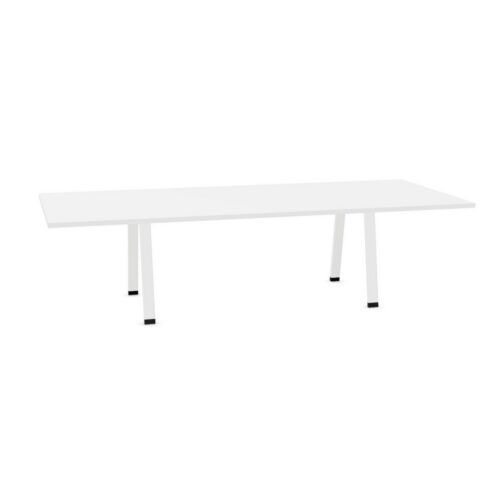
When comparing panel-leg desks and tables for a wider office scheme, assess the meeting use separately from the individual workstation. Chairs approach a shared table from several sides, with the panel locations affecting how those positions are arranged.
Review the chosen table with its actual seating, including positions near the ends. Consider where feet and chair bases sit relative to the lower structure. The surface shape alone does not describe the usable layout, so include the panels and any connecting components in the room plan.
Check material and surface details
A panel-leg description identifies a supporting form rather than one material. The selection includes different constructions, so review the relevant frame specification. Keep the material of the panel distinct from the top, its edge and any other parts of the furniture.
Panel-leg desks can contribute a noticeable area of color or texture below the working surface. Compare that finish with storage and seating nearby, considering views from the entrance and across the occupied room. Use the actual finish information where a close visual relationship is required.
Grouped workstations and connected parts
For a bench-style arrangement, identify which supports serve the group and how the individual working surfaces are supplied. Check any required intermediate elements or fittings for the selected system. Keep the complete configuration together in the specification so the planned furniture is easy to understand.
Consider the approach to every seat and the routes around the group. Screens, equipment and nearby cabinets need their own space within the arrangement. Review those relationships with the panel supports visible in the plan rather than treating the lower structure as an interchangeable detail.
Equipment and workstation functions
Review the provision for power, data and accessories according to the desk or table brief. A cable tray, monitor support or screen fitting needs compatibility with the actual structure. Identify the relevant mounting locations and the components needed to complete the arrangement.
Any adjustment or other function should be checked in the selected product specification. The panel form does not establish how a surface operates or which features are included. Keep the required function tied to the actual version being considered for the workplace.
Choose the panel arrangement in context
Compare practical access, working clearance and the room’s visible scheme together. Consider how the finished piece relates to the people around it and to the other storage or seating nearby. Review the relevant installation and care information for the actual materials chosen.
Choose panel-leg desks through that complete assessment of form and use. Establish the working or meeting positions, check the supporting structure and confirm the required components. The panels can then contribute a clear visual character while the furniture serves its intended office activity.




Artexport

Artexport


Artexport


Artexport


Artexport


