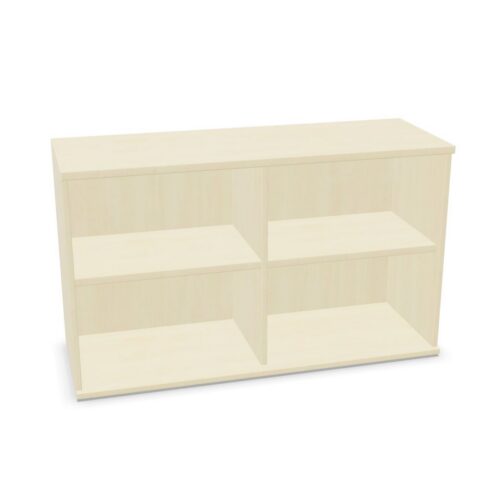
Office cabinets with six shelves can bring reference books, documents and shared materials into a clear arrangement near the people who use them. The selection includes open shelving and cabinet forms, so the same shelf total can produce quite different interiors. Look at the division of space, the way the unit opens and the route to it. Useful storage begins with an understanding of the contents rather than an assumption that six shelves always means the same layout.
Find the layout that suits your documents
Start by grouping the items to be stored. Upright binders need clear vertical room, while stacked document boxes may need a wider opening. Books vary in depth and can project beyond a shelf if its usable surface is too shallow. Compare the internal drawing and dimensions with the actual objects, including the space needed to grasp and remove them.
Office cabinets with six shelves may divide the total between separate bays. Check whether the shelves can move and how the base is counted. This matters when comparing units whose external proportions look similar. A more divided interior may suit categorized supplies, while broader levels may suit larger reference material.
Use open shelving for everyday references
Open shelves let users see titles and labels without opening a cabinet. This can be helpful for a team that regularly consults printed references. Arrange the books or binders in a predictable order and keep the most frequently used material easy to reach. Give smaller objects suitable containers so that they do not disappear behind larger items.
In a shared area, office cabinets with six shelves can form a modest resource point rather than a distant archive. Consider whether users can browse without standing in the path of colleagues. Leave a clear surface elsewhere if people need somewhere to review documents before returning them.
Choose closed storage for a quieter frontage
A cabinet with doors can conceal a mix of supplies and document boxes. The front creates a more uniform view than open shelves, particularly when the contents vary in shape and color. Review the opening movement and leave enough space for doors and users. Where a lock is required, confirm the actual mechanism and how access will be managed.
Do not assume a closed version has the same internal arrangement as an open one. Door fittings and vertical divisions can affect access. Check the selected cabinet, especially when products are offered in several related configurations. The outside finish is only part of the comparison.
Place storage where the team needs it
Supplies used during meetings belong close to the meeting area; references used at desks should be accessible from the work zone. A cabinet placed solely to fill a spare wall may create unnecessary trips. Draw the route people take to collect and return materials, including the space needed while someone stands at the unit.
Office cabinets with six shelves may also help define the edge of a working area. Confirm whether the back is suitable for exposure and whether installation instructions require fixing to a wall. Acoustic back panels are available on some designs, but that feature must be checked for the selected version rather than assumed from the shelf count.
Compare finishes and support details
Wood-look surfaces, metal bodies and different plinth arrangements give storage units a distinct appearance. A visible base can connect with neighboring furniture or make a larger unit feel more clearly grounded. Compare the exact finishes beside flooring, walls and desk tops under the planned lighting.
Adjustable feet or other leveling details, where included, help achieve the intended installation. Follow the assembly and stability guidance before filling the cabinet. Check loading limits for each shelf, especially when storing many books or paper records, and avoid treating every horizontal surface as an unrestricted load-bearing level.
Make the arrangement easy to maintain
A useful storage system remains understandable after the first week. Give categories clear places, remove obsolete documents and leave access for cleaning. If the contents change, confirm which shelves or organizers can be repositioned before moving them.
Choose office cabinets with six shelves for a clear role in the room. Match the internal layout to the documents and supplies, select suitable access and position the unit near its users. Those decisions give the shelf count practical meaning within the everyday workplace.