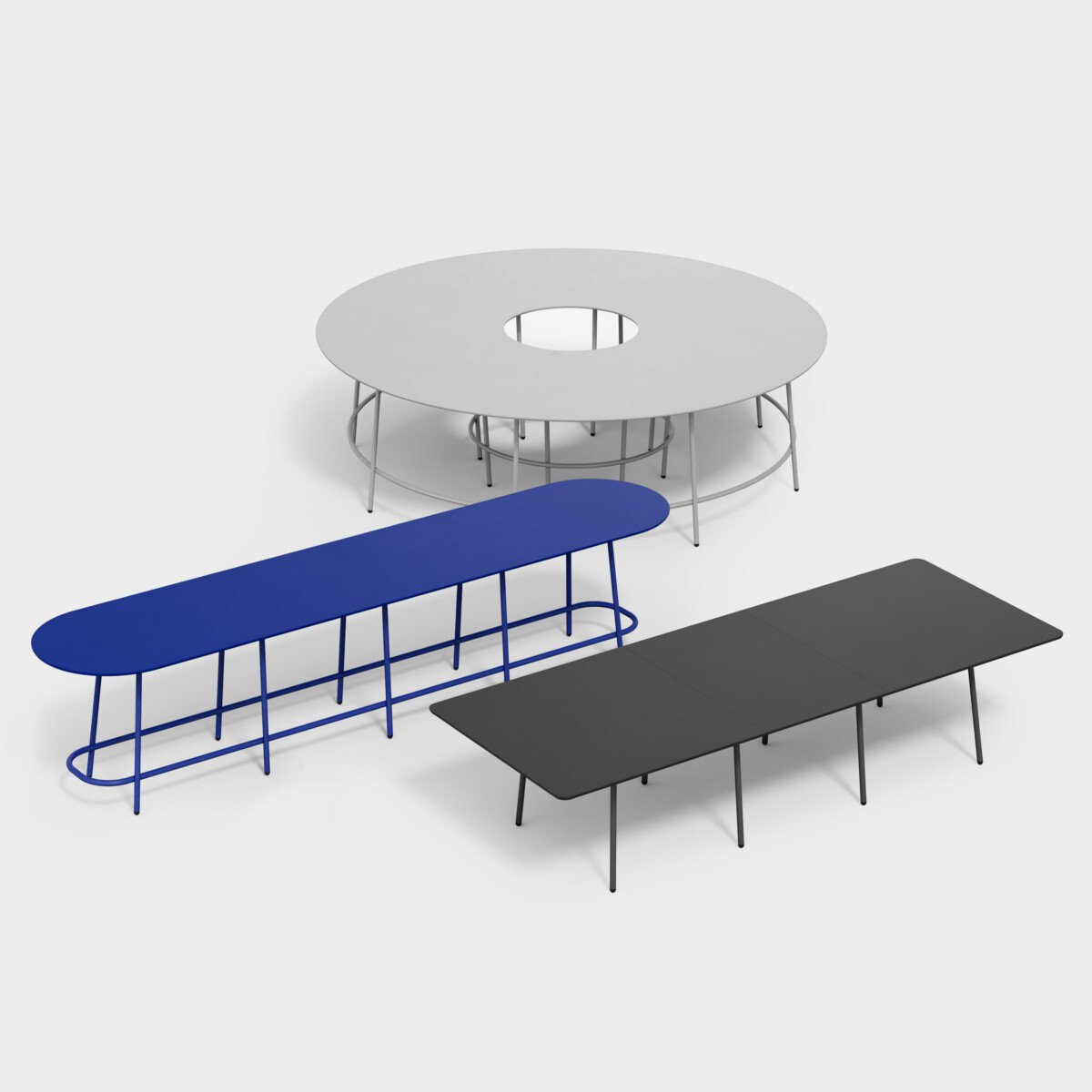
Choose a table for the room and meeting style
Start by considering how people will use the table. A standard-height option at 74 cm is suited to seated meetings, while the family also includes higher formats at 95 and 105 cm for standing conversations or use with appropriate high seating. These are different model configurations, so confirm the height of the specific table rather than assuming it can be changed.
Think about placement next. A freestanding table can work as a central meeting point, while a wall-mounted model may suit a perimeter position or a tighter layout. Check the product listing and dimensions PDF to confirm how the chosen configuration fits your room and how it is intended to be installed.
Pick a top shape and size
Shape affects both the table’s footprint and how it sits in a space. Square tops offer a straightforward layout for a small group; oval models soften the outline, while trapezium and 45-degree angled or corner formats can help define a collaboration zone. The family includes models described for four people, as well as a two-person option in the collection data. Verify the stated capacity for the exact model you are considering.
Compare the 100 and 140 cm formats against the room’s available floor area and circulation routes. A larger top may provide more working surface, but allow enough space around it for people to approach and use the table comfortably. Use the model-specific dimensions rather than the family name alone when planning a layout.
Check materials and practical details
The listed tabletop material is HPL, and family data includes black and grey surface colours. Some model information specifies a Fenix 0720 HPL top; check the individual listing for the available finish. Bases are described as metal or steel, with black, including RAL9005 Jet Black, listed as a base colour. Product data also lists FSC certification for the family, so confirm the certification details for the selected configuration if that matters to your purchasing requirements.
Some options are suitable for a cable tray, but a tray is not included according to the family information. If your meetings require wired equipment, check how cables will be managed and what additional accessories may be needed. A two-year warranty is listed; review the selected product’s terms before ordering.
Confirm the configuration before leasing
Before choosing, compare the model’s mounting style, top shape, dimensions, height, finish and adjustment status. The family data includes both adjustable and non-adjustable configurations, so do not assume every table offers height adjustment. Myntwork offers these products on a monthly lease. Confirm the specifications and requirements for your chosen model as part of planning your workplace setup.
Frequently asked questions about +Halle Meeting Table Nest System
Which Nest System table height should I choose?
The family includes seated-height and higher configurations, with listed heights from 74 to 105 cm. Match the height to your meeting style and seating, then confirm the exact model specification.
Are all Nest System tables freestanding?
No. The collection includes freestanding and wall-mounted models. Check the model name and product details to ensure the mounting style suits your room.
What shapes and sizes are available?
Family options include square, oval, trapezium and corner shapes, with 100 and 140 cm formats listed. Exact dimensions depend on the selected model; consult its dimensions PDF.
Can I adjust the height of a Nest System table?
The family data includes both adjustable and non-adjustable options. Check the individual product listing to confirm whether a particular configuration offers adjustment.
Are cable trays included with the tables?
The family is listed as suitable for a cable tray, but trays are not included. Check the selected model and any accessory requirements when planning cable management.