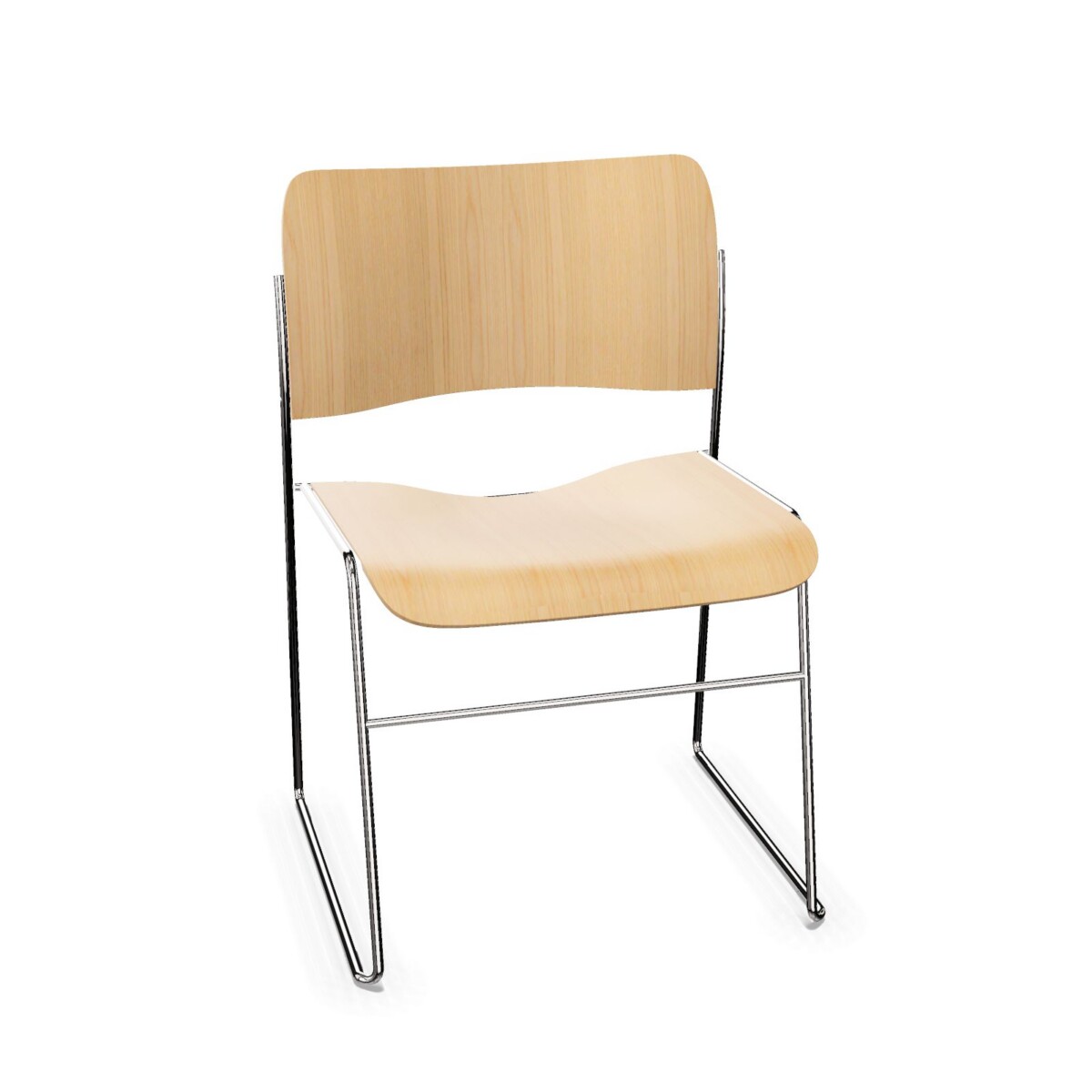
Choosing an Xtra chair for your space
Start with the room’s main use. For a meeting room where an upholstered seat is part of the brief, the DTQ is the model in this family specifically described with fabric upholstery over an oak-veneer seat and back. For spaces where the seat and back’s wood-veneer appearance is a priority, compare the DVQ. It is identified as a non-linking cantilever chair, which is a useful distinction to check when planning how chairs will be arranged and managed.
Both options are meeting or multipurpose chairs, but the provided details do not describe them as adjustable. The family attributes list no seat-height, seat-depth or back-height adjustment, no armrests and no mechanism. If users need support or adjustment features for longer periods of sitting, verify requirements against the product details rather than assuming they are included. Also consider who will use the room, how often the seating will be moved, and whether the finish should blend with existing furniture.
Compare materials and listed finishes
Match the surface and color to the room’s needs. The DTQ description specifies fabric upholstery and oak veneer; the DVQ description specifies a wood-veneer seat and back. Family-level attributes also list leather and PU leather alongside fabric and wood, as well as a range of upholstery colors and base colors. These are collection-level options, not a guarantee that every finish is available on both models. Check the selected model’s current configuration and finish details before specifying a set.
The metal frame is described as chrome-finished on both chairs. For the DTQ, the frame is a sled frame; the DVQ is identified as a cantilever design and as non-linking. When reviewing layouts, consider the room’s available space and the way chairs will be positioned between uses. The supplied information does not state that either chair stacks or connects, so do not rely on those functions without confirming them separately.
What to check before selecting
- Model and appearance: Decide between the DTQ’s fabric-upholstered oak veneer and the DVQ’s wood-veneer, non-linking design.
- Finish availability: Confirm upholstery and base-color options for the exact model and configuration you plan to order.
- Fit for users: Review the fixed, non-adjustable features and the listed 135 kg maximum ballast against your requirements.
- Project details: Check the product information for any specification needed for your room, especially if chair linking or stacking matters.
The family attributes list a two-year warranty and mark the collection as circular. For workplaces considering furniture leasing, Myntwork offers these products on a monthly lease. Compare the models and their available finishes with your space and project needs before making a selection.
Frequently asked questions about HOWE Chair Xtra
What is the difference between the HOWE Xtra DTQ and DVQ?
The DTQ is described as an upholstered oak-veneer chair with a sled frame. The DVQ has a wood-veneer seat and back and is identified as a non-linking cantilever chair.
Which HOWE Xtra chair should I consider for an upholstered seat?
The DTQ is the model specifically described with fabric upholstery. Family attributes also list other upholstery materials, so confirm the available finishes for your chosen model.
Do HOWE Xtra chairs have adjustable features or armrests?
The listed family attributes show no seat-height, seat-depth or back-height adjustment, no mechanism and no armrests. Check the individual model details if your project has specific requirements.
Can HOWE Xtra chairs be linked or stacked?
The DVQ is described as non-linking. The supplied collection information does not confirm stacking or linking for the DTQ, so verify these functions before planning a layout around them.
What finishes and colors are listed for the HOWE Xtra family?
Family attributes list fabric, leather, PU leather and wood, with several upholstery and base colors. Availability may vary by model; check the configuration details for the chair you select.