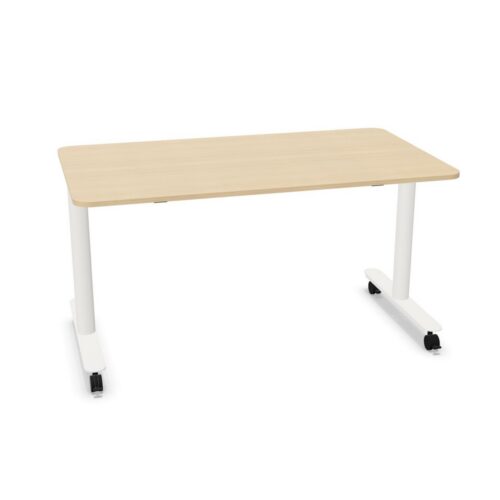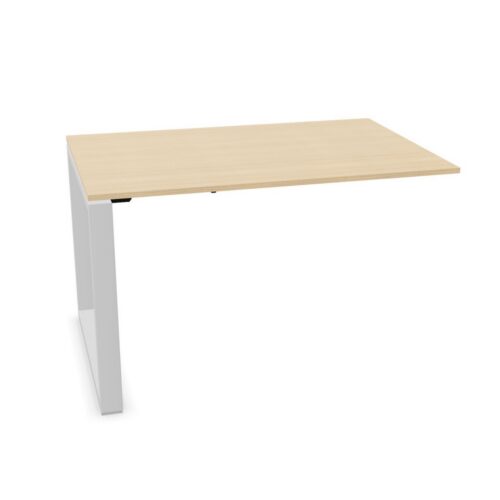


Beige office furniture surfaces bring a soft, neutral finish to workplaces where the desktop, cabinet front or other visible outer surface is an important part of the interior scheme. This filter refers to the colour of the working or external surface, rather than the colour of a desk frame, leg set or base.
Beige can sit comfortably between warmer timber-inspired finishes and cooler grey or white schemes. It is a practical consideration for procurement teams specifying furniture across open-plan offices, meeting rooms, reception areas and support spaces, particularly where a calm, coordinated visual character is required.
What does a beige surface colour mean?
A beige surface colour describes the visible finish applied to the main face of an item. On a desk or table, this will usually be the top that users work on. For storage, it may refer to the cabinet body, door, drawer front or another externally visible panel, depending on the product design.
It does not necessarily describe every component. A product with a beige desktop may have metal legs, a pedestal or other details in a different colour. Likewise, a beige storage finish should be assessed alongside the handle, plinth, frame and internal configuration shown in the individual product information.
Why choose beige work surfaces?
Beige is a restrained neutral that can help furniture feel less stark than brilliant white while remaining adaptable across changing layouts and decorative updates. It can work with a broad range of wall colours, floor finishes and seating fabrics, making it useful where furniture needs to support a consistent workplace standard without dominating the room.
- It provides a warm-neutral alternative to white, grey and darker worktops.
- It can complement natural materials, muted colours and a variety of metal frame finishes.
- It is suitable for schemes intended to feel composed and welcoming rather than highly contrasting.
- It can support visual continuity when desks, tables and storage are selected with related surface finishes.
The perceived tone of beige can vary with surrounding light. Daylight, task lighting, adjacent flooring and nearby partitions may make a finish appear warmer, cooler, lighter or deeper. Reviewing available product imagery and finish details as part of the specification process is therefore worthwhile.
Where beige furniture surfaces work well
Beige surfaces are appropriate in many shared and individual work settings. In open-plan offices, they can create an even background for monitors, desk accessories and task seating. In meeting rooms, a beige table surface can support a quieter setting for presentations and collaborative work without making the table the focal point.
They can also be considered for reception and visitor spaces, managerial offices, project rooms, training areas and storage zones. Where an organisation is fitting out several rooms, using a related surface colour across different furniture types may help spaces feel connected while allowing the base colours, seating and accessories to vary by function.
Furniture types available with beige surfaces
This archive may include different types of office furniture with beige visible surfaces. The exact construction, dimensions and configuration depend on the individual item, so surface colour should be used alongside the functional filters relevant to the project.
- Desks and benching with beige worktops for individual or shared workstations.
- Meeting and conference tables with a neutral top surface.
- Occasional tables for breakout, reception or informal collaboration areas.
- Storage units, cupboards and drawer units with beige outer panels or fronts.
- Workplace accessories and supporting furniture where a visible external finish is specified.
For each type, check which elements carry the beige finish. This is particularly important when matching furniture from more than one range, since the same colour description can be applied to different materials, textures or edge treatments.
Coordinating beige with frames and interiors
Because this attribute concerns the surface rather than the base, frame selection remains a separate decision. Dark metal frames can introduce definition beneath a lighter beige desktop, while lighter frames can produce a more understated overall appearance. The right combination depends on the intended contrast, the room’s existing fixtures and how the furniture will be maintained over time.
Beige surfaces can be paired with neutral seating and partitions for a tonal scheme, or used as a softer counterpoint to stronger upholstery colours. In rooms with timber details, consider the underlying warmth of both finishes: a cool beige and a warm wood effect may look deliberately contrasting, whereas similar undertones may create a more blended result.
How to specify a beige work surface
Surface colour is one part of a wider furniture brief. Begin with the activity the furniture must support, then confirm the footprint, shape, cable requirements, storage needs and base finish. For larger projects, it can help to establish a small palette of approved finishes so that additions and replacements remain visually compatible.
Questions to consider
- Is the beige finish required on the desktop, the storage front, or another visible outer panel?
- Which frame or base colour will be used with the surface?
- Will desks, meeting tables and storage need to appear closely matched?
- How will the surface look under the site’s daylight and artificial lighting?
- Does the workspace need particular dimensions, cable management or adaptable configurations?
- Will the finish sit alongside existing furniture that has warm, cool or neutral undertones?
For a broader view of the decisions involved, the Myntwork guide to choosing office furniture covers practical considerations beyond appearance, including how furniture relates to workplace use and layout.
Planning consistent workplace spaces
A surface finish can influence how a workplace reads as a whole, especially where a large number of desks or storage units are visible at once. Beige offers a flexible starting point for organisations that want a neutral foundation while retaining freedom to introduce identity through seating, screens, artwork or accessories.
When planning zones, consider sightlines between workstations, meeting areas and shared spaces. Repeating a related beige surface may create continuity, while changes in furniture shape, base colour or upholstery can still make each area distinct. The office space planning guide can help place finish choices within a wider layout and capacity plan.
Explore related Myntwork furniture ranges
Use this beige surface filter to narrow the selection, then review individual products for their visible finish, dimensions and component colours. For broader browsing across desks, tables, storage and supporting workplace products, see the Myntwork office furniture collection.