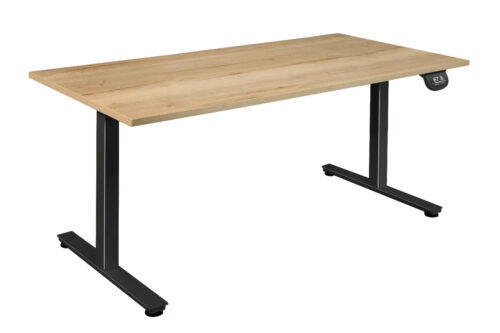
Concrete gray desk surfaces offer a mineral-look tone on an adjustable workstation, with a related top shelf for a drawer unit. The appearance should not be mistaken for a claim that the top is made of concrete. Verify the selected material and care instructions. This small surface family is most useful when the desk and nearby storage are planned together around the user’s equipment and movement. In a compact office, the storage shelf may be visible from the entrance while the desk top is mainly seen by the user. Compare the two views before insisting on an exact match. Their relationship can still feel deliberate if the frames and surrounding surfaces are considered together. The layout should remain clear when the desk rises.
Set the working area first
Place the screen, keyboard, documents and frequently used tools on a scaled desk plan. Concrete gray desk surfaces can provide a quiet background, but they need enough clear area for the task. Decide whether a monitor arm, lamp or cable opening will occupy part of the top. Keep the user’s main working zone free rather than filling it with accessories.
The represented desk adjusts in height. Review its selected mechanism, frame and range independently of the finish. Check that the monitor and cables can move with the top without strain. Leave clear floor space for standing and for a chair to move back without blocking storage or circulation.
Coordinate the drawer unit
A matching top shelf can make a drawer unit relate visually to the desk. Its role is different from the primary work surface. Check the shelf’s compatibility with the cabinet and its intended load. A small storage top may hold everyday items, but it should not become an improvised place for heavy equipment unless the product permits it.
Concrete gray desk surfaces may look more continuous when the shelf sits close to the desk, yet exact finish matching should be checked with samples. A horizontal desk top and a smaller storage shelf receive light differently. Their edges and textures may also differ. Position the drawer unit where it is reachable without restricting legroom.
Test the finish in the room
A concrete-look grey can read warmer or cooler depending on nearby flooring and artificial light. View a physical sample at desk height. Compare it with the selected frame, cabinet body and wall finish. A textured print may have more visual movement at full scale than a small image suggests.
Concrete gray desk surfaces should be assessed under both daylight and task lighting. Check whether the finish reflects light toward the user or makes small items hard to see. A neutral tone is not automatically free from glare. The actual sheen and texture of the selected top matter.
Plan cables and equipment
Trace power from the building connection to the desk. A sit-stand workstation needs a route that accommodates movement and remains clear of feet and chair wheels. Decide where a power strip or docking device can sit without taking over the working area. Keep access to connections practical for later equipment changes.
Concrete gray desk surfaces can sit beside a storage unit that holds spare devices or documents. Decide what belongs in the drawers and what should remain at hand on the desk. This simple allocation can keep the worktop usable. If the workstation is shared, consider how each user will reset equipment and personal items.
Check the complete position
Place the desk, chair, drawer unit and screen together on the room plan. Show the desk at its highest intended position and the chair pulled back. Confirm that the user can move between sitting and standing without hitting a shelf or cabinet. Review the route behind the workstation as well.
Concrete gray desk surfaces can create a consistent visual link between worktop and nearby storage. Choose the components for their roles, verify the actual construction and test the finish in the intended light. A restrained surface works best when the workstation remains easy to use throughout the day.