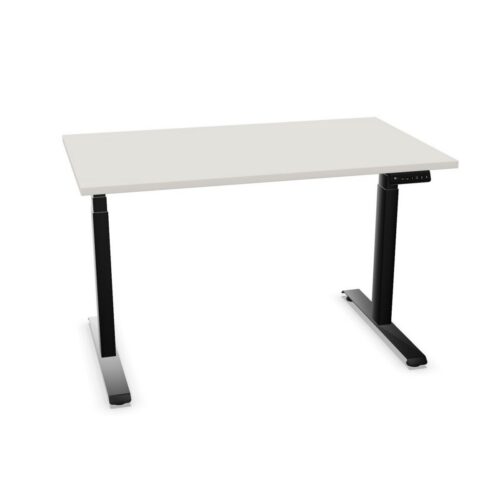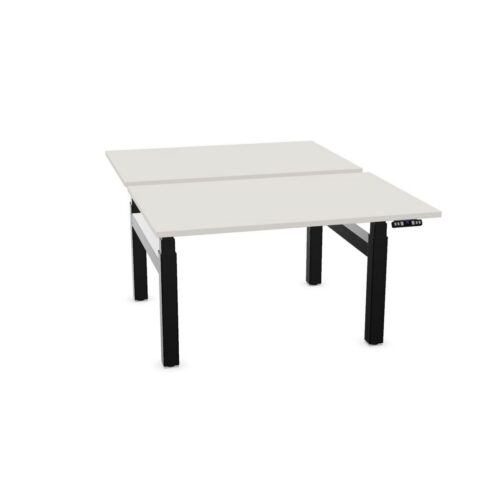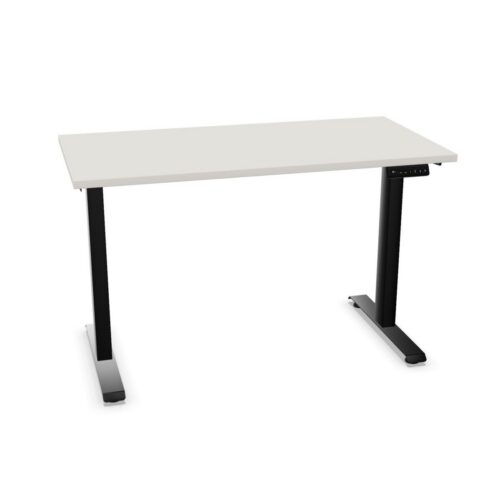


White office furniture surfaces offer a clean, adaptable finish for workstations, storage and shared workplace settings. On this page, White refers to the visible work surface or outer face of the item, such as a desktop, tabletop, cabinet front or storage unit exterior; it does not describe the colour of the frame, legs or base.
White can sit comfortably within many office schemes, from compact focused work areas to larger open-plan floors. It provides a neutral starting point for organisations that need furniture which can work alongside existing seating, flooring, screens and branded elements, while keeping the visual emphasis on the workspace rather than its finishes.
What does surface colour White mean?
Surface colour identifies the finish applied to the main usable or visible panel of a product. For desks and tables, this will usually be the top that supports everyday work. For cupboards, pedestals and other storage, it may be the door, drawer front, side panel or outer carcass visible in the room.
The base can be a different colour or material. A white desk surface, for example, may be paired with black, silver, white or another leg and frame finish depending on the individual product. Checking product imagery and specifications remains important where the coordination of bases, handles and edge details matters to a project.
Why choose white surfaces for an office?
White is commonly specified because it is a straightforward, versatile finish that can support a light and orderly workplace appearance. It can make a practical choice where layouts, departments or furnishing phases may change over time, as neutral surfaces are generally easier to combine with a broad range of other finishes.
- Creates a consistent finish across desks, meeting tables and storage.
- Works with both restrained neutral palettes and more distinctive accent colours.
- Provides a clear visual contrast with many dark accessories, monitors and task seating.
- Can help maintain a bright-looking setting when paired with suitable lighting and surrounding finishes.
- Allows coloured screens, seating upholstery or signage to carry more of the organisation’s visual identity.
The right result depends on the wider environment. Natural light, wall colours, flooring, screen finishes and the density of the furniture layout all affect how a white surface appears in use.
Furniture available with white work surfaces
This filter can include a wide range of workplace furniture where the principal surface is white. Desks are often the starting point, whether for individual work positions, benching arrangements or management spaces. White tops can also appear on meeting tables, collaborative tables and occasional tables used in breakout or reception areas.
Storage may be included where its visible outer finish is white, alongside products such as drawer units, cabinets, credenzas and shelving with relevant panels. The selection may also cover reception furniture, work counters and other workplace pieces with a white external surface. Individual products vary in their construction, configuration and associated components, so the attribute should be used as one part of the procurement brief rather than as a complete specification.
Where white office furniture is commonly used
White surfaces are suitable for many types of professional environment. In open-plan offices, they can help create a repeatable desk standard across teams while allowing different bases, dividing screens or chairs to distinguish neighbourhoods. In meeting rooms, a white table surface can provide a neutral setting for notebooks, display equipment and presentations.
They are also regularly considered for client-facing areas, training rooms, project spaces and home-working setups. In shared offices, a uniform surface colour can simplify visual coordination where furniture is introduced gradually or where several product types need to sit together.
- Individual work areas: desks, sit-stand workstations and compact work tables.
- Team settings: bench desks, shared tables and collaborative work points.
- Meeting spaces: conference tables, boardroom furniture and informal discussion tables.
- Storage zones: cabinets and drawer units chosen to align with desk finishes.
- Reception and support areas: counters, occasional tables and practical storage pieces.
How to choose a white surface finish
Begin with the intended use of the furniture. A desk used for intensive individual work may need a different size, cable-management approach and supporting storage arrangement from a table intended for short meetings. For larger schemes, consider whether a single white finish should run throughout the office or whether it will be balanced by wood-effect, darker or coloured surfaces elsewhere.
It is also useful to review the relationship between the surface and the base. This archive only groups products by their white visible surface, so frame colour should be selected separately to achieve the intended overall look. Consider edge profiles, handle finishes and screen fabrics where these elements will be visible across a repeated furniture run.
Questions to consider during planning
- Which surface is visible from the main approach to the room?
- Will desks, tables and storage need to share the same white tone?
- What base finish will work with the selected surface and surrounding fittings?
- How will monitor arms, cable trays, desk accessories and personal equipment sit on the worktop?
- Does the layout need fixed positions, flexible touchdown spaces or a mixture of both?
- Will the finish complement the room’s lighting, flooring and wall treatments?
Coordinating white surfaces across a workplace
Using white as a recurring surface finish can make it easier to create continuity between different zones without making every item identical. A workplace might use white desks in focused work areas, white meeting tables in enclosed rooms and complementary white-fronted storage in shared zones. Variation can then be introduced through bases, seating, acoustic elements or accessories where appropriate.
For phased furnishing projects, recording the product range, top finish and associated base colour can help maintain consistency when additional furniture is required. It also helps to account for the room dimensions, circulation routes and the placement of storage before selecting individual items. Our office space planning guide provides useful context for considering furniture within the wider floor plan.
Related Myntwork furniture ranges
White surface finishes are one way to narrow a broad specification, alongside product type, dimensions, storage requirements and other visual attributes. Browse the wider office furniture collection to compare furniture for work, meeting, storage and shared spaces. For further guidance on balancing finish, function and layout requirements, see our resource on choosing office furniture.