


Yellow desk and table surfaces appear mainly on conference and collaboration tables, with some desks and bench workstations. A yellow top can make a shared discussion point visible across a floor, but its geometry and equipment plan determine whether it works. The surface color is separate from the supporting frame and chairs. Start with how people will meet, what they bring to the table and how often the room changes layout.
Choose a meeting form for the group
Conference tables can be rectangular, round or another shape, each changing how participants face one another. Yellow desk and table surfaces may be offered on several formats. Choose the form for the usual group size and whether the room has a presentation direction. Draw occupied chairs and leave enough space for people to enter and leave without disturbing everyone else.
A meeting table should have room for notes, devices and any shared materials after people sit down. If laptops are common, check the selected table’s power provision. Trace cables from the building and keep loose lengths away from chair paths. The colored top should not be the only feature considered.
Make flexible tables truly movable
A folding meeting table can help a room change use. Check the selected product’s folding method, weight and storage position. Plan the route through doors and around other furniture. Yellow desk and table surfaces on movable pieces may be more visible during setup and storage than on a fixed table, so view both conditions.
The finish also experiences handling when a table is moved. Review edge and surface care for the selected material. A room that changes daily needs a clear routine for setting up, clearing and storing tables. Without that, the flexible form may create clutter rather than useful adaptability.
Keep individual desks practical
A yellow desk top can mark an individual work position, but the user still needs a calm, clear area for screen and documents. Place a sample at desk height under normal task lighting. Check whether the color affects the view of printed materials or creates reflections. Yellow desk and table surfaces should be selected with enough room for keyboard, monitor and everyday tools.
Some relevant desks have angled legs or other distinctive frames. Check legroom and cable access independently of the top finish. If a desk is height-adjustable, confirm that equipment and cables move safely through the selected range.
Consider a bench at room scale
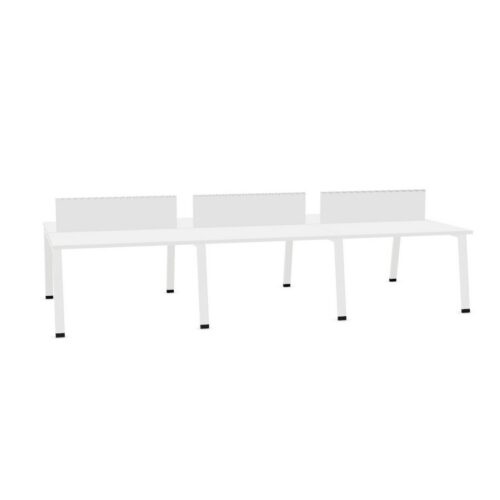
A bench repeats the yellow top across several users and can make a team area easy to identify. It also creates a large field of color. Draw all screens, chairs and cable flaps to see how much of the top remains visible. Each user needs a defined work zone and accessible power.
Yellow desk and table surfaces may look different when several sections meet. Compare exact finishes and edge details in physical samples. Decide whether screens and frames should blend or provide contrast. A strong top color can be balanced by quieter surrounding storage or wall finishes.
Check material and light
Yellow can shift under warm and cool lighting. View the surface horizontally in the intended room rather than relying on a vertical swatch. Compare it with flooring and any wood-look finishes. A smooth top may reflect light differently from a textured one. Read the selected product’s material and care information.
Yellow desk and table surfaces in shared rooms may need frequent cleaning. Decide how spills, fingerprints and routine use will be handled according to the actual top construction. A color name does not establish maintenance needs. Keep a record of the finish chosen for future replacements.
Connect color to use
Use yellow where it helps identify a collaboration point or team area. A single colored table can be more effective than scattering the finish across unrelated surfaces. Review the complete floor from the entrance and from occupied seats. Check whether the table is still easy to reach and use when the room is busy.
Yellow desk and table surfaces can bring clarity to shared spaces when form and function lead. Select the top for its activity, verify material and equipment access, then test the finish in the room. The result should support conversation and work long after its color first catches the eye.




Alea

