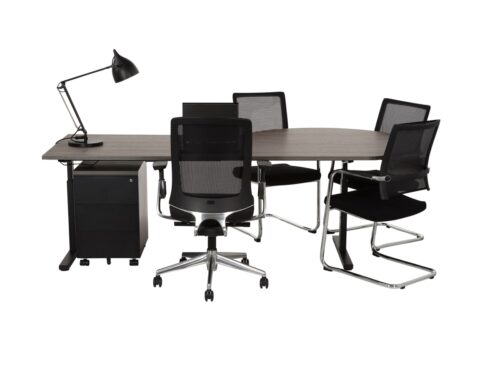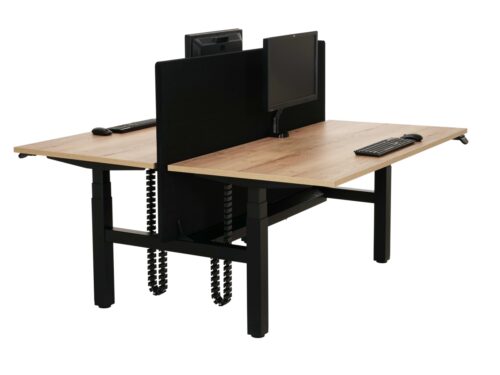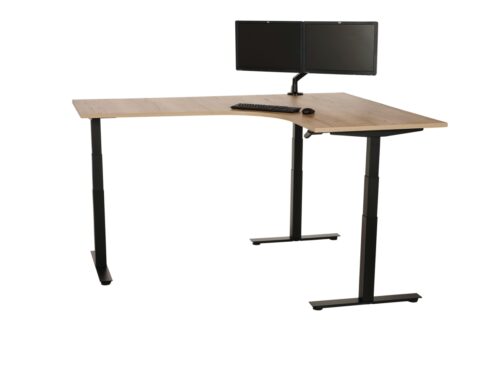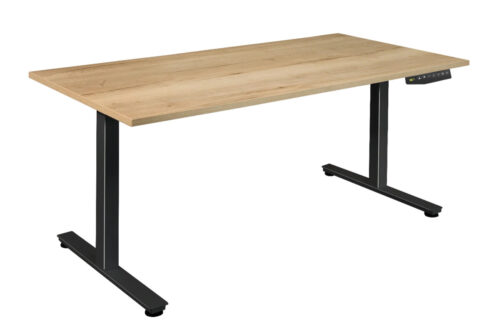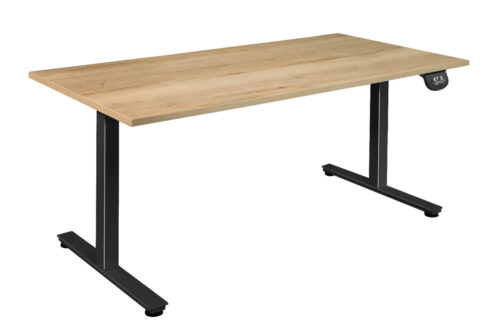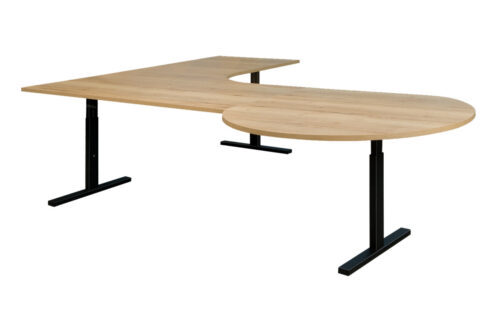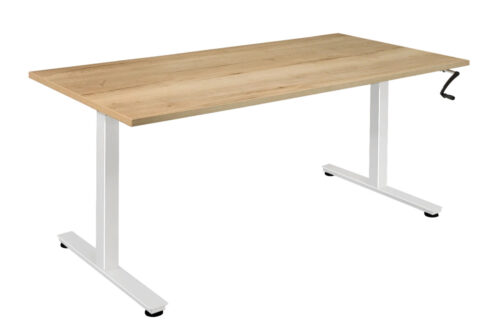


Melamine table top office furniture offers a practical, consistent surface option for workplace tables, desks and shared settings. In this filter, melamine refers specifically to the tabletop surface material; it does not describe the table base, frame, edge finish or the construction beneath the top.
Melamine-finished tops are widely specified for everyday office use because they are available across many sizes, shapes and furniture formats. When leasing furniture for a new workplace, relocation or changing team layout, the surface choice should be considered alongside the intended use, cleaning routine, visual scheme and likely level of day-to-day wear.
What is a melamine table top?
A melamine table top generally has a decorative, resin-treated surface bonded to a manufactured board substrate. The surface can be produced in a broad range of colours and patterns, including plain neutrals, darker tones and wood-effect finishes. Its appearance is designed to provide a uniform finish across multiple tables or workstations.
The term describes the visible working surface rather than the complete table. Products within this selection may differ in top thickness, board type, edge treatment, base design and dimensions. For that reason, individual product information remains important when comparing tables for a particular project.
Why melamine suits everyday workplace furniture
Office tables need to support routine tasks without making the working environment difficult to maintain. Melamine surfaces are commonly used where a straightforward, wipeable and visually coherent top is required. They can work well in projects that need several matching table types, from individual desks to larger meeting tables.
- A consistent surface finish can help create a coordinated look across different work areas.
- The material is commonly available in a useful choice of colours and wood-effect designs.
- It is suitable for routine desk work, meetings, training sessions and shared table use.
- A smooth surface can simplify normal cleaning between users or activities.
- It can be specified independently from the table’s leg style or base material.
Suitability will still depend on the way a table is used. A reception counter, a frequently moved training table and a large fixed boardroom table can all have different requirements, even where each has a melamine top.
Where melamine-topped tables are commonly used
Melamine is a familiar option throughout commercial interiors because it can support a broad mix of workplace functions. In open-plan settings, matching desk tops can bring order to a varied arrangement of bench desks, individual workstations and team tables. In enclosed rooms, the same or complementary finish may be used for meeting, project or touchdown tables.
It is also relevant in training rooms and multipurpose spaces, where furniture may be arranged in rows, clusters or larger group layouts. For communal areas, consider whether the selected table format, finish and base are appropriate for the anticipated traffic and cleaning regime. The surface is one part of that decision, alongside stability, access, seating clearances and room flow.
Furniture types available with melamine tops
This attribute can apply to a wide variety of furniture rather than one specific category. The available products may include:
- Office desks and workstations for focused individual work.
- Bench desk systems for teams and shared floorplates.
- Meeting and boardroom tables in round, rectangular, boat-shaped or modular formats.
- Training and conference tables for adaptable learning or event spaces.
- Poseur, breakout and café-height tables for informal collaboration.
- Side tables, console tables and occasional tables where a coordinated surface is wanted.
Not every melamine-topped product will offer every configuration or finish. Filter results and product specifications should be used to confirm the dimensions, shape and supporting structure that suit the intended setting.
Choosing a melamine finish for your scheme
Start with the practical role of the table. A large shared desk benefits from a finish that sits comfortably with screens, task seating and storage, while a meeting table may need to complement presentation furniture or the room’s joinery. Lighter surfaces can contribute to an open visual feel, whereas darker or wood-effect finishes may provide contrast and a more grounded appearance.
It is also useful to distinguish tabletop material from colour filters elsewhere in a catalogue. A melamine top may be offered in several colours or patterns, and the table base can have a separate finish altogether. If a project requires black legs, a particular wood-effect top or upholstery to coordinate with nearby seating, check each relevant attribute rather than assuming they are linked.
Questions to consider before specifying
- What tasks will take place at the table: screen work, meetings, training, dining or occasional use?
- Which top shape and size fit the available room, circulation routes and number of users?
- Will the finish coordinate with existing desks, storage, flooring or meeting chairs?
- How visible will everyday marks be in the chosen colour or pattern?
- Does the product provide the cable management, power access or modularity needed for the space?
- Are edge details and base finishes appropriate for the overall specification?
Care and longer-term use
Routine care helps preserve the appearance of a workplace table regardless of its surface material. For melamine tops, follow the care guidance provided for the specific product and use a cleaning approach appropriate to the workplace. Prompt attention to spills, sensible use of writing or cutting implements, and avoiding unsuitable cleaning materials can all support a well-kept shared surface.
For leased furniture, planning the location and use of tables from the outset can also help maintain them over time. Consider placing furniture so that it has adequate clearance, using suitable accessories where needed and ensuring staff understand any practical care requirements. Myntwork’s guide on how to extend the lifespan of office furniture provides broader considerations for keeping workplace assets in use for longer.
Planning a coordinated workplace
A tabletop finish is most effective when selected as part of the wider furniture plan. Compare melamine-topped tables with the desk systems, seating, storage and acoustic elements needed for each zone. This makes it easier to balance visual continuity with the different needs of quiet work, team collaboration, formal meetings and informal breaks.
When reviewing options, use the product details to compare dimensions and configurations, then consider how each item contributes to the whole layout. Guidance on choosing office furniture can help structure those decisions. For a wider view of available workplace categories, see the Myntwork office furniture collection.