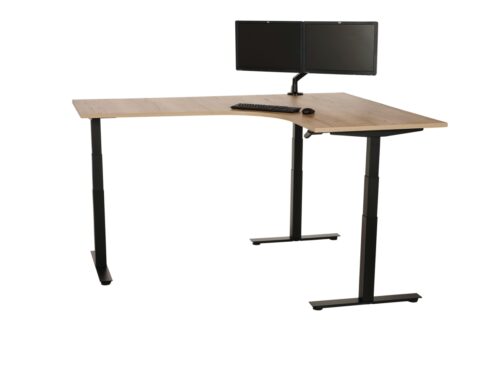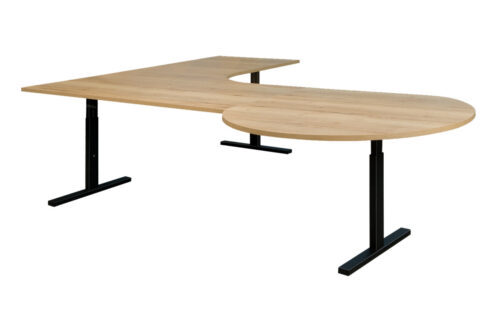


Corner leaf table tops describe a plan shape that incorporates a leaf or extended section at a corner of the main work surface. In office furniture, this format is commonly used where a rectangular table or desk needs an additional usable area without becoming a much larger, uniformly rectangular footprint.
The exact outline, orientation and dimensions vary by product. A corner leaf may create space for an extra user position, support equipment or paperwork, or help a table follow the layout of a room. When comparing options, it is important to assess the full top size and the position of the leaf rather than relying on the shape name alone.
What does corner leaf mean for a table top?
Table top shape refers to the view of the surface from above, not the material, colour, edge finish or base type. A corner leaf top has a main surface with a distinct section extending from one corner or side area. This can give the top a more purposeful layout than a standard rectangle while retaining straightforward working space along its longer edges.
Depending on the design, the added leaf can be useful for bringing people together around a meeting table, forming a return on an individual workstation, or making better use of a corner in a shared office. The product drawings and dimensions should always be checked to establish the precise configuration.
Why choose a corner leaf configuration?
A shaped top can help an organisation balance available floor area with the way a surface will be used. Rather than selecting a larger table in every direction, a corner leaf can place additional surface area where it is most useful. This is particularly relevant in rooms with doors, circulation routes, storage walls or existing furniture to work around.
- It can provide an additional section for laptops, documents, screens or meeting materials.
- It may help a workstation accommodate a monitor set-up while preserving a clearer central work area.
- It can create a more inclusive meeting layout than a narrow rectangular table in some spaces.
- It may allow the top to sit more naturally against a wall or within a corner-led room layout.
The benefit is dependent on orientation, dimensions and the selected base. A shaped top should be planned as part of the whole furniture layout, including chair movement and access around the perimeter.
Common workplace applications
Corner leaf tops are found in a range of practical office settings. On desks, the extended section can act as a return for task work, paperwork or peripheral equipment. In team and meeting spaces, it can introduce a designated area for a host, presentation materials or additional participants.
They can also suit project rooms, management offices and touchdown areas where people need a generous working surface but the room does not suit a large boardroom table. For larger collaborative settings, compare the available conference tables alongside the room plan and intended number of users.
Desk, meeting and conference table considerations
The same top shape has different implications depending on the furniture type. At an individual desk, the priority is usually reach: regularly used equipment should remain within a comfortable working zone, with the leaf positioned to support the user’s main tasks. Consider whether a left- or right-hand arrangement is required if the product is offered in more than one orientation.
For a meeting or conference table, consider how chairs will sit around the shape. A corner leaf can affect both the number of practical seating positions and the clearance required behind each chair. It may be helpful to mark out the proposed footprint, including chairs pulled back from the table, before finalising a layout.
- For desks, identify the principal seated position and where screens, docking equipment and cable access will be located.
- For meeting tables, allow for circulation, access to doors and sufficient space between occupied chairs and walls.
- For shared spaces, decide whether the leaf is intended for a user, a display, refreshments or working materials.
- Check whether the chosen frame or leg arrangement leaves comfortable knee and leg room around the extended section.
How to select the right size and orientation
Start with the room dimensions and the function of the furniture. Measure the usable area rather than simply the overall room size, taking account of radiators, power points, doors, storage and circulation. Then review the complete width and depth of the top, including the corner leaf, against the proposed position.
Orientation matters as much as size. A leaf that projects into a clear corner can make efficient use of the room; one that projects into a route may make the space harder to use. Where a product has handed options, confirm the orientation from the perspective used in the product information or drawing.
Questions to consider before specifying
- Who will use the surface, and how many people need to work or meet there at one time?
- Which side needs the additional area, based on the room layout and working habits?
- What equipment will sit on the top, and where are power and data connections located?
- Will the chosen shape leave enough clearance for chairs, visitors and everyday movement?
- Does the base design suit the required seating positions and cable-management needs?
Pairing the top with an appropriate base
The tabletop shape is only one part of the specification. Base placement, leg style and frame dimensions influence stability, access and the appearance of the finished table. An extended corner section may need particular consideration when choosing the supporting structure, especially where people will sit or work close to the leaf.
Also consider the relationship between the top and surrounding furniture. A corner leaf desk can complement storage placed along a wall, while a meeting table may need clear sightlines to a screen or presentation point. Reviewing the product’s stated dimensions and configuration will help ensure that the table performs as intended in the finished space.
Planning a flexible office layout
Corner leaf table tops can be a useful choice where a standard shape does not quite fit the room or working pattern. Their added section can make a compact office more functional, but it should not be treated as interchangeable with a rectangular, radial or fully L-shaped top. Compare the actual footprint and usable surface area for each option.
For individual and shared workspaces, explore Myntwork’s office desks. For rooms intended for group discussion and formal collaboration, the conference tables category provides a useful starting point for comparing table formats and layouts.