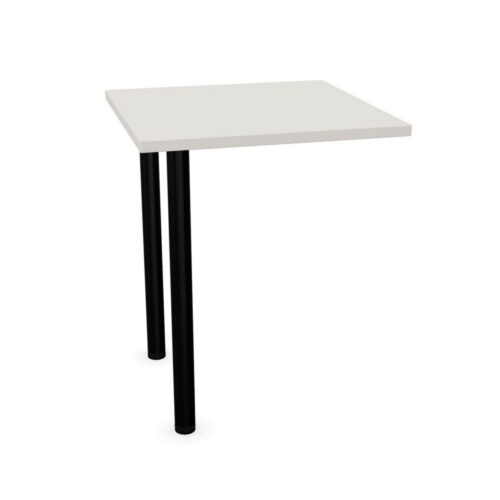


Round leaf table tops combine a predominantly circular working surface with an extending or leaf-like section in the tabletop plan. On Myntwork, this attribute refers specifically to the shape seen from above; it does not describe the table base, finish, material or seating capacity.
This format can be a practical option where a fully round table would not make the most of the available footprint, but a hard-cornered rectangular top is not the preferred layout. The rounded section can support more natural face-to-face discussion, while the leaf section may help the table sit neatly alongside a wall, circulation route or neighbouring workstation.
What does round leaf mean for a tabletop?
A round leaf tabletop has a circular or rounded main form with a distinct leaf, extension or shaped segment incorporated into its outline. Exact proportions vary between products. Some tops may appear almost round with a subtle extension, whereas others have a more noticeable straight or shaped edge alongside the curved portion.
Because this is a plan-shape attribute, it should be considered separately from the table’s construction. A round leaf table may have a central pedestal, multiple legs or another support arrangement, depending on the individual product. It can also be supplied in different finishes and dimensions across a range.
Why choose a round leaf table shape?
The shape is often selected to balance collaboration, room planning and visual softness. Curved edges can make meeting areas feel less formal than conventional rectangular tables, while the leaf section can give a clearer orientation within the room.
- It can create a sociable layout for small meetings, catch-ups and project discussions.
- It may use an irregular or constrained floor area more effectively than a fully circular table.
- The shaped edge can help define the practical side of the table for screens, paperwork or shared equipment.
- Rounded edges can complement workplaces that use softer forms in seating, breakout furniture or reception areas.
- It offers an alternative where a standard round, square or rectangular top does not suit the intended layout.
The suitability of any individual model still depends on its dimensions, base position and the space required around it for chairs and access. The tabletop outline alone does not determine how many people can use it comfortably.
Where round leaf tables can work well
Round leaf tables are relevant in spaces that need an approachable meeting point without relying on a conventional boardroom arrangement. They can be used as a focal table in an open-plan setting or as a compact shared surface in a dedicated room.
Common applications include:
- Informal meeting spaces for brief team conversations.
- Project areas where colleagues gather around documents or laptops.
- Small conference and collaboration rooms with an asymmetrical floor plan.
- Touchdown areas within larger offices.
- Manager offices or consultation rooms requiring a separate discussion table.
- Breakout spaces that also need to support occasional work or meetings.
In a circulation-sensitive setting, consider how the leaf portion will face. Positioning the shaped or straighter side towards a wall or adjacent furniture can sometimes leave the rounded edge more open to users, although the right arrangement will depend on the particular table and room.
Round leaf tables for meetings and shared work
The curved side of a round leaf top can help participants sit in a less linear arrangement, which may suit collaborative conversations. The additional leaf area can provide a useful surface for a laptop, notepad, drinks or shared materials without changing the character of the table into a full rectangular meeting table.
For more formal discussions, check whether the table gives every user appropriate access to the centre of the surface and to any required power or data provision. If presentation equipment, monitor arms or cable management are needed, these requirements should be reviewed against the specification of the selected product rather than assumed from its shape.
For larger rooms or meetings involving more participants, browse Myntwork’s conference tables alongside round leaf options. A larger rectangular, boat-shaped or circular design may offer a more suitable surface and seating arrangement for the intended use.
Choosing the right dimensions and layout
Start with the usable floor area, not just the nominal room size. Allow space for chairs to move back, for people to pass behind seated users and for doors, storage and other furniture. A round leaf table can make a room feel easier to navigate than a table with four pronounced corners, but it still requires a sensible clearance zone.
Questions to consider
- Which side of the tabletop should face the wall, entrance or main circulation route?
- How many people need to use the table at one time, and for what type of work?
- Will users primarily work on laptops, review paper documents or hold short conversations?
- Does the base allow chairs to be positioned as needed around the rounded and leaf sections?
- Is the selected top size proportionate to the room and to surrounding furniture?
- Do finish, edge detail and base style coordinate with the wider workplace scheme?
It is also worth considering whether the table needs to operate as a dedicated meeting surface or as part of a mixed-use workspace. A compact round leaf model may suit occasional collaboration, while a larger shared table may be better placed in a project zone or meeting room.
Tabletops, bases and finishes
Tabletop shape is only one part of the specification. Review the product details for the top finish, edging, support structure and any available dimensions. The location of a central or offset base can influence leg room and chair placement, particularly where the leaf portion changes the usable perimeter of the table.
Where visual consistency is important, compare the chosen model with adjacent desk and storage finishes. In offices with multiple work settings, using related tones and materials can help meeting furniture feel integrated without making every table identical.
Planning round leaf tables with office desks
A round leaf table can sit alongside individual workstations as a nearby place for quick conversations, one-to-one meetings or shared review work. Keep enough separation between the table and desk positions so that both areas remain usable when occupied. Consider sightlines, acoustic needs and the path people take through the space.
For workstations and individual task settings, view Myntwork’s range of office desks. For rooms intended primarily for group discussions, the conference table range provides further shapes and sizes to compare with round leaf table tops.