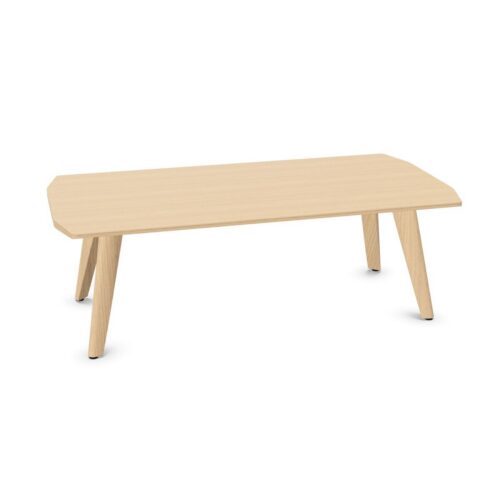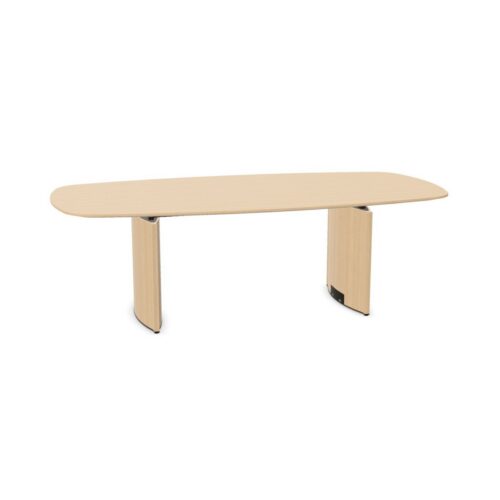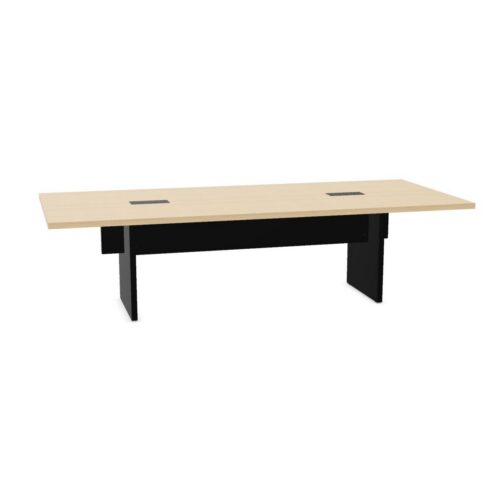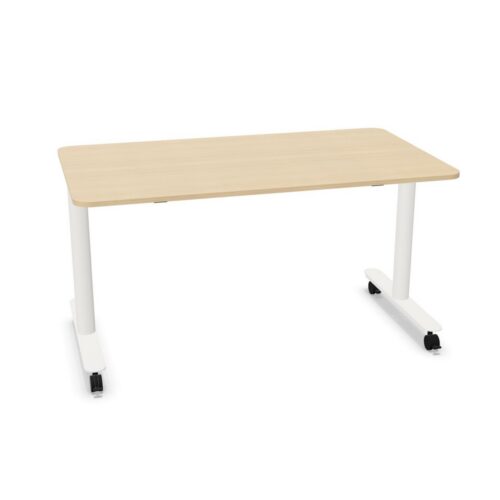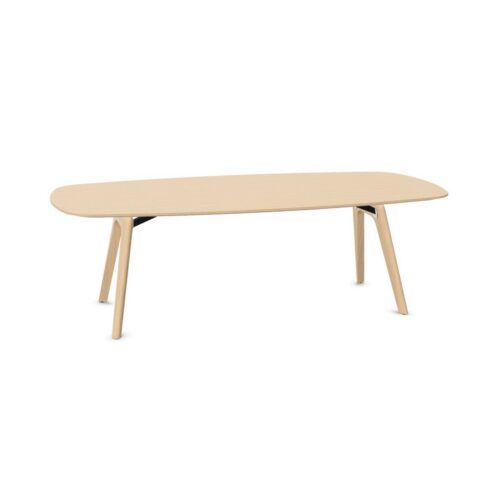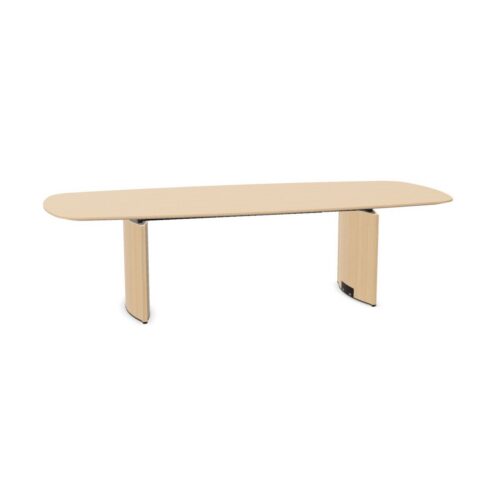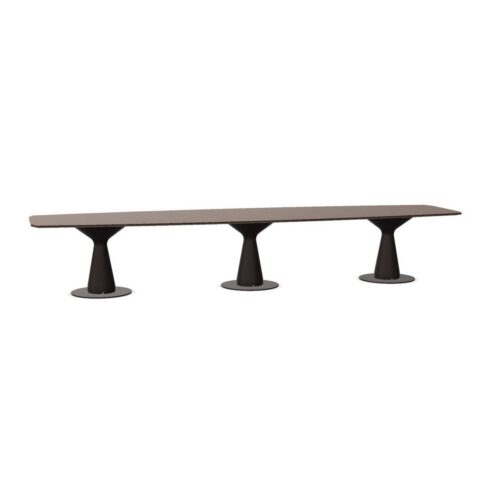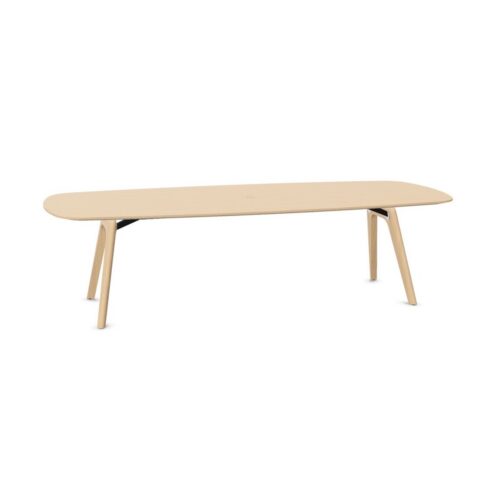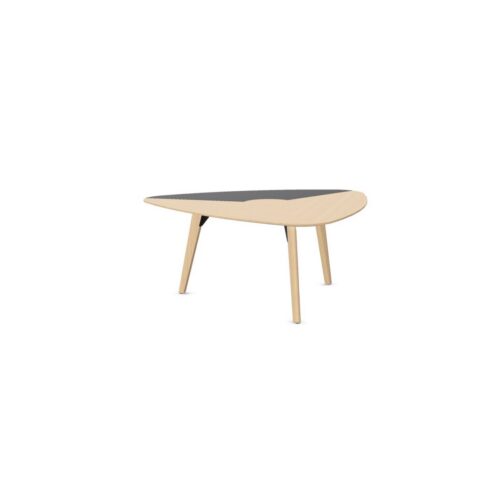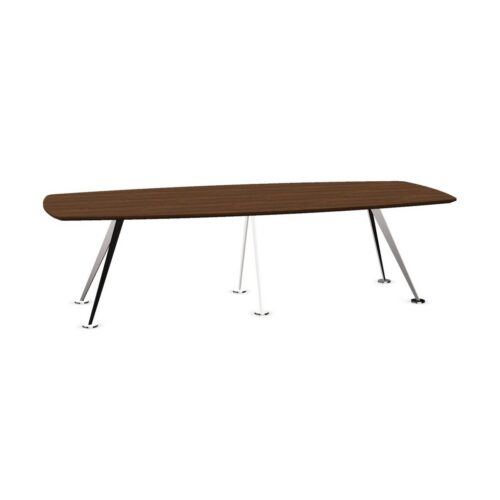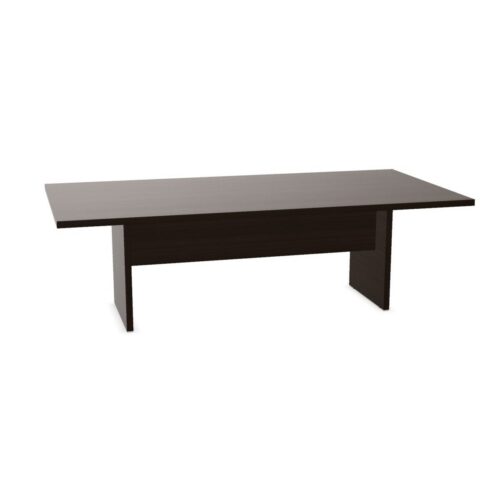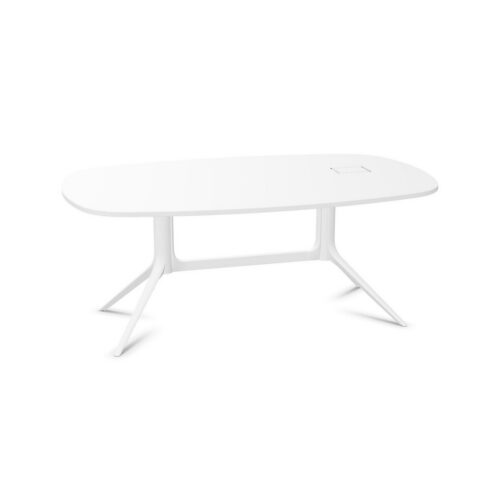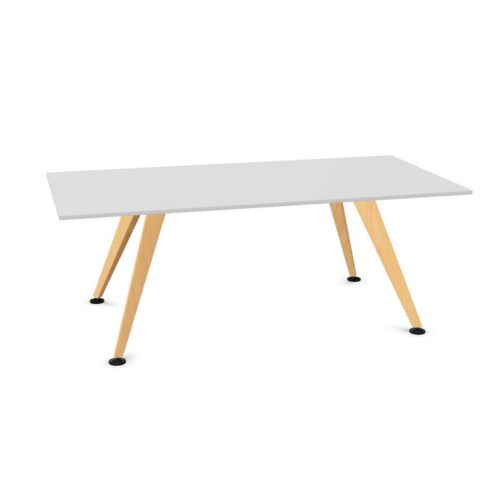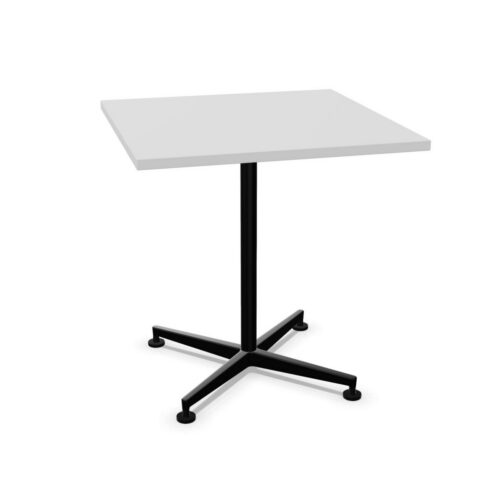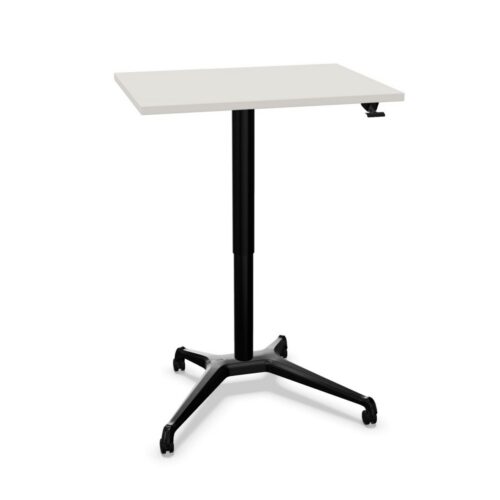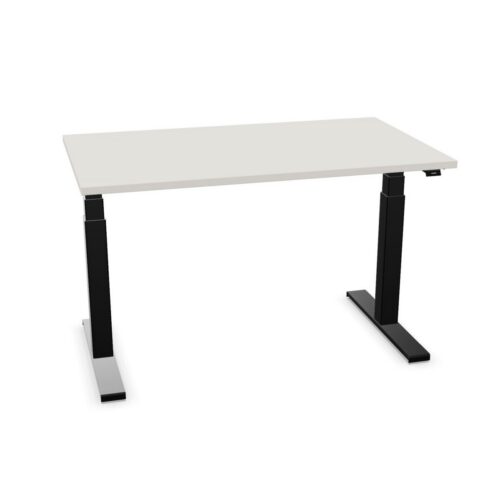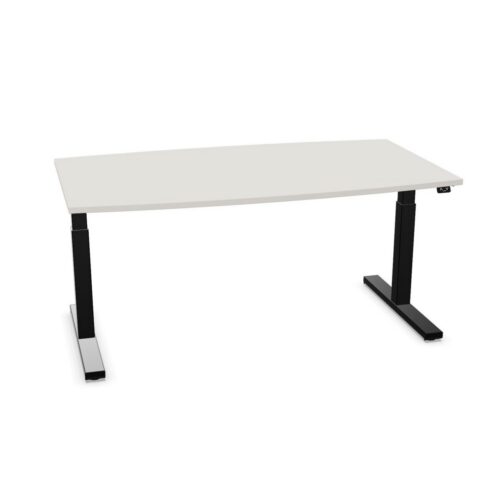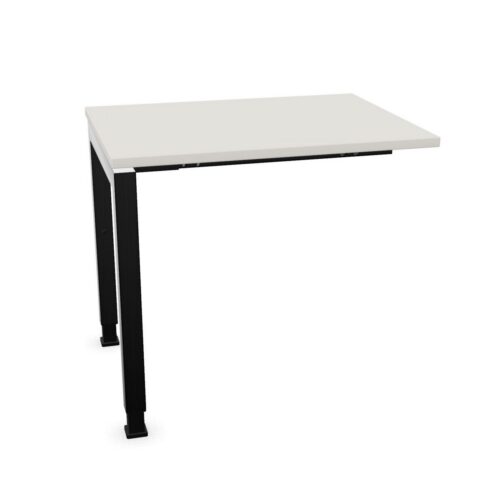


Rounded both sides table tops have a plan shape that softens the table at each end, rather than finishing with two square or sharply angled ends. This profile can make a table feel less formal while retaining a practical central work surface for meetings, individual work and shared tasks.
For workplace procurement, tabletop shape affects more than appearance. It influences how people approach the table, how readily chairs can be arranged around it, the circulation space needed nearby and how comfortably the piece sits within the wider layout. The products in this selection are identified by a tabletop rounded on both sides; dimensions, bases, finishes and intended uses vary by individual product.
What does rounded both sides mean?
This value describes the plan shape of the tabletop when viewed from above. A rounded-both-sides top is shaped with softened ends on both sides of its length. The exact radius, curve and overall outline can differ between designs, so it is useful to review product images and measurements when comparing options.
It is not a description of the table base, edge profile or material. A table may have a rounded-both-sides top with a pedestal, leg or other base configuration, depending on the model. Likewise, the top may be suitable for different workplace settings according to its size and construction.
Why tabletop shape matters in workplace planning
A table is often a focal point in a meeting room, project area or open-plan office. Selecting a shape that works with the room can help create a layout that is easier to use day to day. Rounded ends can offer a more fluid visual line than a rectangular top and may help the table integrate with spaces where routes around furniture need to remain clear.
- Softened ends can reduce the visual bulk of a longer table.
- The shape can support an approachable, collaborative feel in shared work areas.
- People seated at the ends may have a less angular position than at a square-ended table.
- The profile can complement curved partitions, rounded seating and other softer furniture forms.
- It offers a considered alternative where a conventional rectangular layout feels too rigid.
The available floor area still matters most. Allow for chairs being pulled out, people moving behind occupied seats and access to doors, screens, storage and presentation equipment.
Suitable settings for rounded-end tables
Tables with rounded ends can be considered across a range of commercial interiors. In meeting rooms, the shape provides a clear central surface for discussion, laptops and papers while giving the room a less severe visual character. In informal collaboration zones, it can suit team catch-ups and short project sessions.
They can also be useful in executive offices, training spaces and multipurpose rooms where furniture needs to look appropriate for both focused work and meetings. A compact top may be used as a small team table or desk, while a larger format may be planned as a boardroom or conference table. The product specification, not the tabletop shape alone, determines the most appropriate application.
Table types available with rounded both sides
This tabletop shape may appear on several office-furniture categories. Comparing the full construction and dimensions helps ensure that the chosen table suits the intended occupancy and use.
- Meeting tables: for one-to-one conversations, team meetings and formal discussions.
- Conference tables: for larger meeting rooms and spaces arranged around presentations or group decision-making.
- Office desks: where a softened desktop outline is preferred for individual workstations or private offices.
- Collaborative tables: for shared project work, touchdown activity and flexible office areas.
- Multipurpose tables: for rooms used for different activities throughout the working week.
Browse the wider selection of conference tables when planning dedicated meeting spaces, or compare office desks for individual and small-team work settings.
Choosing the right size and layout
Start with the room plan and the number of regular users. Measure the available footprint, then account for circulation around the table rather than selecting only according to the top dimensions. A table that fits physically but leaves insufficient room for chairs and movement can make a space difficult to use.
Consider the position of screens, power access, windows and doors. For meeting rooms, decide whether attendees need a clear view of a display or whether the table needs to support hybrid equipment, paperwork or shared devices. If several tables are being specified for a larger workplace, a consistent shape can provide visual continuity, while different sizes can respond to each room.
Base design, finishes and practical details
Once the top shape has been selected, assess the rest of the table as a complete specification. Base placement affects legroom and chair positioning, especially near the rounded ends. A central pedestal base can provide a different seating arrangement from perimeter legs, while the base footprint should work with the flooring and room layout.
Finish selection should be coordinated with adjacent desks, storage, chairs and interior surfaces. Consider the practical demands of the setting as well: meeting tables may need to accommodate frequent cleaning, technology use or repeated movement of chairs. Check individual product details for the available finish, edge, base and size options rather than assuming these are shared across all rounded-both-sides models.
Questions to consider before specifying
Planning checklist
- How many people need to use the table at one time?
- What clearance is required around the top for seating and circulation?
- Will users need power, data or presentation equipment at the table?
- Which base arrangement gives suitable legroom for the intended seating positions?
- Does the table need to coordinate with existing workstations or meeting-room furniture?
- Is the rounded-end shape appropriate for the room’s routes, doors and fixed features?
Rounded both sides is a useful tabletop option where a softer outline is wanted without losing the usable length of a conventional workplace table. Review the individual dimensions and construction alongside the broader ranges of conference tables and office desks to identify furniture suited to the planned space.