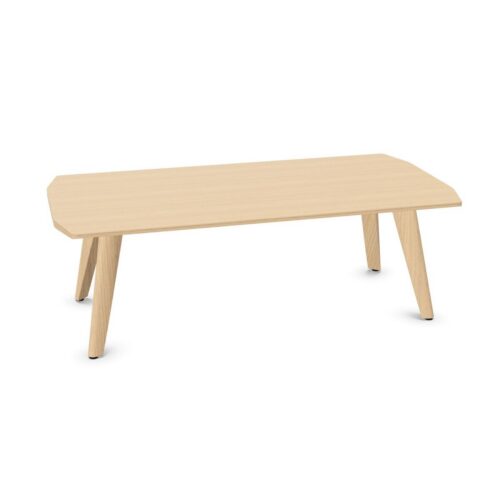
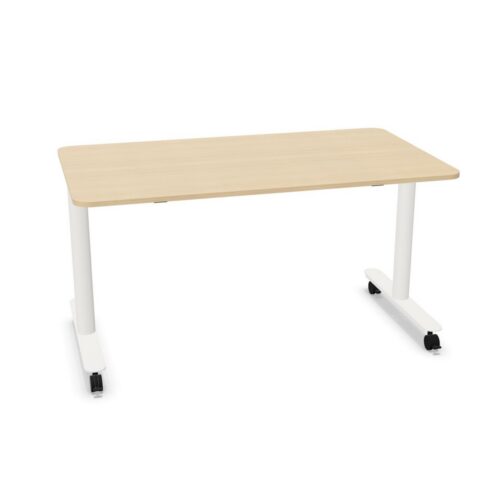
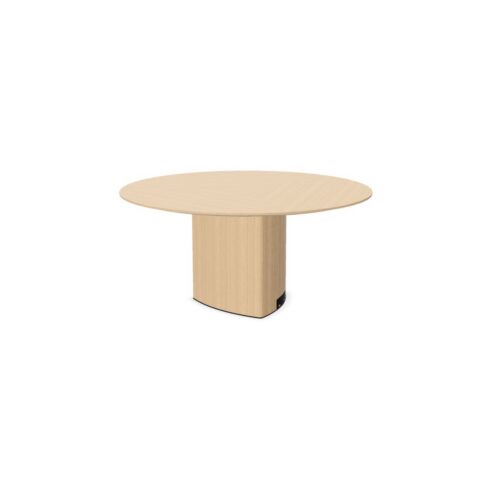
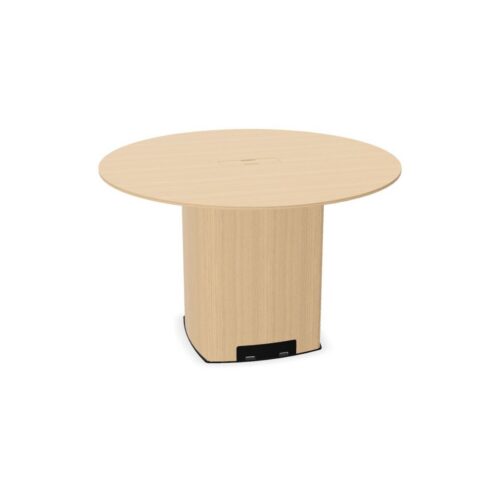
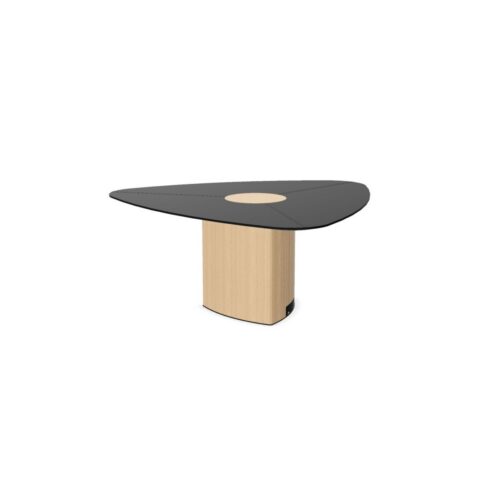
Triangular office table tops use a three-sided or triangular-inspired plan form on selected meeting and occasional tables. Check the precise curves and angles of the selected top, since rounded triangular forms can differ considerably between designs and configurations. The shape can create distinct sides for conversation or fit into a modular arrangement. Check seating, support and room access before making it the center of a space.
Understand the three-sided layout
A triangular form can give each edge a clear role. People might sit along separate sides for a small discussion, or several shaped tables might combine for a larger group. Inspect the product drawing to see whether the corners are sharp, softened or rounded and how much straight working edge is available.
Triangular office table tops may not be identical across furniture families. Some examples are explicitly triangular, while others use a related shaped outline. Confirm the exact configuration and where its base sits before deciding how participants will gather around it.
Place chairs at usable edges
Triangular office table tops can make one side feel more generous than another. Set the intended chairs at their full widths and place typical notebooks or laptops on the top. Check elbow space and reach, especially near corners where adjacent users may crowd one another.
A central base may keep the edges open, while separate legs can occupy positions near the corners. A table that looks equal from above may feel uneven once people sit down, because one support meets a preferred foot position. Look at foot and knee clearance at every planned seat. The number of apparent sides does not establish the number of comfortable places.
Try modular groupings
Shaped tables can sometimes be grouped into a larger working area. If this is the intent, confirm that the selected products are designed to meet and how their tops align. A small gap or seam may be acceptable for discussion but inconvenient for writing across joined surfaces.
Triangular office table tops used separately may be rotated to change the conversation pattern. Test each planned orientation in the room. One point of the shape may open a route in one arrangement and project into circulation in another.
Use the surface for real work
A table shape should not force laptops, documents or shared samples into an awkward cluster. Place those items on a plan and identify where power or display connections would go. If a microphone or speaker sits near the center, check reach and sightlines from each side.
On an occasional table, the surface may support drinks or reading material rather than computer work. The same outline can serve that lighter use at a different height. Compare the exact piece and its neighbouring seats rather than assuming every Trigoon top is a conference table.
Fit the shape into the room
Draw chairs pulled back and trace the routes around all points of the top. A triangular-looking piece can leave useful open floor on one side while creating a tight turn near another. Check nearby doors, storage and screens in the occupied layout.
Place the table so people can approach the sides they will use. A point pushed into a room corner may seem space-efficient but leave a participant against a wall. Test the route to each chair and the view toward colleagues or a display. If the shape is used near lounge seating, check the distance from each seat to the usable part of the table.
Review the exact construction
The finish, edge profile and base are separate decisions from the shape label. Inspect the chosen material around corners and curves, where seams or grain may be visible. Check cleaning guidance and the compatibility of any cable fitting.
Choose Triangular office table tops when their three-sided character supports a specific meeting or lounge arrangement. Confirm the actual outline, seating and support geometry, then place the piece where people can use every intended side.