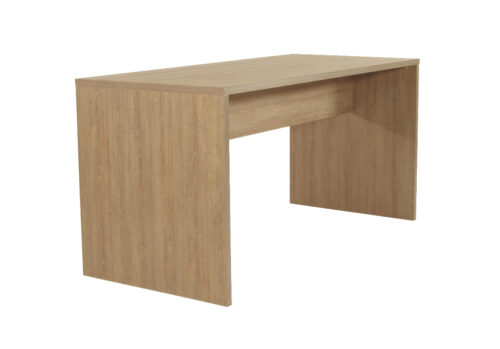
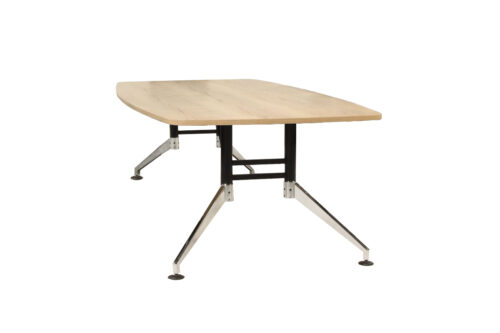
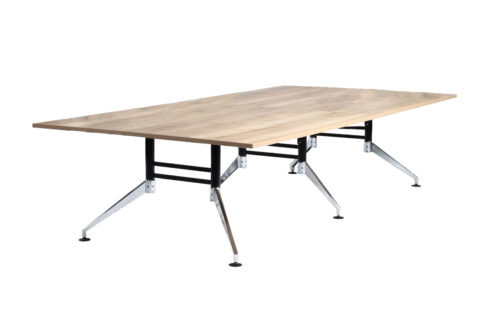
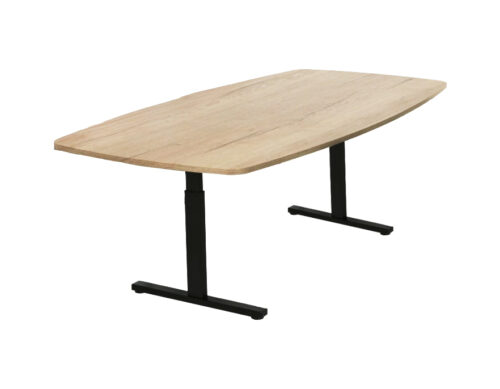
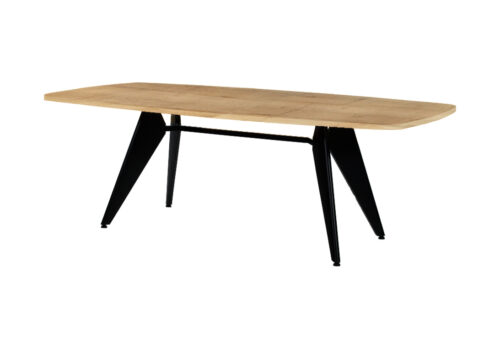
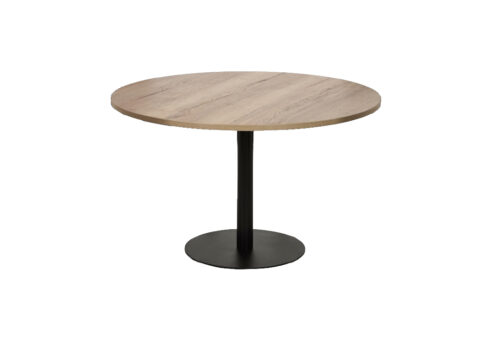
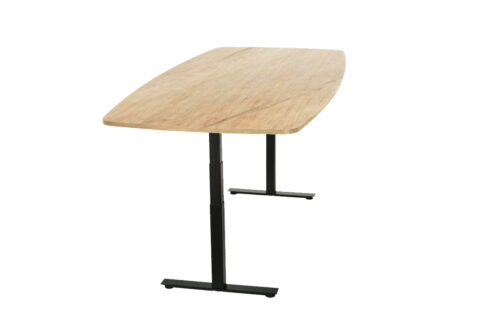
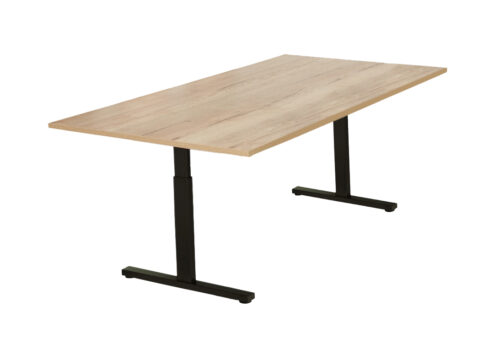
Office meeting tables create a shared surface for discussion, presentations and collaborative work. The selection includes round tables, larger conference forms, bar-height pieces and adjustable tables, so the label describes use rather than one fixed geometry. Choose a table by the meetings it will host and the room around it. Seating, visibility, equipment and circulation should be considered together.
Define the meeting routine
A short team check-in may need little more than a clear surface and a few seats. A planning session with laptops and printed material needs more working area and power access. A presentation may need every participant to see the same display. Decide which activities occur regularly before comparing tops.
Office meeting tables can be used in dedicated rooms or open collaboration areas. In an open space, consider how conversations relate to nearby desks. In a closed room, check the view toward the screen, whiteboard and door from each seat.
Choose the right height
Standard-height tables work with conventional meeting chairs. A bar-height table can support standing conversations or stools. An adjustable table may change position for different activities, but it needs clearance and practical controls. Check the selected model’s height and pair it with seating that belongs to that surface.
A high table that feels useful for a brief catch-up may be less suitable for a long session with laptops. A seated table may encourage longer work but occupy more room once chairs are pulled back. Let the expected meeting duration and posture guide the choice. Try the intended chairs or stools at the table rather than relying on furniture categories alone. Armrests, footrests and the table base can change how close people sit and whether they can work comfortably.
Use shape for conversation
Round tables can bring people toward a common center; rectangular ones can establish a presentation direction; curved or shaped tops can change the balance between those patterns. The exact base affects where chairs fit. Test the full group rather than judging only the top outline.
Office meeting tables may also be modular. If the room changes between small groups and one larger session, confirm how units connect, move and store. A table that can be rearranged should remain stable and useful in every planned form.
Plan technology early
Place screens, cameras, speakers and power points on the room plan before finalizing the table. A cable opening should be accessible from the positions that need it. Keep leads away from knees and walking routes. If a top changes height, give connections enough slack for its full movement.
A technology setup should remain serviceable. People may bring different devices from one meeting to the next. Check whether the selected table offers suitable access without covering the working surface in adapters and cables.
Leave room around the group
Draw occupied chairs, including their full outer widths, and then pull them back to stand. Check routes to the door, screen and storage. A table can fit comfortably when empty while making the meeting room cramped in use. Consider how participants arrive, where they place bags and whether someone can leave early without moving others. These ordinary movements often determine whether a room feels practical.
Office meeting tables in an open area need circulation on the sides people actually use. Consider whether colleagues can pass without interrupting the group. If the table sits beside a wall, check whether far-side seats remain accessible.
Review materials and care
A meeting surface encounters devices, papers, hands and sometimes drinks. Compare the chosen finish with lighting and the room’s cleaning routine. The edge and joints can matter as much as the central surface, especially where people write or rest their forearms.
Place the table, chairs and normal equipment together in a realistic layout. Sit at every type of position, including ends and corners. Choose office meeting tables that give the group clear views, useful surface space and practical movement throughout the room.