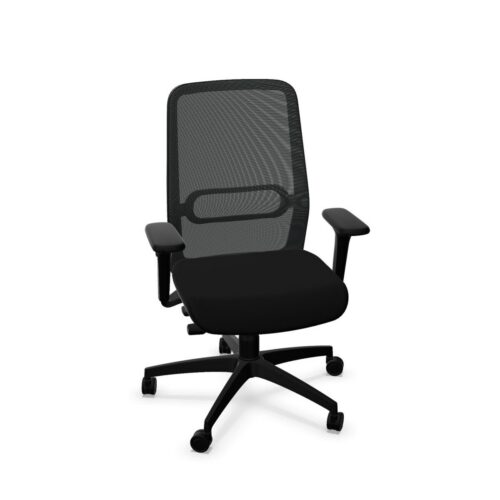
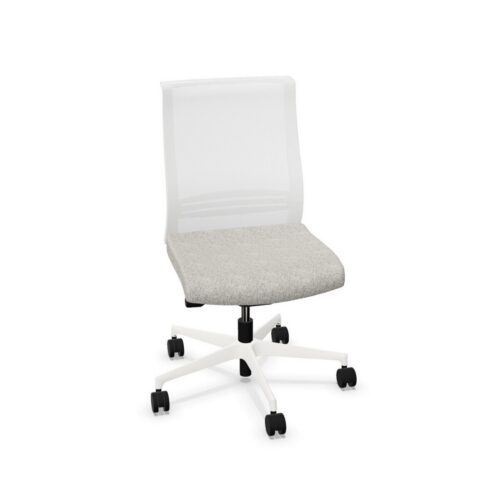
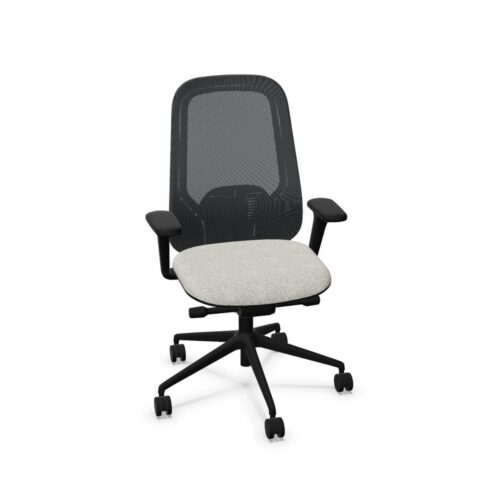
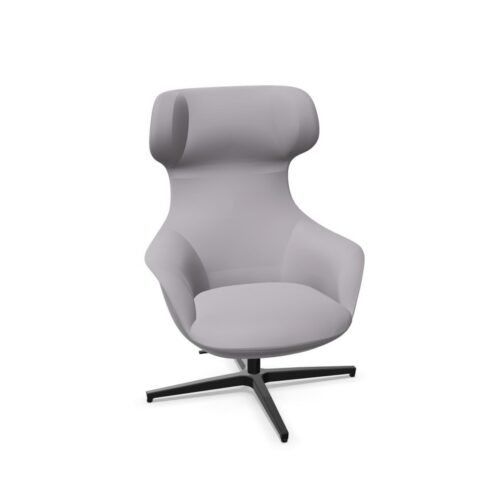
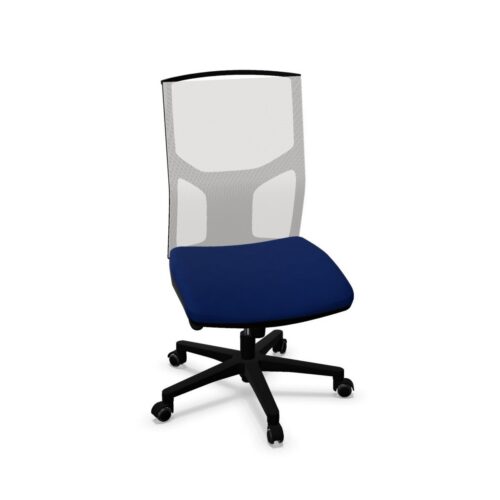
Office chairs with headrests add a supporting element above the main backrest. For some users, that extra point of contact is an important part of the chair they want at a workstation, particularly when their working pattern includes periods of leaning back. The useful comparison is how the headrest meets the person in the positions they actually use. Its presence alone does not describe the chair’s back support, adjustments or suitability for a particular desk.
Look at the headrest and backrest together
A headrest sits at the top of a larger seating arrangement. Its shape and position need to be considered alongside the height and profile of the backrest below it. Compare where the user’s shoulders sit, how they make contact with the back and whether the upper support meets them in a natural position.
Office chairs with headrests can differ in how that upper element is configured. Check whether it has its own adjustments, how those operate and what positions are available. A fixed headrest and an adjustable one should be assessed on their actual fit rather than treated as identical features. A practical trial is particularly useful when the headrest is a central reason for choosing the chair.
Consider focused work and leaning back
Desk work involves more than one position. A person may sit closer to the surface to type, turn toward a colleague or lean back while reading. Think about the headrest during those different activities. In some positions it may be used directly; in others the relationship between the seat, backrest and working surface will be more noticeable.
Choose the chair around that whole pattern of use. Review any recline controls and the way the user returns to an upright working position. The headrest should be considered as part of the chair’s operation, not as a reason to overlook the movement or support provided by the rest of the seating.
Individual workstations and shared seating
An assigned workstation allows office chairs with headrests to be set up around one person. The seat, backrest and head support can be assessed together at the relevant desk. Consider how the person reaches the keyboard and sees the screen once the chair is in a suitable working position.
Shared desks require a wider comparison. Different people may need different settings, so look at which adjustments are provided and how clearly they can be used. If the headrest position can be changed, users need to understand that adjustment as well as the chair’s other controls. Where it cannot be changed, review how the fixed position suits the intended users.
Choose the right chair beyond its upper profile
The headrest does not establish which seat, armrests or base a chair provides. Office chairs with headrests may also differ in their backrest construction, upholstery and movement mechanism. Identify the features required for the intended work, then compare the exact configuration against that list.
Armrests deserve attention in relation to the desk, and the seat should suit the user in the position where work takes place. Check the base and any castors against the floor and the way the chair will move around the workstation. These details keep the additional upper support connected to a complete seating choice.
Use the chair’s outline in the room plan
A headrest can add to the visible height of a chair, which affects its relationship with a desk, screen or nearby seating. Consider views across several workstations and the way the chair looks when the space is occupied. In a smaller room, review the whole chair profile alongside the other furniture rather than judging a single feature from a close-up image.
Choose office chairs with headrests by matching the upper support to the user, the movement to the activity and the complete chair to the workstation. That combination gives the headrest a clear purpose within the seating arrangement. It also makes it easier to distinguish a chair that simply has the feature from one whose overall configuration suits the person who will use it.