







Assess Views Around Conference Tables With Transparent Bases
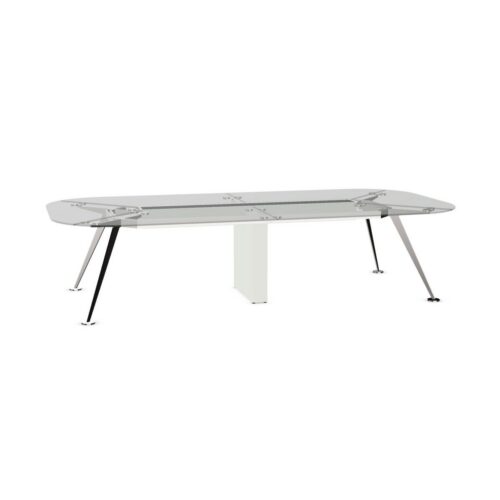
A transparent base should be considered in relation to what surrounds it. Look at the floor beneath the table, the furniture beyond it and the patterns created by chair positions. These elements can remain part of the visual field rather than being fully obscured by the base.
Review the arrangement from several ordinary viewpoints, including the entrance and the seats used most often. Transparency does not establish that a base disappears or looks identical from every angle. Use the room's actual lighting and background when assessing the appearance, without assuming a particular material or construction.
Plan Meeting Connections Without a Tray
Identify whether participants normally work with documents, disconnected devices or equipment that needs a wired connection. This distinction matters because the combination has no cable tray. Any lead that reaches the table needs a deliberate route from the room connection to the device, together with a plan for handling it afterward.
Pay attention to the sections visible near the base. A cable running behind a transparent area may remain noticeable from some positions. Keep the practical route clear of entrances and chair movement, then assess its appearance as part of the room arrangement rather than treating it as an afterthought.
