



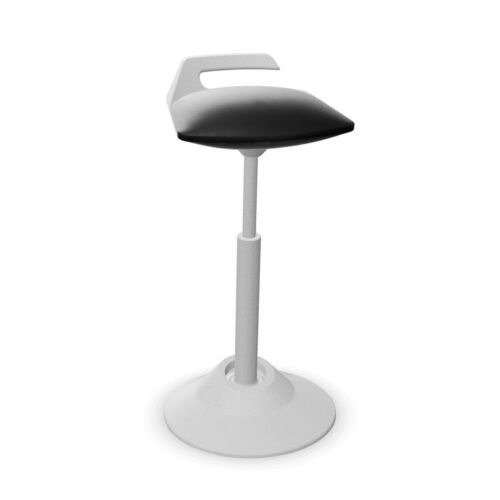


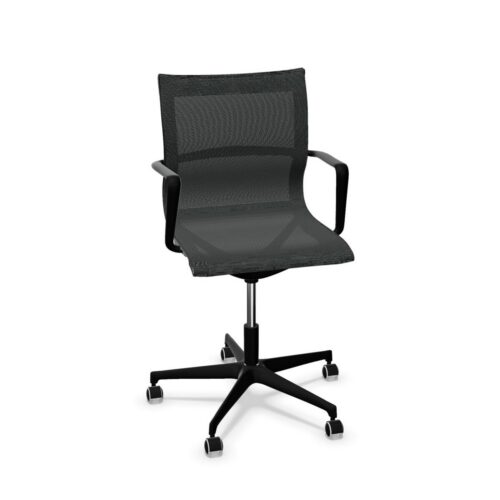




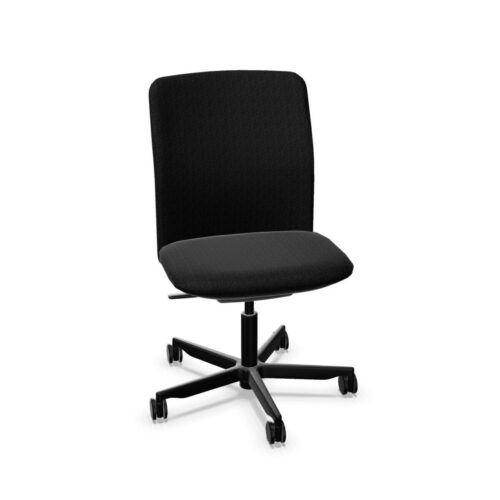
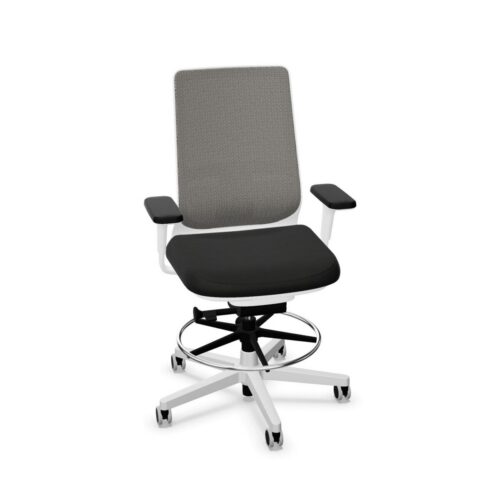
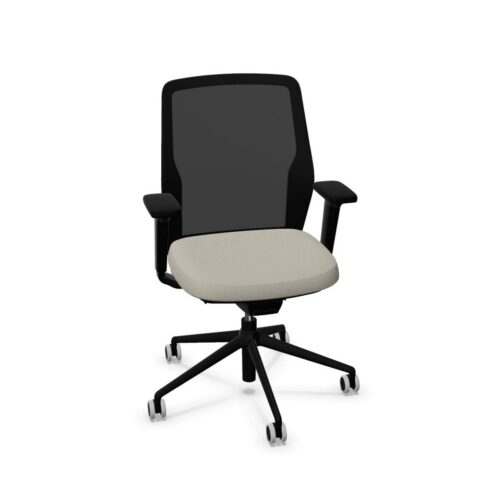
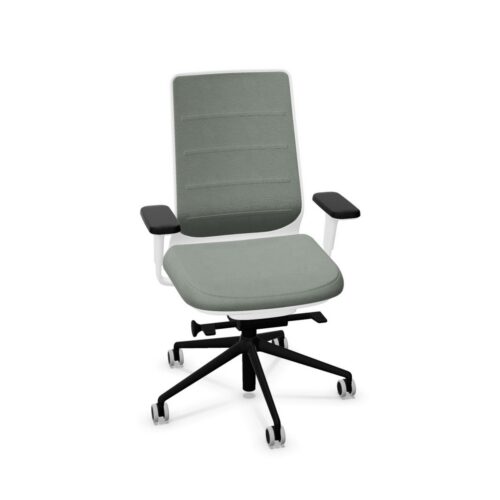


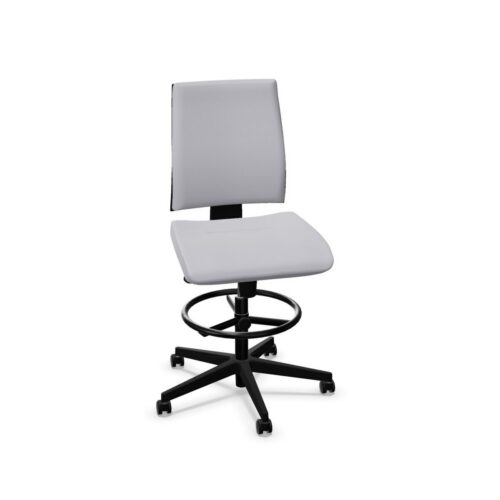
Follow The Route Between Tasks
Observe the routine the stool needs to support. Identify the surfaces used, the direction of approach and any repeated movement between equipment or colleagues. This establishes where compact seating is useful and where its position could interfere with a route through the workspace.
Assess the space occupied while someone is seated and while they enter or leave. Include the base and any armrests in that assessment. A compact seating role does not establish the dimensions of an individual stool. Check the actual footprint against the circulation plan, including the position in which the stool will remain when the user moves to another task.
Relate Seat Height To Surface Height
Stools can be considered for elevated working surfaces, but the required seating position must be checked. Compare the actual seat height with the bench or counter and the task performed there. Confirm whether the user can reach the working area appropriately and how their feet will be supported.
Where seat height is adjustable, establish the usable range and how the adjustment operates. Where it is fixed, evaluate that position against the intended users and surfaces. Do not infer a suitable range from the presence of a height adjustment alone. A shared stool may need assessment with several users, particularly where the working surface remains at one height.
