





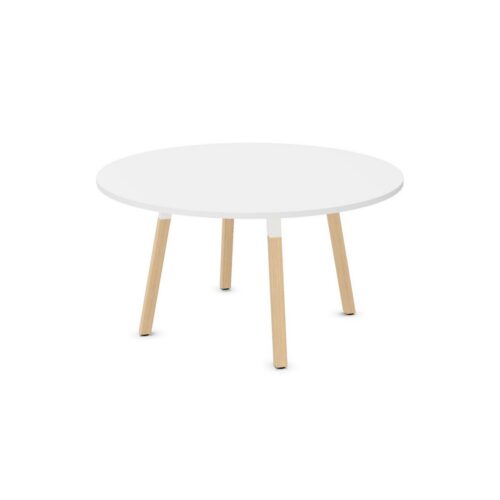


Arranging lounge furniture with round tops and beige bases
Start with the intended relationship between the seats. A group organized for conversation needs a different assessment from seats facing toward another part of the room. Place the circular top in relation to that activity and then review its position within the wider setting. Because there is no long side to establish the direction, the seating arrangement carries much of the visual organization. Consider where people enter the group, where they pause before sitting, and which seats they approach from behind. Use these observations to compare positions rather than treating the room's geometric center as the default location.
Let beige respond to actual backgrounds
A beige base can be seen against several backgrounds as people move through the lounge. The floor usually forms the immediate context, but surrounding seating and nearby finishes also influence the overall view. Compare these relationships together. If the room contains several neutral colors, decide which one should provide the principal reference instead of expecting every neutral to coordinate automatically. If stronger colors are present, assess how beige sits alongside them. The objective is a deliberate palette relationship. The base color alone does not establish material, texture, or any other physical characteristic of the furniture.
