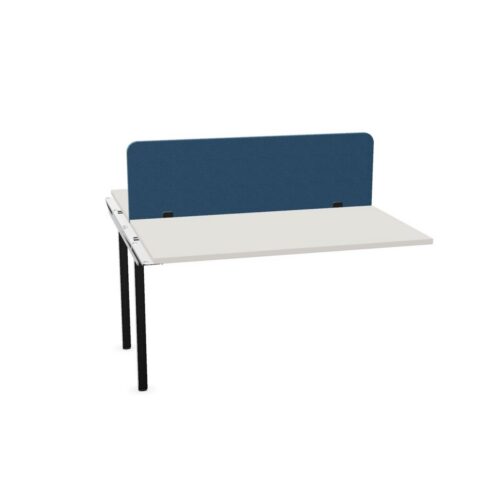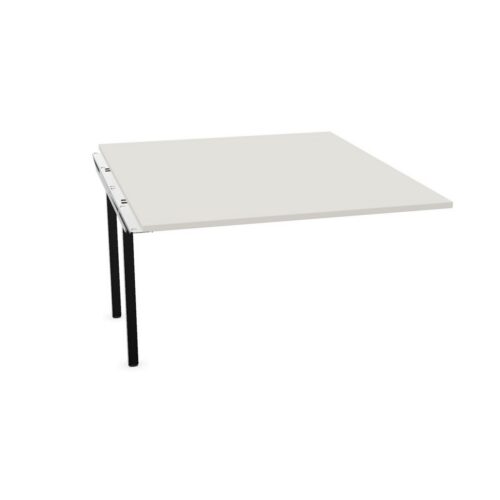


Straight desks provide a simple, linear worksurface for focused individual tasks, shared offices and organised workstation layouts. Defined by a rectangular or straight-edged desktop rather than an L-shaped, radial or corner configuration, they are a practical starting point when specifying desks for a wide range of business settings.
This desk type can suit everything from a single home-office position to a large bank of workstations. The available products may differ in dimensions, frame design, adjustment options, storage compatibility and cable management, so the desk configuration is one useful part of a broader procurement decision.
What is a straight desk?
A straight desk has a main worksurface arranged in one continuous line, usually with the user seated along one long edge. It may be freestanding, placed against a wall, used in rows or paired with other desks to create a larger workstation arrangement. Its uncomplicated footprint makes it easy to understand within floor plans and furniture schedules.
The term describes the configuration, not necessarily the construction or performance of the desk. A straight desk may have a fixed-height or height-adjustable frame, a modesty panel, integrated cable access, bench-style legs or a more individual workstation base. Likewise, it does not prescribe a particular desktop finish, frame colour or storage provision.
Why choose a straight desk layout?
For many workplaces, a straight layout offers a clear balance of usable work area and efficient planning. It can keep circulation routes legible and allows desks to be aligned consistently across an office, particularly where teams carry out similar computer-based work.
- Flexible planning: desks can be positioned singly, back-to-back, side by side or against perimeter walls.
- Clear allocation: the linear surface gives each person a defined workstation and straightforward equipment zone.
- Efficient replacement: a consistent desk type can simplify future additions, moves and reconfiguration.
- Broad suitability: the format can support administrative work, screen-based tasks, study areas, reception back offices and project spaces.
A straight desk is often particularly useful where the room itself is rectangular or where a regular grid of workstations is required. It can also be a considered choice for hybrid offices, where furniture may need to accommodate changing team sizes without introducing complex shapes into the layout.
Where are straight desks commonly used?
Straight desks are found in open-plan offices, private rooms, call and contact environments, education settings and home-working spaces. In open plan, rows or back-to-back runs can create a tidy workstation neighbourhood while preserving routes between teams. In enclosed offices, a single desk can sit along a wall or facing into the room, depending on the desired visitor and storage arrangement.
They can also work well in touchdown areas and shared-use settings. In these locations, consider how users will connect laptops, access power and store personal items. A desk that is suitable in a dedicated workstation may need a different level of cable access or surface durability when used by multiple people throughout the day.
Desk sizes and workspace planning
The right size depends on the work being undertaken, the equipment in use and the available room. A compact straight desk may be appropriate for laptop-led work, while roles involving multiple screens, paperwork, drawing sets or desktop peripherals can require a larger surface. Depth matters as much as width: it affects monitor positioning, keyboard space and the distance available between the user and screen.
When preparing a layout, allow for the desk itself as well as the space needed to sit, move a chair, open nearby storage and pass safely through the office. Check door swings, columns, radiators, glazing and power locations before finalising a plan. Where desks will form a run, decide whether shared screens, dividers, cable trays or linking arrangements are needed.
- Identify the typical technology at each workstation, including monitors, docks and desk phones.
- Measure the usable room dimensions rather than relying on an overall building plan.
- Consider whether users need room for papers, reference materials or meeting with colleagues at the desk.
- Plan access to sockets and data points before desks are placed in position.
Supporting comfortable desk-based work
A desk configuration contributes to a workstation, but comfort also depends on the chair, screen placement, task lighting and the ability to adjust the working position. A straight desk with sufficient depth can help position a display at a comfortable viewing distance, while a suitable chair and correctly arranged equipment help users maintain a practical posture for their tasks.
For teams reviewing wider workstation set-ups, our ergonomic workplace guide outlines considerations around desk-based working. It is useful to assess the completed workspace rather than selecting a desk in isolation, especially where workstations will be used for extended periods.
How to choose a straight desk
Start with the intended user group and room plan, then compare individual product specifications. A standardised desk range may be helpful where many positions need a consistent appearance, whereas a smaller project may prioritise a particular size, frame style or adjustment method. Consider the practical relationship between the desktop, pedestal storage, monitor arms and any screens or acoustic accessories specified separately.
Questions to consider
- What width and depth are appropriate for the role and the equipment being used?
- Will the desk be used individually, in a bench arrangement or alongside other workstations?
- Is fixed height suitable, or does the workplace strategy call for height adjustment?
- How will cables, chargers and power supplies be routed and accessed?
- Is under-desk storage required, and will it affect legroom or circulation?
- Do finishes and frame details need to coordinate with existing office furniture?
Straight desks within a broader furniture scheme
Because of their adaptable form, straight desks can form the core of a wider office furniture scheme. They may be combined with task seating, storage, meeting tables and collaborative settings while keeping personal workstations consistent. In a mixed layout, straight desks can provide the predictable individual work area alongside more informal spaces for short meetings or focused work.
Review the wider selection of office desks to compare desk configurations and identify options that suit your floor plan, workstation requirements and supporting furniture choices.
- Reset all
- Bspace