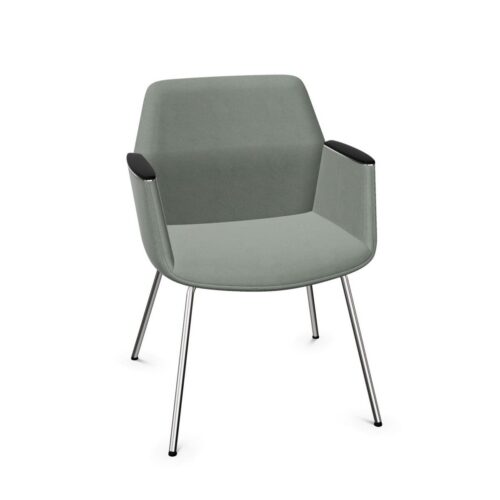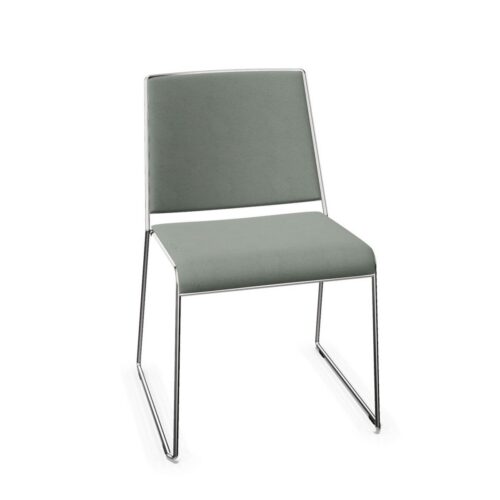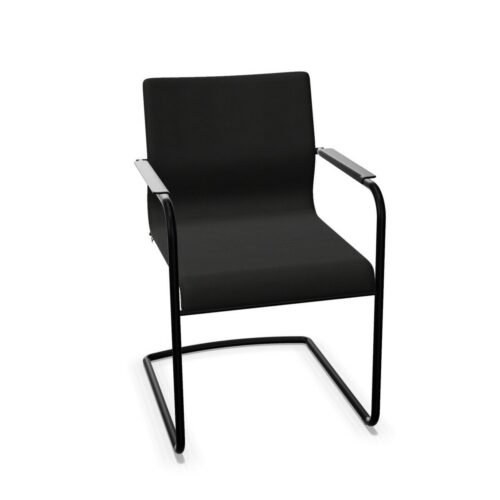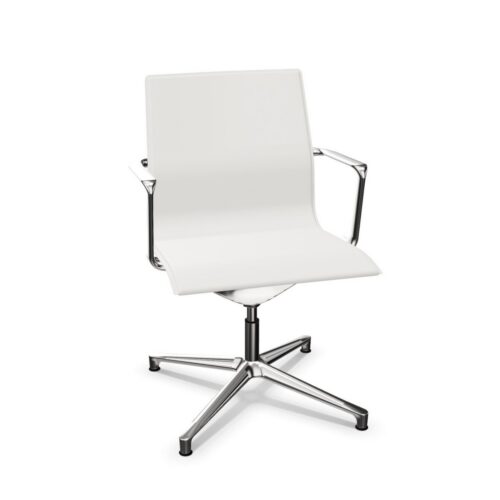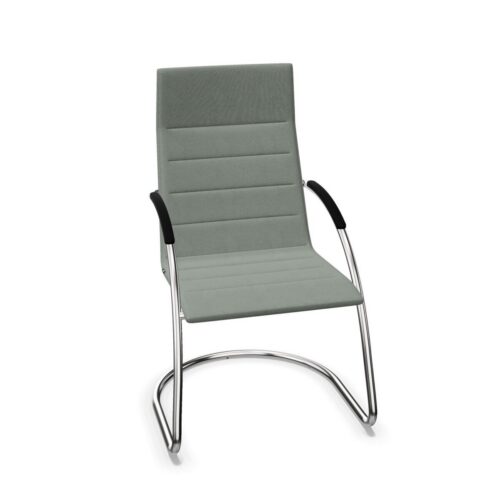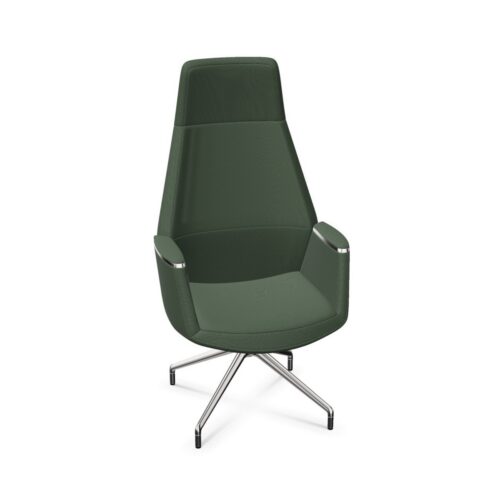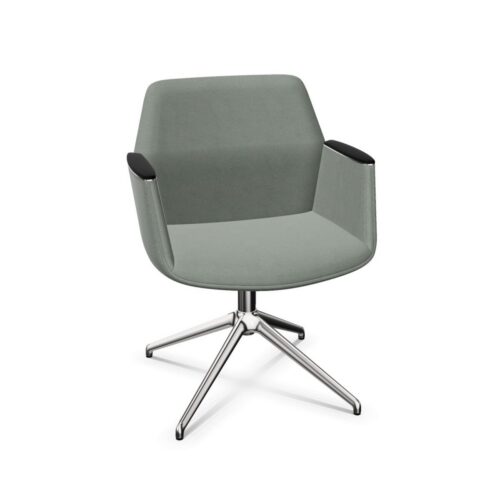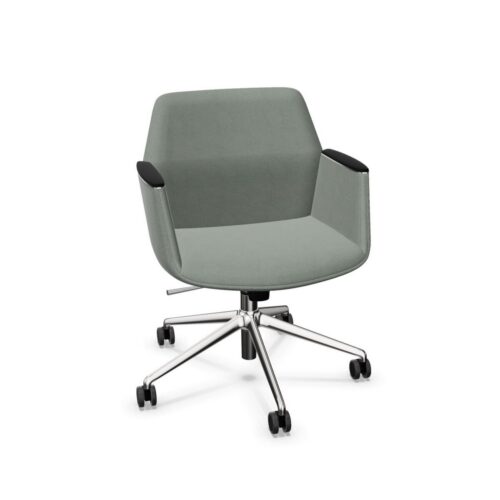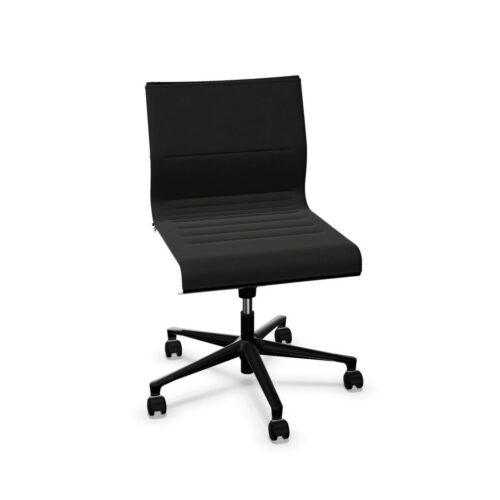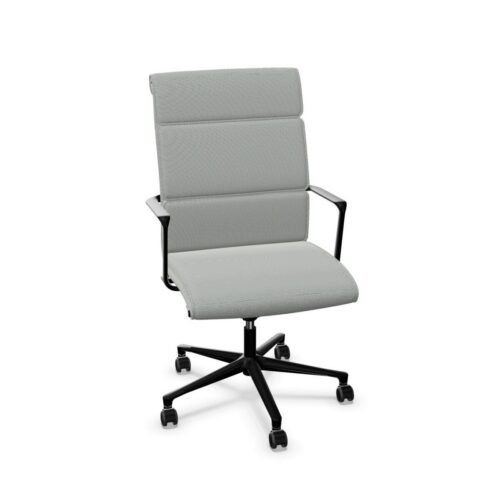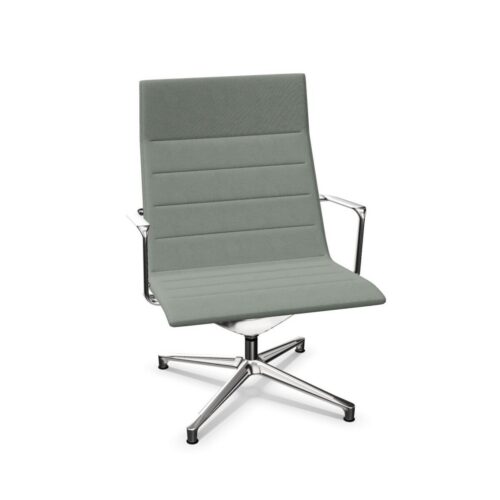


EN 16139 Level 1 seating is furniture intended for general non-domestic use and assessed against a recognised European standard for the strength, durability and safety of seating. For workplace buyers, it provides a useful reference point when comparing chairs, stools and other seating for shared professional environments.
This archive brings together Myntwork furniture listed with EN 16139 Level 1. The standard is particularly relevant where seating will be used regularly by different people, rather than kept for occasional domestic use. It should be considered alongside the product’s dimensions, intended setting, materials and other requirements of a workplace project.
What is EN 16139 Level 1?
EN 16139 is a standard for non-domestic seating. It sets requirements and test methods concerned with the safety, strength and durability of seating used away from the home. The Level 1 classification relates to general contract use: the everyday environments in which employees, visitors, clients or students may use furniture as part of normal activity.
In practical terms, this can include seating specified for offices, meeting rooms, reception areas, cafés, classrooms and similar commercial or public-facing interiors. It gives procurement teams a common technical description that is more meaningful than relying on appearance alone.
Level 1 is not a general label for all office furniture. The standard concerns seating, so it does not by itself establish the suitability of desks, storage, screens or other product types. Nor does it describe a particular style, upholstery, colour or mechanism.
Why buyers look for this standard
Furniture in a workplace is often used more frequently, and by a wider range of people, than furniture in a private home. Selecting seating with an appropriate non-domestic standard can help teams build a clearer and more consistent specification across a project.
- It provides a recognised point of comparison when reviewing seating from different ranges.
- It helps align furniture selection with the expected intensity and setting of use.
- It can support specification schedules and conversations between facilities, design and procurement teams.
- It makes it easier to distinguish general contract seating from products intended primarily for domestic environments.
- It gives a structured way to document why a chair or stool has been considered for a shared workplace.
For leased furniture, this clarity can be especially useful when furnishing changing teams, temporary project spaces or multi-use areas. The standard is one part of the product information to retain alongside the chosen configuration and supplier documentation.
What Level 1 does and does not indicate
EN 16139 Level 1 addresses defined safety, strength and durability requirements for general non-domestic seating. It is relevant to the physical performance of the seating under the conditions and methods covered by the standard.
It does not, on its own, confirm that a seat will suit every user, task or environment. Comfort depends on factors such as posture, duration of use, adjustability and the relationship between the chair and desk. A standard also does not replace a review of fabric suitability, cleaning needs, fire requirements, accessibility considerations or a project’s own policies.
Likewise, an EN 16139 Level 1 listing should not be read as a statement that Myntwork has independently retested every item. Buyers should use the individual product information and relevant manufacturer documentation when a formal specification or compliance record is needed.
Typical workplace settings
Level 1 seating is commonly considered for locations with routine, general contract use. The right choice will still depend on the number of users, the length of occupancy and how the space operates from day to day.
- Meeting and collaboration spaces: chairs used for scheduled discussions, workshops and project work.
- Office touchdown areas: flexible seating for short periods of focused or informal work.
- Reception and waiting areas: visitor seating where a durable, professional specification is needed.
- Breakout and café-style zones: chairs and stools used by staff and guests throughout the working day.
- Training and learning rooms: seating that may be moved, rearranged and used by successive groups.
Where use is unusually demanding, highly intensive or exposed to particular risks, a different performance level or additional project-specific requirements may be appropriate. Consider the actual environment rather than specifying by standard name alone.
Choosing seating for the intended use
Start with the activity the seat needs to support. A visitor chair in a reception area, a meeting chair used for an hour at a time and an operator chair used through a working day have different priorities. EN 16139 Level 1 can be a useful filter for non-domestic seating, but it is not a substitute for matching the design to the task.
For desk-based work, review the adjustment range, back support, seat dimensions and compatibility with the workstation. Our guide to how to choose an office chair outlines the practical factors that affect seated work. For communal chairs, consider stackability, weight, footprint and whether the upholstery or finish is appropriate for the anticipated cleaning regime.
Questions to consider when specifying
Use and layout
- Who will use the seating, and for how long at a time?
- Will it remain in one place, or be moved regularly for different layouts?
- Is the setting a quiet meeting room, busy reception, breakout space or training area?
- How much clearance is needed around tables, circulation routes and storage?
Product and project requirements
- Does the required standard apply to this item and its proposed configuration?
- Are there additional requirements for upholstery, finishes, cleaning or fire performance?
- Does the seat need arms, a writing tablet, castors, stacking capability or a particular base?
- Is there supporting technical documentation to include in the project record?
It is also worth checking that all selected seating has a coherent specification. A mixed workplace can use several chair types successfully, but each should be chosen for its own role rather than assumed to meet the same requirements.
Using standards within an office furniture plan
Standards are most helpful when they form part of a wider brief. Combine them with information about room capacity, user needs, furniture movement, maintenance and the desired lifespan of the layout. This produces a more considered schedule than selecting products solely by visual design or a single technical criterion.
For a broader approach to layouts, furniture types and workplace needs, see our resource on choosing office furniture. The EN 16139 Level 1 products in this archive can then be reviewed alongside the wider seating and planning requirements of your space.
- Reset all
- ICF