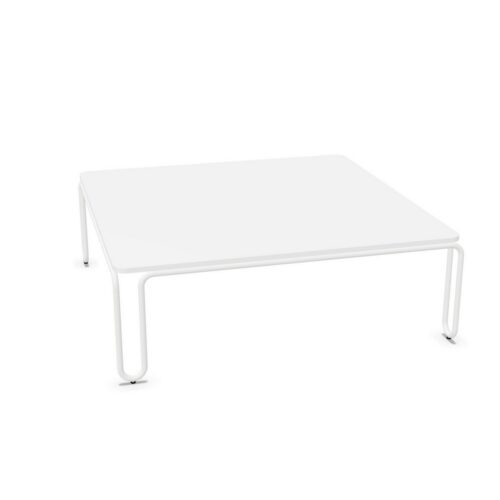
Red desk and table surfaces occur on conference tables, individual desks and shared workstations. A red top can make a room’s main gathering point easy to recognize, but the table must fit the discussion and equipment placed on it. The color applies to the surface, while legs, chairs and storage may be different. Plan the activity and the occupied footprint first, then assess the red finish at room scale. In a workplace with several meeting rooms, reserve the strongest red surface for the room where it supports orientation. Other rooms may use related details rather than another full colored top. This keeps the main meeting point recognizable. Note the exact finish used on the table so replacement or expansion can be assessed with physical samples, not just a broad color description.
Choose conference tables around interaction
A rectangular conference table can support a group facing a display or working across the top. A different shape may encourage a more equal conversation around the perimeter. Red desk and table surfaces can appear on these various forms, but group size and sight lines should decide the geometry. Draw every occupied chair and a clear route to the entrance.
If meetings involve laptops, check the selected table’s cable-tray or module provision. Trace power from the building and keep loose cords away from feet. A strong colored top may make devices visually prominent, so plan their positions while preserving clear space for notes and discussion.
Keep individual desks functional
At a desk, the user needs screen, keyboard and documents within comfortable reach. Red desk and table surfaces can provide a distinct working area, but glare and contrast should be tested from the chair. Place a sample at desk height under normal daylight and task lighting. Check whether the color affects how printed material is viewed.
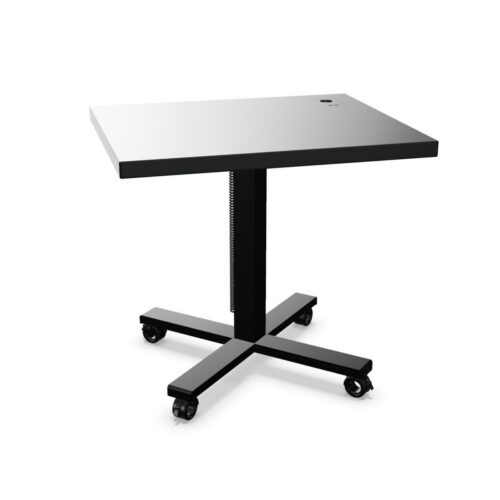
Some relevant desks adjust in height. Confirm the chosen frame and adjustment details separately from the top finish. Cables should travel safely with a moving surface. Leave enough room around the desk for a chair to move back and for the user to stand without blocking storage.
Consider a repeated bench finish
A bench desk makes the red surface more prominent by repeating it across a row. Decide whether that helps identify a team zone or overwhelms the room. Draw every screen and chair position. Red desk and table surfaces should still offer each user enough clear work area and a reachable power point.
Desk screens, cable flaps and frames may carry other colors. Compare selected components in physical samples. A contrast can help define each station; a close match can make the group feel continuous. Either approach should be deliberate and should not compromise equipment access.
Review material and care
A red top may be melamine, laminate or another specified material. Its sheen affects reflections, and its texture affects cleaning. Review the selected product’s care guidance, especially in shared meeting rooms where hands, cups and devices move across the surface frequently. Color alone cannot establish durability.
Red desk and table surfaces should be viewed beside flooring, chairs and storage. A large table may have more visual impact than a swatch suggests. Test the finish in both daylight and artificial light, and look at it when the room is occupied rather than only empty.
Set a clear purpose for the color
If red marks a meeting point, consider whether it should also appear on nearby desks. A single strong surface may be enough to make the zone recognizable. Repetition can link areas, but it can also reduce the clarity of the cue. Plan the whole floor before deciding.
Red desk and table surfaces work best when form, equipment and finish are selected together. Use the top shape for the activity, confirm cable and maintenance details, and test the color at the scale it will occupy. The result should be easy to work at and easy to navigate around every day.




Alea