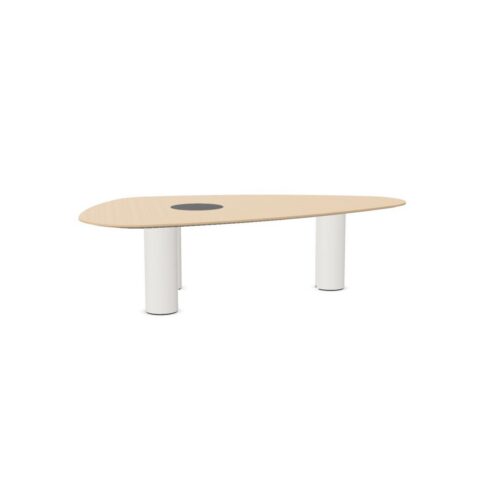
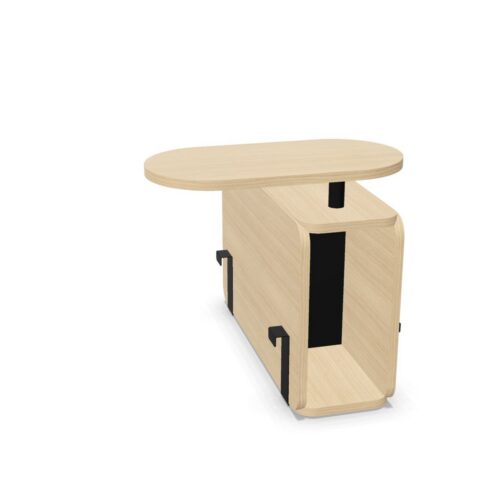
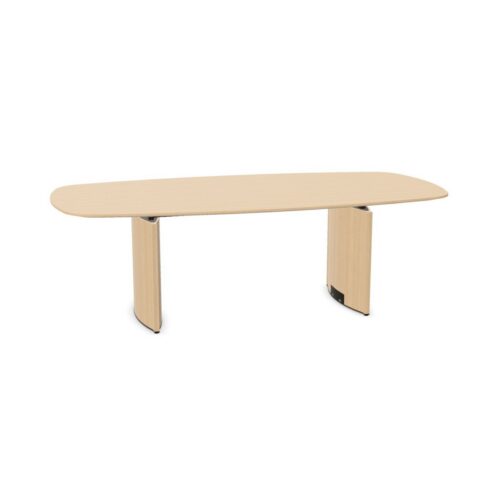
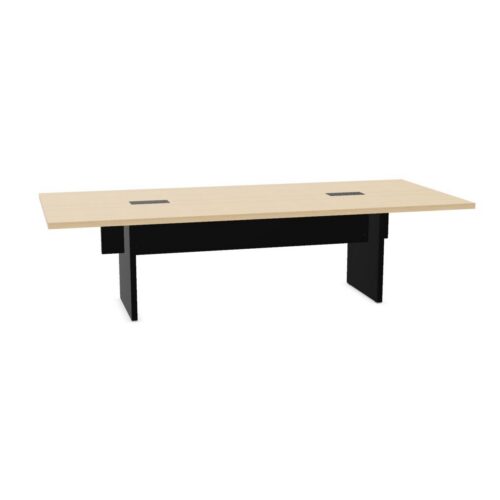
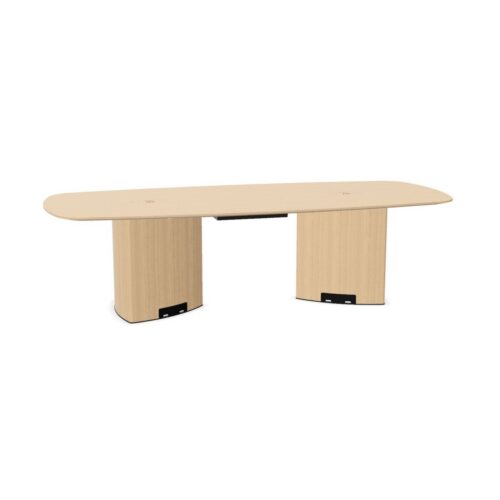
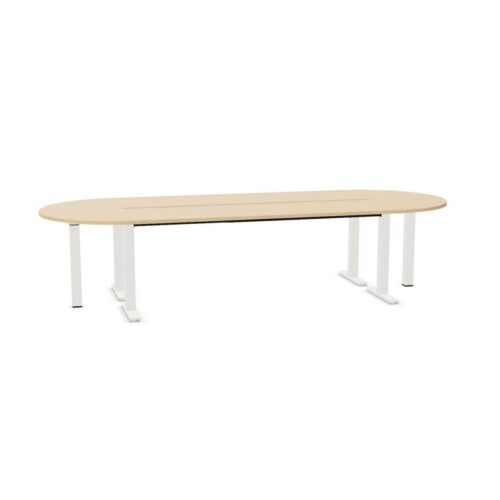
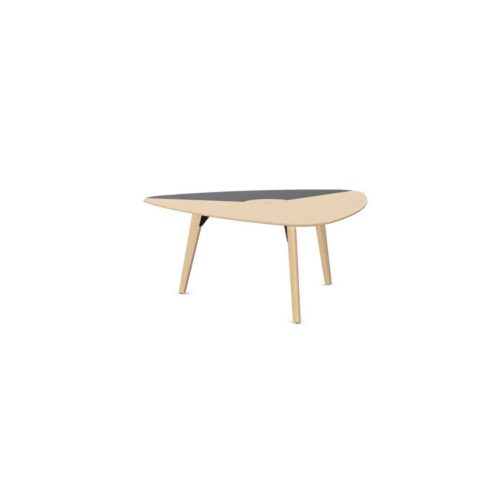
Oval office meeting tables combine a long shared surface with curved ends. The shape can make movement around the table feel less abrupt than a sharp-cornered rectangle while retaining room along its sides for discussion and equipment. The exact oval varies by product, so check the chosen top and base together. A pleasing outline still needs useful seats, clear sightlines and practical access in the room.
Arrange the discussion group
An oval table can bring the people at its ends closer into the conversation than a strict rectangle, depending on its proportions. Place the intended chairs around the actual outline. Curved ends may offer less straight edge than they appear to in a photograph, so test where end users will write or place a laptop.
Oval office meeting tables can serve focused discussions and larger groups. Consider whether the main activity is face-to-face conversation or a presentation toward one wall. The table shape influences the relationship, but screen position and chair orientation still need deliberate planning.
Use the center carefully
Oval office meeting tables with a wide top may put shared material farther from people along the edges. If samples, a speaker or a cable point sit in the middle, check reach from several chairs. Plan personal work areas for laptops or notes around the perimeter so central equipment does not crowd them.
A meeting table with integrated power needs a route from the center to the floor or wall. Inspect the base and underside so cables remain accessible without occupying leg room. A smooth surface on top can hide a complicated installation below.
Match the base to curved seating
A pedestal or column arrangement may allow chairs to move along the curved edge, while multiple legs can define more fixed positions. Check foot and knee space at every planned seat. The base should support the top without turning the useful curved ends into awkward places.
Oval office meeting tables may use two or more supports along their length. Review the exact structure, especially at a table made from several sections. Where tops join, check level alignment and whether a seam falls beneath a user’s work area.
Place the table in the room
Curved ends can ease movement around a meeting table, but occupied chairs still need room to pull back. Draw the full seating footprint and routes to the door, screen and storage. A narrow room may favor one orientation of the oval far more than another. Mark the main walking route on the floor plan before choosing a position. The most generous gap on paper may be needed for a chair to pull back, leaving less actual passage during a meeting.
Consider how people approach the table while others remain seated. A route behind the sides may be important for a long session. The table should not prevent access to a whiteboard or cabinet simply because its top fits between the walls.
Check surface and edge
The curved edge is visible from many angles and can be a major part of the table’s character. Review its thickness, finish and comfort for forearms. The surface material should suit regular writing, device use and cleaning. Look at the complete table under the installed lighting.
If the top has a wood grain or directional pattern, see how it runs through the curved ends. A laminate, timber-look or other finish can emphasize the oval differently. Material choice should complement the shape without taking priority over seating and access.
Test the real meeting
Place chairs, equipment and typical materials around the proposed table. Have people sit at the ends as well as along the sides, then check conversation and screen views. The most informative review is a full meeting setup, not an empty top.
Choose oval office meeting tables when their curved ends and long sides suit the room’s working pattern. Confirm the exact outline, base clearance, equipment route and circulation before settling on a finish.


Arte & D

Arte & D


Artexport


Audo Copenhagen