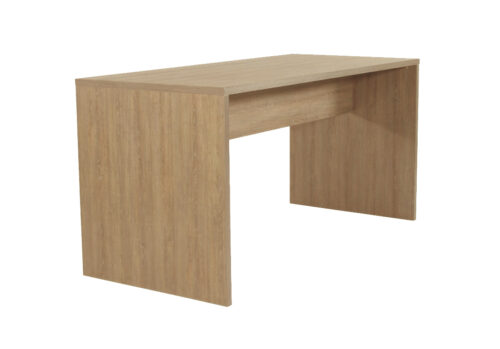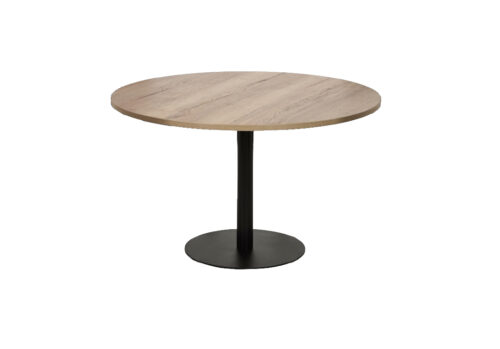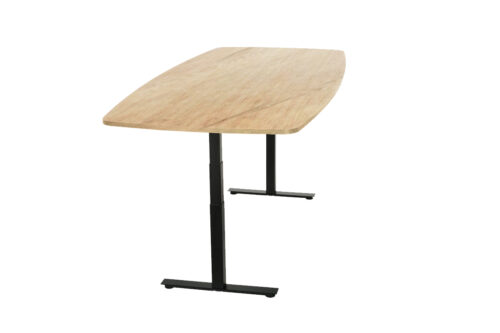


Bar tables for offices provide a taller table setting for informal meetings, quick catch-ups and shared work. Their elevated format suits workplaces that want a more relaxed alternative to conventional meeting tables, while still giving teams a defined surface for laptops, notes, refreshments and conversation.
On this page, bar table refers to the table typology rather than its colour, material or base design. Individual products can differ in size, shape, finish, leg arrangement and intended seating, so the product specification should always guide a final procurement decision.
What is a bar table?
A bar table is a high table designed to be used while standing or with appropriately sized high stools or chairs. In an office environment, it creates a distinct setting between a seated desk and a formal boardroom table. The height encourages short, focused interactions, although larger models can also support longer collaborative sessions when paired with suitable seating.
The term describes how the table is intended to be used. It does not necessarily indicate a particular top shape, number of seats or style. A bar table may have a round, square or rectangular top, and may be specified as a compact point table or as a longer shared workspace.
Why choose high tables in the workplace?
Different table heights help a workplace offer more than one way to meet and work. A bar-height setting can make an open-plan area feel less formal without removing the practical need for a stable worksurface. It can also help define a small collaboration zone within a larger space.
- Supports brief stand-up meetings and informal discussions.
- Provides an alternative setting for individual laptop work or quick reviews.
- Works well in breakout areas, cafés and social spaces.
- Can help create visual variety across open-plan offices.
- Offers a practical companion to high stools and other elevated seating.
Whether a bar table is appropriate depends on how long people are expected to use it. It may be useful as one part of a varied workplace, rather than as the only meeting or touchdown option.
Where are bar tables commonly used?
Bar tables are often specified in areas where people move between focused work, social interaction and short meetings. They can bring a more hospitality-led feel to shared workplace zones while remaining suitable for everyday business use.
Common locations include:
- Kitchen and refreshment areas for breaks and informal conversation.
- Breakout spaces used for ad-hoc team meetings.
- Open-plan neighbourhoods that need a standing-height collaboration point.
- Reception-adjacent lounges or visitor waiting areas, where appropriate.
- Project spaces and creative studios with changing team requirements.
- Training or event areas that benefit from flexible, sociable layouts.
In smaller offices, one well-positioned bar table can serve as a useful multi-purpose point. In larger schemes, a group of high tables may help divide a broad floorplate into approachable activity zones.
Bar tables for meetings and collaboration
A high table can support a meeting style that is more spontaneous than a conventional seated room. Teams can gather around it for a quick update, review samples or discuss work in progress without the formality of reserving a dedicated space. This can be particularly useful where meeting rooms are in demand.
For meetings involving extended laptop use, detailed paperwork or several attendees, consider the available top depth, overall length and seating layout carefully. A taller format is not automatically right for every task or every user. Providing a mix of table heights allows people and teams to select a setting that matches the activity.
For more structured group discussions, presentations and longer sessions, explore the wider range of conference tables. These are typically selected around room capacity, technology requirements and the expected duration of meetings.
Choosing a bar table for your space
Start with the intended activity and location. A compact table may suit a coffee point or narrow collaboration area, while a larger shared table may be more appropriate for a busy breakout zone. Allow enough circulation space around the table for people to pull out high seating, move through the area and use the surface comfortably.
It is also important to coordinate the table with compatible seating. Check the table height and the seat height of any stools or high chairs being considered together. This relationship affects comfort, leg clearance and how easily users can work at the surface.
Questions to consider
- Will the table mainly be used standing, seated on high stools, or both?
- How many people need to use it at one time?
- Is the space intended for short conversations, meals, laptop work or project collaboration?
- What clearances are needed around it for circulation and access?
- Does the top need to accommodate power, devices, paperwork or refreshments?
- Which finishes and base styles work with the wider furniture scheme?
Planning height, layout and circulation
High tables should be planned as part of the whole room, not selected in isolation. Their elevated profile can make them a clear visual feature, particularly in compact spaces. Consider sightlines, nearby storage, lighting, power access and the position of adjacent seating before finalising a layout.
Where several tables are being introduced, mixing sizes or arranging them in small groups can create different levels of privacy and capacity. Keep routes through shared areas clear, especially near kitchens, entrances and frequently used workstations. A layout should support the intended activity without turning a circulation route into a meeting area.
For guidance on matching furniture, capacity and room functions, see the meeting room planning guide. Its planning principles can also help when considering informal spaces alongside enclosed meeting rooms.
Related Myntwork table ranges
Bar tables are one option within a broader workplace table strategy. Pairing them with lower meeting tables, occasional tables and dedicated conference tables can give staff and visitors a choice of settings throughout the day. This supports a more adaptable environment while keeping each area suited to its primary purpose.
Browse Myntwork’s conference tables for formal meeting spaces, and use the meeting room planning guide when developing a considered furniture layout across the workplace.