


Executive office chairs combine a workplace seating requirement with a visible role in the room. They may sit behind a dedicated desk, form part of a more formal meeting setting or contribute to the overall character of an individual office. The chair still needs to be chosen around the person using it. Consider how the host moves between desk work and speaking with a visitor, and whether the chair can return to its working position without rearranging the surrounding furniture. That everyday transition can reveal useful differences between otherwise similar seating choices. Begin with the working position, then consider how its profile and finish relate to the surrounding furniture.
A chair for a dedicated desk
An individual office often brings several activities to one desk: focused work, document review and conversations with visitors. Consider how the chair will be used during those activities and how the user approaches the working surface. The seat and backrest need to be assessed in that actual position.
Executive office chairs should be compared by their supplied adjustments and movement controls, not by appearance alone. Review how the person operates the chair and whether its settings support the intended work. Keep the relevant desk, equipment and visitor area in the furniture plan while assessing the seating.
Backrest profile and the room’s proportions
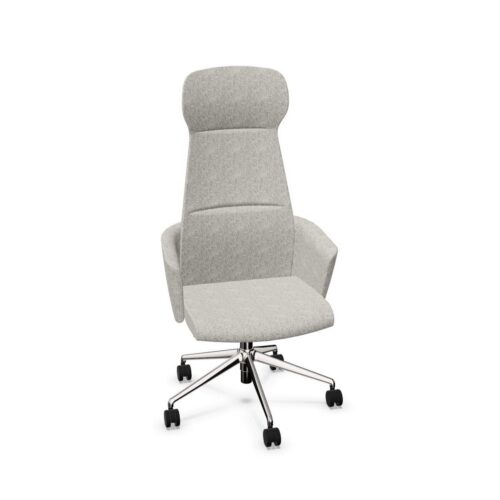
The back of the chair is often visible from several parts of an office. Consider its height and shape in relation to the desk, nearby storage and the view from the entrance. A higher profile and a more restrained outline can create different relationships with the same room.
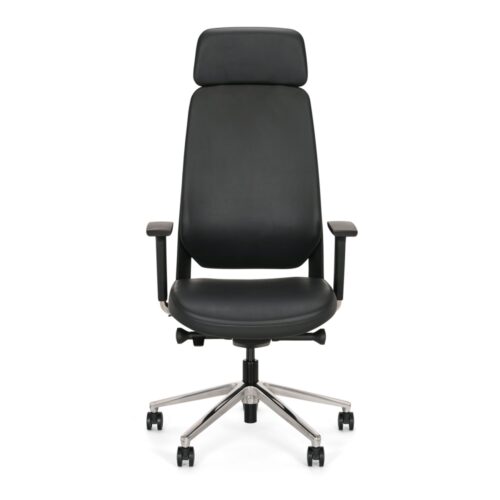
The visual profile does not establish a single sitting experience. Review the backrest’s shape, construction and movement against the user’s position. Where a headrest or another supporting feature is included, assess how it meets the person rather than treating it as a necessary part of every executive-chair specification.
Materials and finishes with a clear purpose
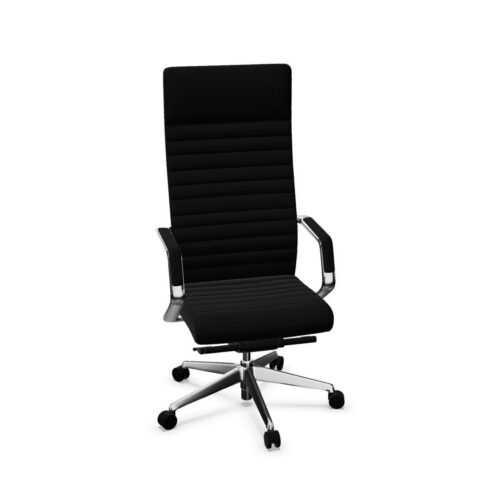
Executive office chairs can have different upholstery and backrest forms. The selection is not defined by one surface material, so compare the actual configuration with the brief. A mesh-style back and an upholstered design each need to be evaluated through their relevant construction, support and appearance.
Consider the chair beside the desk rather than choosing the finish in isolation. Base color, visible frame details and upholstery can connect with other furniture without matching every surface. Where samples are available, use them to compare the actual material and finish within the intended lighting and room scheme.
Armrests, controls and working clearance
Review the armrest arrangement supplied with the selected chair and its relationship with the working surface. Fixed and adjustable forms should be assessed on their actual operation. The person needs a useful approach to the desk, with the chair and its arms fitting into the surrounding arrangement.
When comparing executive office chairs, include the space required by the base and normal chair movement. Nearby cabinets, returns and visitor furniture can affect that space. Look at how the complete room works when occupied, so the chair is assessed as part of the working environment rather than as a standalone statement piece.
Executive seating in a meeting arrangement
Some projects consider executive-style seating around a table as well as at a desk. Review that use separately. The position of neighboring chairs, table supports and armrests can change the practical requirements, particularly where several seats share one surface.
Keep the configuration clear when selecting related chairs for different parts of the room. A visitor version and a desk-chair version may have different bases or functions even when their backs and upholstery look coordinated. Specify each one around the activity it needs to serve.
Executive office chairs are best selected by connecting the individual seating assessment with the room’s design. Compare fit, movement and clearances first, then refine profile and finish in context. That approach gives the chair a considered visual presence while preserving its main purpose as a useful working seat.




Myntwork
