

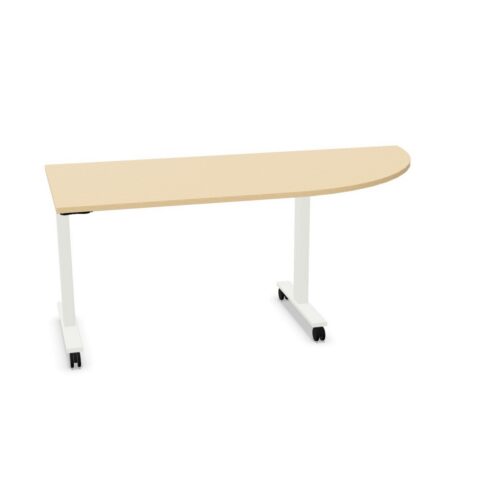
Semi-Oval Leaf Tables With Black Bases

Conference tables with semi-oval leaf tops and black bases pair a partly curved tabletop outline with a dark base color. The shape invites attention to where the curved portion sits within the room and how chairs relate to it. Black provides a separate visual choice beneath the top; it does not specify the support layout, material or surface treatment.

Consider the meeting’s focus before deciding which way the tabletop should face. A discussion-led room and a presentation-led room may call for different relationships between the curved edge, participants and shared display. Semi-oval leaf meeting tables with black bases should also be assessed alongside the floor and chair frames. A darker base can sit among similar tones or stand apart from paler surroundings. Choose that relationship after checking the approach to seats, views across the table and the route people will use while others remain seated.

6 models
From €10.56 p/m
7 models
From €10.56 p/m
18 models
From €42.84 p/m
6 models
From €48.77 p/m
4 models
From €36.06 p/m
3 models
From €12.73 p/m
8 models
From €54.31 p/m
10 models
From €25.28 p/m
13 models
From €22.63 p/m
11 models
From €28.29 p/m
67 models
From €17.45 p/m

Orienting Conference Tables With Semi-Oval Leaf Tops and Black Bases

Begin with the curved portion of the semi-oval leaf outline and consider what should face it. The answer might be the entrance, another part of the meeting area or the presentation position, depending on the room’s routine. Avoid choosing an orientation solely because the curve looks appealing from the doorway. Sit in the intended participant positions and check views of colleagues and any shared display. The same outline can relate differently to a room when turned. Use that flexibility in planning to find a position that supports the meeting’s focus while preserving clear approaches around the occupied chairs.

Balancing Curved Form With Dark Color

The tabletop outline and black base contribute different things to the visual arrangement. The curve defines part of the perimeter, while the dark color establishes the appearance below it. Consider both against nearby chairs and the floor. In a room with pale surroundings, the base may be more visually distinct; among dark furniture, it may form a closer tonal relationship. Decide whether that distinction is useful to the room composition. Do not attach assumptions about sheen or material to the color. A black base should be assessed as the selected color within the actual arrangement of furniture, lighting and room finishes.

Placing Chairs Along the Curved Portion

Semi-oval leaf tables with black bases require chair positions that respond to the outline rather than a rigid habit of parallel placement. Around the curve, consider the angle each participant takes toward the shared discussion. Check that neighboring seats relate comfortably and that the working edge in front of each person is convenient. Then inspect the support positions beneath those seats. The base color cannot establish freedom of movement for feet or chair bases. Test how people sit down, move closer to the table and leave. This gives the curved portion a practical role without assuming it automatically improves comfort or interaction.

Preserving Access During Presentations

A presentation changes the room’s movement patterns. Participants may turn their chairs, a speaker may stand away from the table and someone may need to reach a display. Review those actions with the semi-oval leaf top in its proposed position. Pay attention to routes near the curve as well as beside the other parts of the outline. A rounded edge does not remove the need for a clear passage around occupied seating. Resolve these movements before coordinating the black base with other dark accents. The result should be a room where the selected shape serves the meeting routine and the color relationship feels intentional.

Frequently Asked Questions

Should the curved portion face the presentation area?

That depends on the intended seating and views. Test the relationship from participant positions and consider where the speaker will stand. The curve does not determine the best orientation by itself; the meeting routine and circulation should guide the choice.

Does a black base work with pale flooring?

It can create a distinct color relationship beneath the tabletop. Assess that contrast alongside the chairs and other room details. The selected black color does not establish material or sheen, so keep those questions separate from the color decision.

Can chairs follow the curve without further checks?

Chair positions still need direct assessment. Review the angle toward colleagues, the working edge and the supports below. A curved outline does not guarantee comfortable seating, especially where chair movement or access from the room perimeter is restricted.

Compare how conference tables with semi-oval leaf tops and black bases relates to chair positions and shared views in the intended room.

Assess conference tables with semi-oval leaf tops and black bases alongside circulation and the meeting's main viewing direction.

Explore related selections