






Use blue to organize a workplace palette
A blue work surface can add color without requiring the entire room to follow the same tone. It may identify a project area, distinguish a shared desk zone or bring a focal point to a neutral office. Consider the specific product finish, because blue can appear in different tones and textures. Pair it with quieter surrounding colors when the worktop should be prominent, or coordinate it with existing accents for a more integrated result.
Think beyond the desktop when planning the color scheme. Chairs, partitions, storage and screens all contribute to the final appearance. Repeating blue across a workplace can help a room feel intentional, while a selective use can guide people toward a particular team or task area. Check finishes in the context of the room and its lighting before choosing desks for several locations.
Arrange seating around a fixed workstation
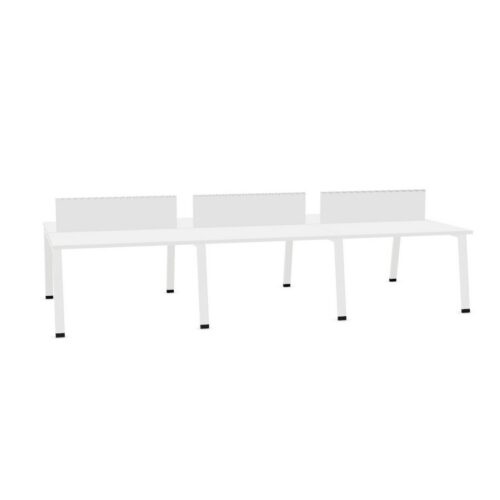
These desks keep a set worktop position, so plan the seat and equipment for the user rather than expecting the surface to adapt. Check that the chair can be configured for comfortable use and place the screen, keyboard and task materials with the intended work in mind. A clear setup is particularly useful when the desk belongs to a dedicated employee or serves a consistent role in the office.
When colleagues share the same station, decide how they will adjust the parts of the workstation that can move. Seating and monitor supports may need to accommodate different users. Keep the worktop organized so that personal items do not obstruct the next person, and leave space around the chair for easy access. These choices help a fixed desk serve multiple users without changing its height.
