








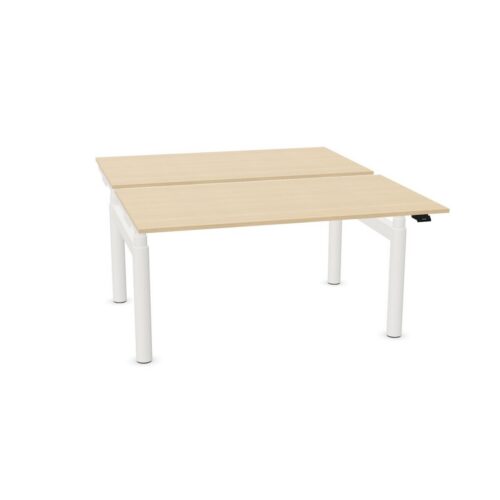
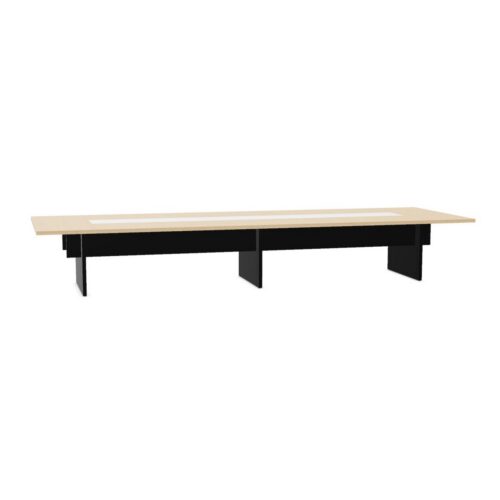
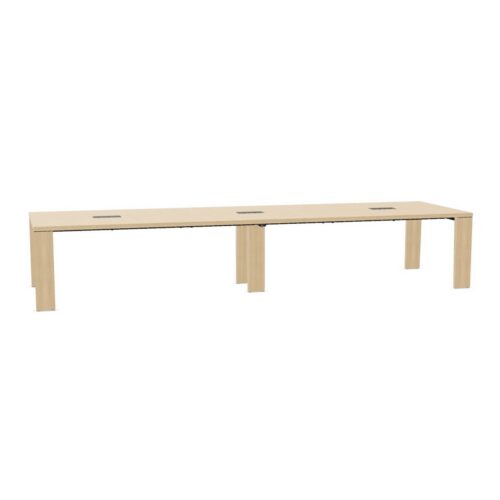

Give the workstation a defined visual role
A black work surface can create a clear outline within an open room, especially alongside pale walls or lighter storage. It can also connect a desk to dark screens, equipment and seating for a more unified arrangement. Choose whether the desk should contrast with its surroundings or repeat an existing finish. That choice can help determine how many dark surfaces to use and where to introduce lighter accents.
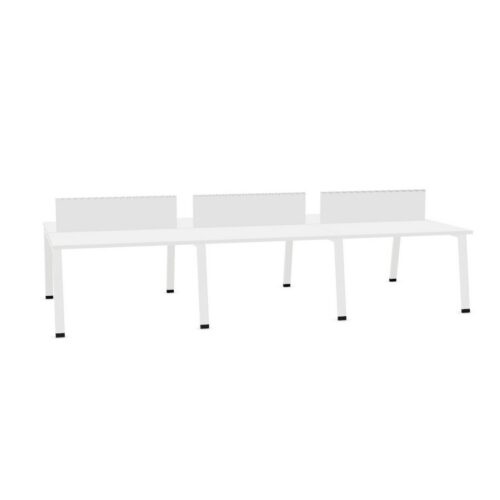
Think about the effect when several desks are arranged together. Repeated black tops can create a strong visual rhythm, while a mix of desk shapes may add useful variety without breaking the palette. Check product finish descriptions and frame details individually, since the surface color alone does not define the full appearance. Lighting, flooring and nearby furniture all influence how a black desk reads in the room.
Set up a comfortable fixed-position desk
Because the work surface remains at a fixed height, the chair and equipment must be planned around it. Select a chair that allows the user to sit comfortably at the desk and position the screen and keyboard for the work being done. Think about the person who will use the station most often. A fixed setup is easiest to plan when the user and primary task are known in advance.
If several people share a station, decide how they will adapt the parts that can be adjusted. Seat height, screen position and accessories may need attention when users change. Keep frequently used items accessible and leave enough room for the chair to move. These considerations help a fixed-height desk remain functional in a shared setting, even though the desk itself cannot be raised or lowered.
