


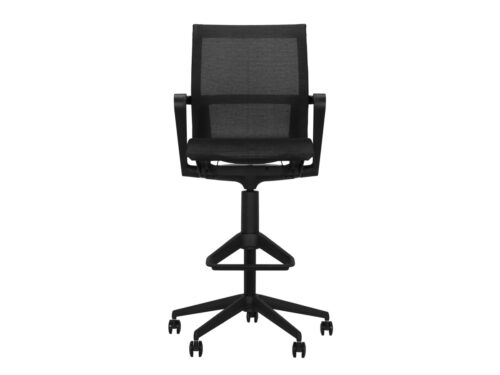
Read the Backrest Shape Through Seated Contact
Compare black office chairs without adjustable back height by examining where the backrest meets the intended user. Ask the person to sit as they normally would for desk work, then describe the contact they notice. Include both quiet reading and active keyboard tasks in the trial.
Check the stated back dimensions alongside the seated observations. A photograph cannot establish how a particular contour will meet someone’s back. Since height cannot be changed through a dedicated back height adjustment, the existing arrangement needs to suit the person. Record any mismatch clearly instead of assuming the user will adapt to it.
Clarify Which Movements Are Actually Available
The absence of back height adjustment does not establish that the backrest is rigid or unable to recline. It also does not establish that a tilt function is present. Identify the available movements and controls individually, using the instructions for the actual chair.
When assessing office chairs, describe each confirmed function in plain terms so users understand what it changes. Check whether operating another control alters their contact with the backrest. Reassess the complete position after each relevant change. Keeping these distinctions clear prevents the term fixed height from becoming an inaccurate description of every aspect of the seating arrangement.
