

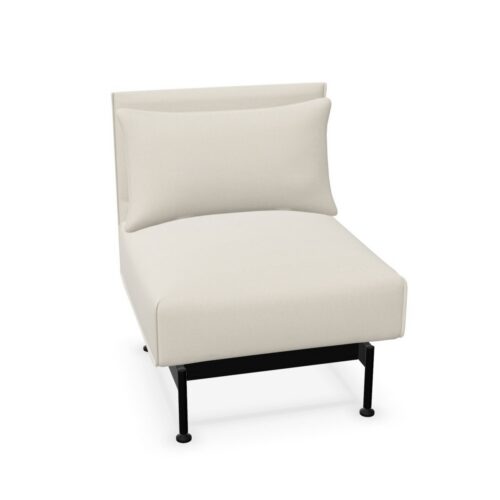
Lounge Furniture With Black Bases and Era Upholstery

lounge furniture with black bases and era upholstery creates a planning question around contrast: how clearly should the base stand apart from the upholstery and surrounding floor? Black can be a repeated color within the room or a distinct detail concentrated beneath the seating. Establish that role first, then compare the furniture as a complete group. The relationship matters more than judging the base color in isolation.

For reception and shared workplace lounges, consider what people see from the main approach. The black base may be prominent against its immediate surroundings or less apparent where neighboring colors are similarly dark. Neither result needs to be avoided, but it should be deliberate. Bring the upholstery color into the same comparison and check how the combination relates to existing dark details elsewhere. This provides a clear basis for deciding whether the seating should define its area visually or sit within a wider coordinated scheme.

3 models
From €48.97 p/m
4 models
From €44.46 p/m
5 models
From €64.42 p/m
6 models
From €29.07 p/m
4 models
From €20.07 p/m
2 models
From €20.36 p/m
7 models
From €15.76 p/m
3 models
From €22.22 p/m
€25.73 p/m
2 models
From €12.97 p/m
3 models
From €16.82 p/m
3 models
From €17.87 p/m
2 models
From €16.82 p/m
2 models
From €22.22 p/m
29 models
From €20.36 p/m
2 models
From €29.19 p/m
10 models
From €32.06 p/m
15 models
From €17.67 p/m
3 models
From €61.38 p/m

Defining lounge furniture with black bases and era upholstery

Use the room's visual hierarchy to guide the black base decision. Identify the features that should lead attention, such as the reception point, a meeting area or the seating itself. Then assess whether visible black details strengthen that hierarchy or introduce a competing emphasis. The answer depends on the complete setting. A black base viewed against a lighter floor can have a different prominence from the same color against darker surroundings. Review the upholstery at the same time, since its relationship with the base determines how clearly the parts of the furniture are visually distinguished.

Manage repeated dark accents

Look beyond the individual piece and trace where black already appears in the room. Repetition can connect the seating with its surroundings, but an uneven concentration may shift attention toward one part of the space. Review the arrangement from the entrance and along the main route past it. Include neighboring areas if they share the same view. Decide whether black should be distributed throughout the interior or concentrated in the lounge. Keeping that intention explicit makes it easier to compare furniture without allowing every existing dark detail to dictate an exact match.

Use orientation to clarify the group

When arranging lounge furniture with black bases and era upholstery, start with where people approach and where their attention should face once seated. A reception group may relate to an arrival point, while an informal conversation area may turn inward. Place the furniture accordingly, then examine how the black bases appear through the spaces between pieces. The arrangement should communicate the group's purpose even where the bases are less visible. Keep the route into the seating understandable and review whether people passing the area would naturally cross through the conversation space or move around its edge.

Compare the complete silhouette

Assess the visible form of each piece against its actual background. Black details may appear distinct in one position and merge with nearby dark colors in another. Review side views as well as the front, especially where the lounge is approached from several directions. Include the upholstery color, the open spaces beneath and between forms, and the repetition across the group. Avoid treating a close view as the final assessment. Step back to the normal room viewpoint and ask whether the base contributes the intended amount of visual definition without diverting attention from the area's main purpose.

Questions about black bases and Era upholstery

Does black need to appear elsewhere in the room?

No. It can be a distinct furniture accent. Decide whether repetition would improve the overall composition rather than adding matching details solely because the bases are black.

How should black bases be assessed against a dark floor?

Compare them in the intended setting and lighting. Decide how much visual separation you want, then judge the whole piece rather than expecting the base to remain equally prominent everywhere.

What is the priority in an open shared area?

For lounge furniture with black bases and era upholstery, prioritize a recognizable seating group, clear circulation and a deliberate distribution of dark accents across the wider view.

Explore related selections