



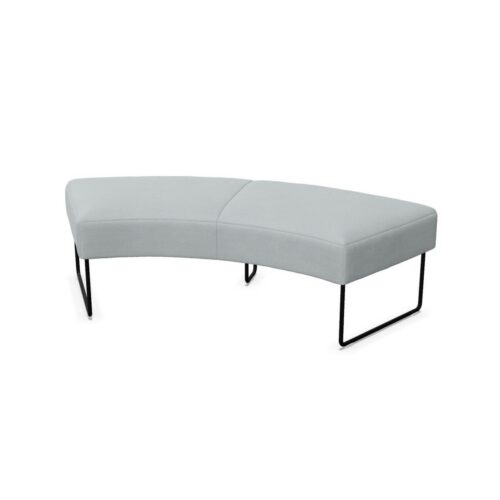


Zoning With Lounge Furniture With Purple Bases and Fabric Upholstery
Start by identifying the boundaries of each seating area. These may be defined by the room layout, furniture orientation or adjoining circulation routes. Purple bases can act as a recurring visual detail within those boundaries, but the arrangement itself should make the grouping understandable. Decide whether the color will connect all lounge areas or distinguish one particular setting. Review the proposal from the routes between groups. This helps establish whether the purple is visible at the points where continuity matters, rather than only in close views of individual seats.
Create a Shared Fabric Strategy
Choose the upholstery relationship at room level before considering each seating group separately. A consistent fabric color may strengthen continuity, while a controlled variation may help distinguish areas. Compare all intended fabric colors with the same purple base reference. This reveals whether each pairing belongs to the wider palette. Consider how strongly the upholstery contrasts with the base and whether that contrast should remain similar across groups. A clear strategy gives each area a place within the whole without requiring every seating arrangement to have the same orientation or purpose.
Make the Arrangement Easy to Read
Furniture orientation should explain how people enter and use each seating group. Keep approaches clear, consider who faces whom and check the relationship with adjoining activity. Once the layout is coherent, review how much of the purple base remains visible between and behind seats. Avoid changing a useful orientation solely to expose more color. Instead, judge whether the combination still has an appropriate presence within the workable layout. Document the agreed fabric and base together, along with the views used to assess their relationship across the shared space.
