









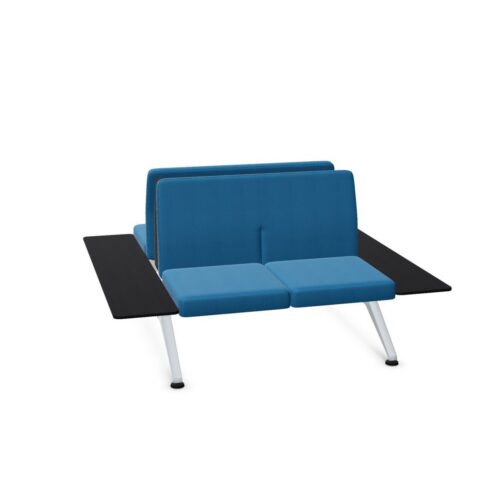
Balance lounge furniture with silver bases and black upholstery
Assess the base and upholstery as two related parts of the furniture outline. Look at where the silver remains visible beneath the seat and whether it draws attention from the main room approaches. Black upholstery can create a clear color reference, but its relationship with silver still depends on the actual surfaces and surrounding background. Compare the furniture in the proposed location rather than judging the colors in isolation. Include the floor in the assessment, since it forms the immediate setting for the base and affects how its edges are perceived.
Use contrast with a clear intention
A visible difference between base and upholstery can emphasize the furniture's construction visually, but it should serve the room scheme. Decide whether the lounge needs a distinct outline or a more continuous relationship with nearby elements. Consider how repeated silver details would read across the proposed grouping. Several visible bases may create a different impression from a single isolated piece, even when the upholstery color is consistent. Review the total composition from a distance, then return to individual details to understand which relationships are responsible for the overall effect.
Compare silver references under the same lighting
With lounge furniture with silver bases and black upholstery, do not assume every nearby silver element will look identical. Compare the actual base appearance with the room's established details under the same lighting conditions. Look for differences in tone and surface appearance without inferring a particular treatment. Where daylight reaches only part of the lounge, assess the proposed positions individually. The objective is a deliberate relationship between the furniture and the interior, which may involve a close visual connection or a clearly distinct base appearance.
