



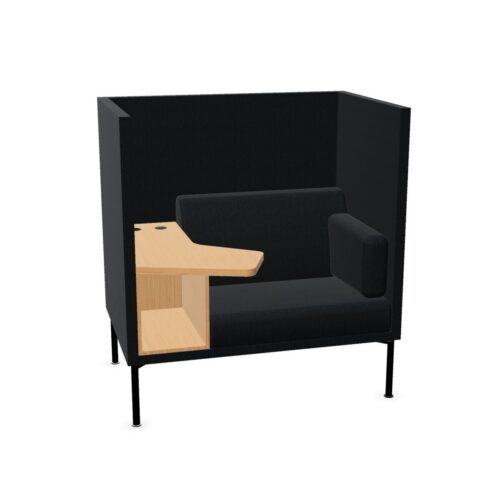


Coordinating lounge furniture with leather upholstery and wood bases
Begin with the relationship between the two selected materials. View the leather and wood appearances together, considering whether their tones create continuity or a deliberate difference. The goal is a clear pairing rather than an assumed match based on material names. Review the combination alongside the room's existing visual elements before deciding which relationship should lead. If there is wood elsewhere in the interior, compare the actual appearances directly. A close match and a clearly distinct treatment can each be valid directions when they are chosen intentionally for the complete lounge composition.
Design the Conversation Setting First
Decide who will use the lounge and how people are likely to arrive. Colleagues meeting as a group need an arrangement that makes their shared conversation area apparent. Visitors arriving separately may need seating that is easier to approach independently. Position the furniture according to that distinction, then assess the visible wood bases across the group. Keep the route into the lounge clear and avoid making people pass through another conversation to reach a seat. Material coordination works best when it supports a layout with a recognizable purpose and an understandable relationship to its surroundings.
