



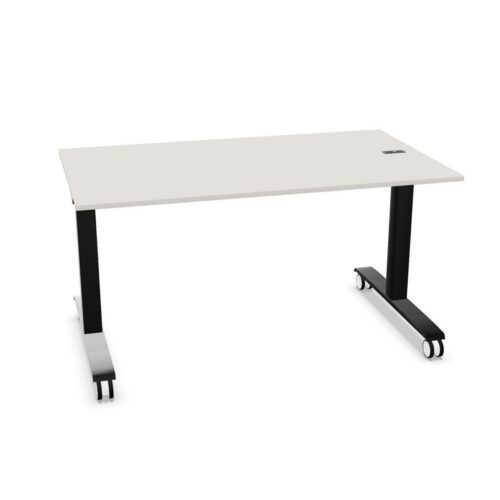


Planning electrically adjustable conference tables with white surfaces
The white surface is shared by both sides of this comparison; electric height adjustment changes the operating relationship. A fixed table retains its working level, while an electrically adjustable table allows that level to change. Establish when adjustment would help the meeting activity, then confirm the actual movement before assigning different uses to the room.
Keep the color decision grounded in the surroundings. White identifies the surface color, without establishing its material, texture, or sheen. Review those details separately if they matter to the room's final appearance.
Position the Table With Its Electrical Connection in Mind
Consider access to an appropriate electrical supply when choosing the table's location. Follow the operating instructions for connection and adjustment. The room arrangement should allow the table to move as intended without nearby furniture or loose items becoming obstacles.
For electrically adjustable conference tables with white surfaces, review the connection through the intended movement. Do not assume that electrical adjustment provides charging points or other power facilities for meeting participants. Those are separate properties that the selected combination does not establish.
Assess White Against the Room's Actual Lighting
View the tabletop color in the conditions participants will experience. Daylight, ceiling lighting, and nearby finishes can affect how white appears within the room. Consider the surface from seated positions and from the entrance, especially where the table forms a prominent part of the view.
If participants regularly look between documents and shared information, review that activity in the proposed arrangement. White alone does not establish reflective behavior. Assess the actual surface and lighting together rather than assuming that the color guarantees a particular visual experience.
