



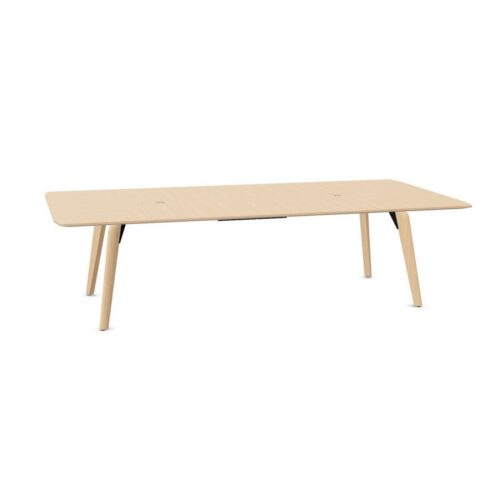


Planning height-adjustable conference tables with wood bases
The relevant distinction is whether the working level can change. Here, height adjustment is present, so the table should be assessed around the activities that may benefit from it. Identify those activities before allowing the wood color to lead the decision. Appearance and adjustment answer different questions about the same room.
Consider how people prepare for discussions, work with shared documents and use the room between formal sessions. Adjustment may be relevant to some routines and unnecessary for others. Check the actual table's adjustment information against those needs, since the presence of adjustment does not establish its method or available working positions.
Use Wood Color as a Consistent Visual Reference
The base can retain its visual relationship with the room while the working level changes. Choose a wood-color reference that already matters in the setting, such as storage or door finishes. Decide whether the base should relate closely to that reference or introduce an intentional difference within the palette.
Assess the color with the chairs in place and under the lighting used for meetings. The same wood tone can appear different beside contrasting floor and seat colors. Direct comparison helps avoid relying on color descriptions alone. Keep the room's palette understandable without assuming every wood-colored element must have an identical appearance.
