


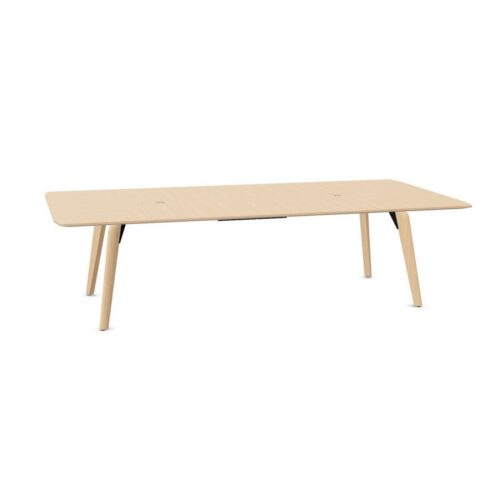


Planning height-adjustable conference tables with beige bases
The main comparison concerns whether the working level should remain unchanged or be adjustable. A fixed setting may suit a room with an established seating arrangement. Height adjustment offers another way to organize the relationship between the table and its users, but it still requires a deliberate setup. Identify what would prompt a change before making adjustment part of the room's routine.
Do not assume that height adjustment automatically supports every meeting posture. The relevant question is whether the available positions suit the activities and seating intended for that particular space.
Set a Practical Routine for Shared Use
Agree on how the table should be prepared before a meeting begins. If different teams use the room, a consistent handover can help them find an appropriate working arrangement without spending the opening discussion reorganizing furniture. Include chairs in that routine, since changing the tabletop position affects their relationship with the working surface.
Record a normal starting arrangement for the room, then establish when changing the table height would help the next activity. Check it as part of ordinary room preparation. Avoid assuming that the position left by the previous group will suit the next participants.
