



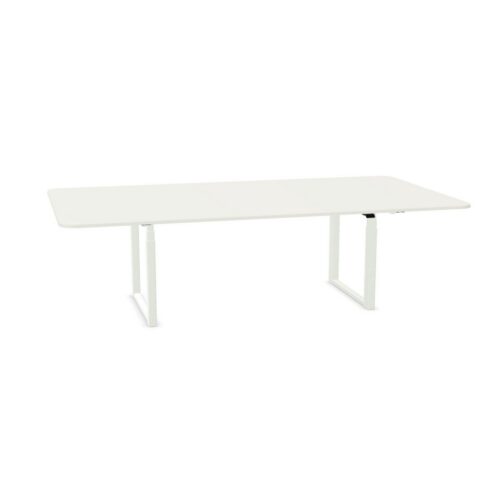


Conference Tables With HPL Tops and Cable Trays
Start at the presentation device and work outward. Identify its place on the table, the connection it requires and the available point in the room. Then consider how the cable will reach and leave the tray. This sequence exposes gaps that can be missed when the tray is considered alone.
Repeat the exercise for equipment used by participants. Shared devices may remain connected between sessions, while personal equipment comes and goes. Decide which routes need regular attention and which can remain consistent, then check how those patterns relate to the intended seating and the people responsible for room preparation.
Review Access During an Occupied Meeting
Imagine a participant needing to change a connection after the discussion has begun. Assess where they would reach and whether a chair or another person's working materials would need to move. The useful position of a tray depends on that actual relationship with seating and equipment.
Include arrivals, breaks and the end of the session in the same review. Cables should be planned around the movements the room regularly supports. Check the continuation toward the outlet as carefully as the section within the tray, particularly where people approach the table from an entrance or presentation area.
