



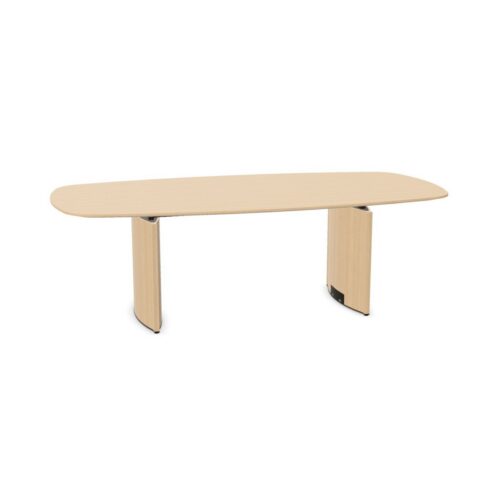

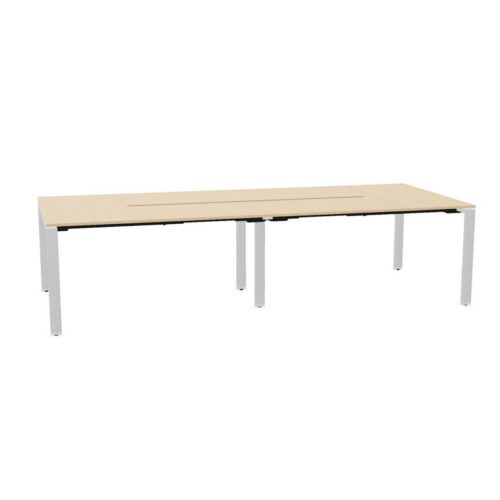

Relate Oak to Existing Wood Finishes
A room may already contain wood doors, storage or flooring that will remain part of the setting. Treat these as individual finishes rather than assuming that all wood references should look alike. Compare the brown tabletop with each element visible nearby, paying attention to whether their colors feel related or distinctly different.
If the room contains several brown tones, establish which surface should lead the palette. The conference tabletop may take that role, or it may sit within a scheme led by the flooring or joinery. A clear decision helps prevent a collection of similar but disconnected colors from determining the room by default.
Conference Tables With Oak Tops and Brown Surfaces
Oak and brown describe different aspects of the table, so evaluate both deliberately. The oak material does not establish an exact brown shade, and the brown color does not describe a particular construction or finish treatment. Keep the selection grounded in the stated combination and the appearance required for the meeting setting.
For brown oak conference tables, a useful comparison includes the room's permanent finishes and the chairs intended for use around the top. Look at them under the lighting used during meetings. This gives the material and color decision a practical context without relying on an isolated view of the tabletop alone.
Plan a Shared Surface for Conversation
Consider how people will use the tabletop during a discussion. Documents, notebooks and laptops should have a practical place without forcing participants to turn away from one another. Arrange the room so that attention can move naturally between the shared surface, other participants and any presentation area used during the meeting.
Access to reference materials also matters. Position storage where someone can retrieve a document without passing between the presenter and the group. The brown surface may visually connect with that storage, but a matching appearance is less useful if the placement interrupts conversation or makes routine movement awkward for seated participants.
