

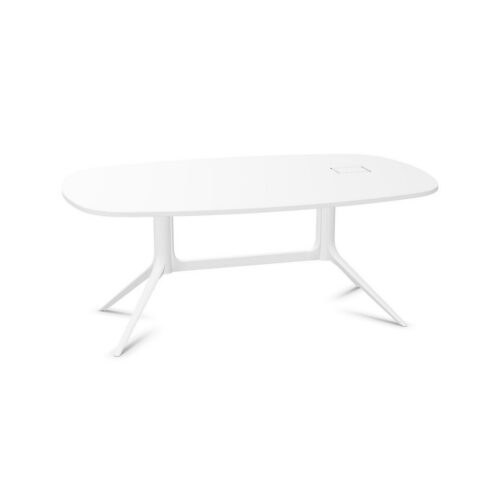
Adjustable Height for Elliptical Conference Tables

Describe the working positions the room needs, then test the table with occupied chairs, connected equipment and clear access to each seat. This combination retains the curved, elongated outline while allowing the working height to change. The shape influences seating and movement around the table; adjustment introduces different relationships between the surface, chairs and nearby furniture. Plan those relationships around the activities the room actually supports.

Begin with the direction of discussion and any shared presentation area. Position the elliptical outline accordingly, then review seating along its sides and curved ends. Before relying on height changes, confirm the intended working positions and the actual operating method. Height adjustment alone does not identify a mechanism or establish suitability for every meeting activity. A useful room plan makes clear why the height needs to change and how people will continue to reach their seats and materials when it does.


Planning height-adjustable elliptical conference tables

The useful comparison begins with the meeting routine. A fixed surface stays at the same working level, while an adjustable one can be repositioned to support confirmed uses. Decide which activities require that change before evaluating the room arrangement. The elliptical outline remains relevant in either case because chair placement follows a curved perimeter. Assess the outline and height function together, but give each a separate purpose. Changing the surface level should address a real working requirement rather than stand in for decisions about presentation direction, chair choice or movement around the table.

Review Conversation Along the Elliptical Perimeter

Arrange the proposed seats around the actual curve and consider how discussion will move between participants. Check positions near the ends as carefully as those along the sides. The base may affect where chairs can approach, so the top's outline is only part of the review. If meetings alternate between group discussion and a shared display, examine how participants change their viewing direction. Choose an orientation that supports the activity and allows people to reach their places without disturbing the main conversation. Repeat this review in the working positions you intend to use.

Account for the Room During Height Changes

Look beyond the tabletop when planning adjustment. Nearby furniture, chair arms and connections to equipment on the surface may need attention as the working level changes. Keep the surrounding area clear and establish the correct operating procedure from the actual table. Because the adjustment mechanism is unspecified here, do not build the room routine around an assumed control method. Decide who prepares the table and whether the position should be set before participants arrive. A consistent routine gives shared users a clear understanding of how the meeting space is meant to function.

Compare the Same Activity in Both Arrangements

The practical value of height-adjustable elliptical conference tables depends on whether the available positions suit the intended activity and the furniture used alongside the table. Follow arrival, discussion, material sharing and departure through the proposed room plan. Then consider where height adjustment would make a practical difference. Check whether that difference concerns the surface position or a separate issue with chairs, circulation or sightlines. The curved ends still need clear routes around occupied seating. If the intended benefit depends on a particular working position, confirm that position directly before treating adjustment as a solution for the room's changing activities.

Frequently Asked Questions

Does adjustment determine where chairs should go?

No. Review the actual elliptical outline and base first, then assess chair compatibility at the intended working positions. The ability to change height does not establish clear access at every point around the surface.

Should the table be adjusted during every meeting?

Only when the meeting routine calls for a different supported working position. Establish a purpose for the change and follow the confirmed operating procedure rather than making adjustment an automatic setup step.

What should I confirm about height adjustment?

The table has height adjustment, but this property does not identify an electric or manual method. Confirm the actual operation and intended settings before planning the shared-room routine.

Explore related selections