







Planning Fixed-Height Conference Tables With Elliptical Tops
Start by establishing the room's main direction of use. An elliptical outline has a long axis that can be aligned with the room or with the intended discussion area, depending on access and presentation needs. Test that orientation with proposed chair positions marked around the curve. Look at how participants will face one another and whether anyone would need to turn repeatedly toward a shared focal point. The shape provides an outline to work with, but the success of the arrangement depends on where people and surrounding furniture are placed.
Check Chair Fit Before Finalizing Seating
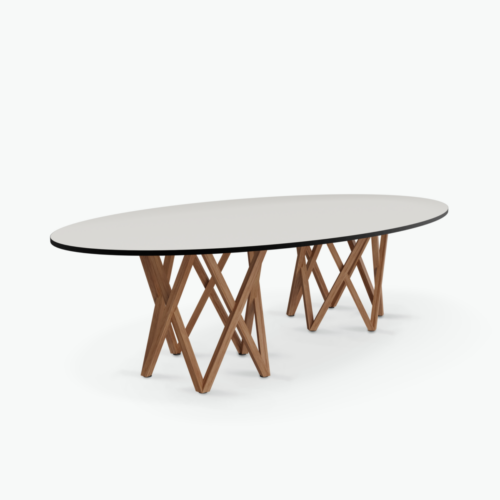
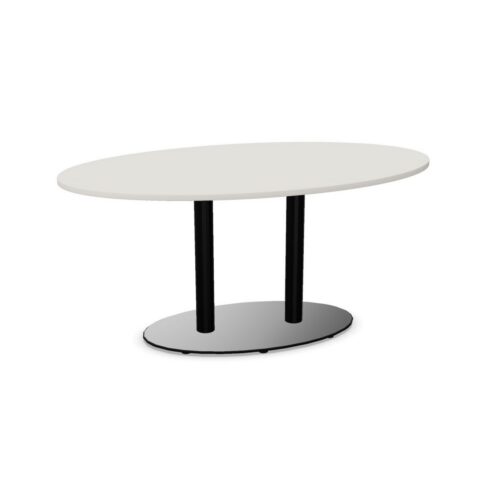
A fixed working height remains the same throughout the meeting, so review the relationship between chairs and the surface early. Consider the approach to the tabletop, room for normal seated movement and possible interference from chair arms. Check the base from each proposed seating position rather than assuming the curved top means unrestricted access underneath. Chair adjustment, where present, should be assessed as part of the actual seated arrangement. The useful question is whether people can work comfortably with their materials at the constant surface, without an awkward approach or obstructed foot position.
