


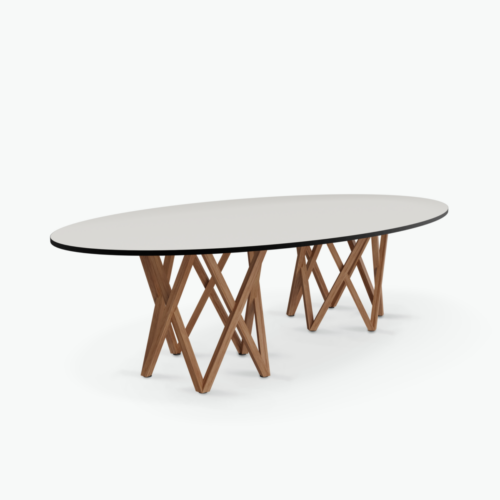


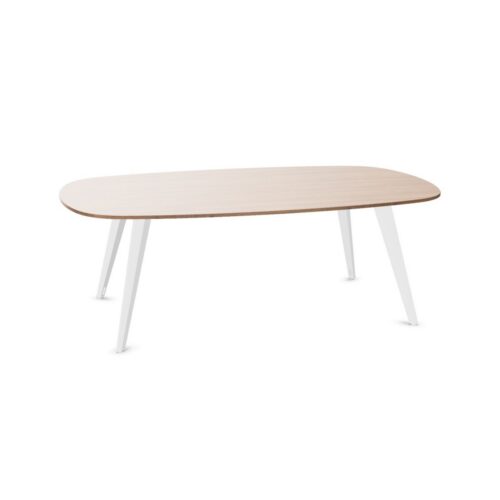
Arranging conference tables with elliptical tops and beige bases
Position the table in relation to the room's main activity. For a discussion room, consider how participants will face each other along the curved perimeter. Where meetings involve a wall display, review the view from the ends as well as the sides. An elliptical outline does not make every seat equally suited to every task. Place chairs according to the intended conversation, leaving their movement clear of doors and storage access. Assess the arrangement with chairs pulled back, since an orderly view of tucked chairs can conceal awkward routes during use. This makes the proposed layout easier to judge.
Coordinate beige with the surrounding neutrals
Beige can sit alongside a range of neutral interior colors, but the relationship depends on the particular shades involved. Compare the base color with the floor first, because these surfaces meet visually beneath the table. Then consider nearby chair frames and wall finishes. Closely related neutrals may create a quiet composition, while a more distinct floor color can make the base easier to distinguish. Judge these relationships under the room's usual lighting. Avoid assuming that every beige element will match; decide if you want a deliberate tonal relationship or a clearly visible difference between neighboring elements.
