


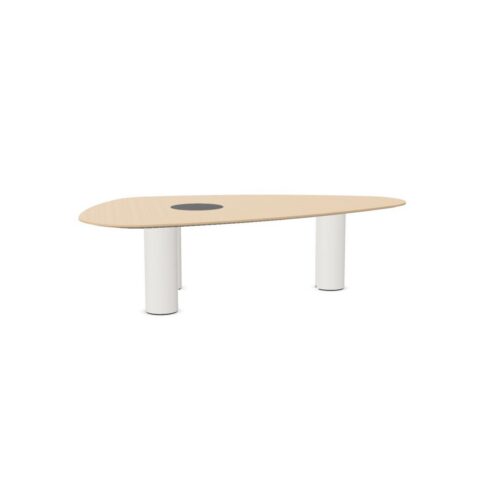

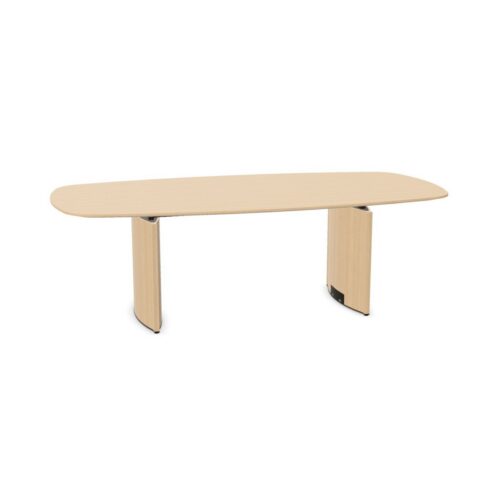


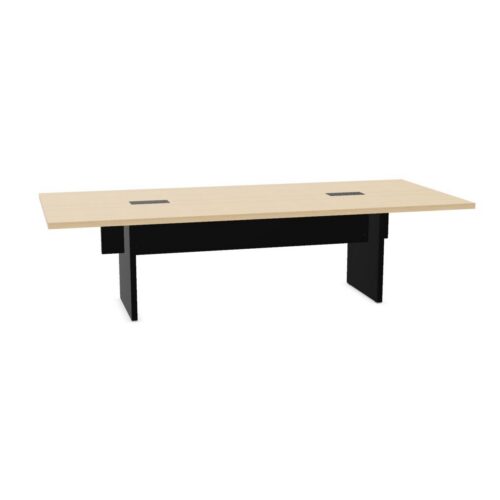
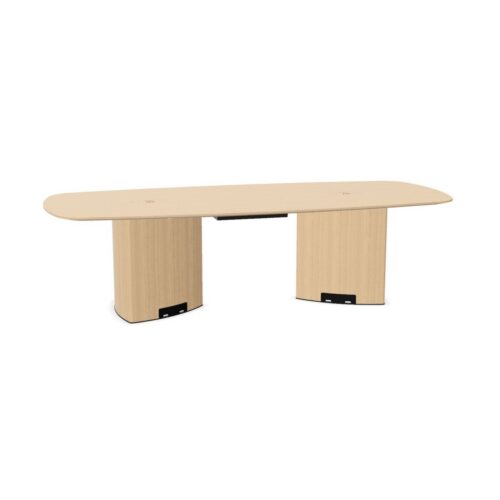


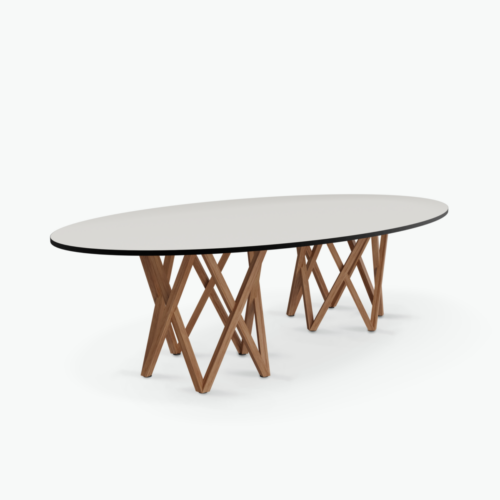


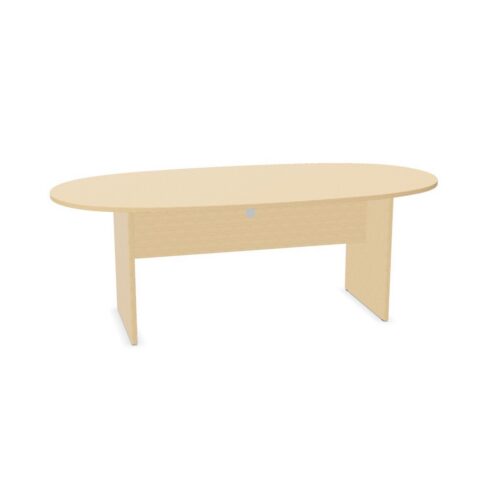

Coordinate Conference Tables With Oval Tops and Beige Bases
Compare beige with the floor before deciding how it should relate to smaller room details. When the base and floor are close in color, consider if you want that close relationship or a more defined boundary between them. Chairs can introduce another visible layer, so review their color alongside the base rather than as an isolated choice. Beige covers a range of appearances; the color name alone cannot establish an exact match. Assess the complete palette under the room's usual lighting and retain a clear reason for each relationship, whether it is continuity, contrast or a connection to nearby furniture.
Leave Space for Meetings to Begin and End
Arrival and departure deserve as much attention as the seated meeting. People may enter together, pause beside a chair or leave while colleagues continue talking. Trace those movements around the oval edge and identify where they cross the positions of pulled-out chairs. The curved ends should remain part of this exercise even when they look open in an empty room. Check access to storage and any shared presentation equipment at the same time. A visually quiet base color does not change these physical requirements, so make circulation decisions from the furniture arrangement rather than from how unobtrusive the table appears.
