



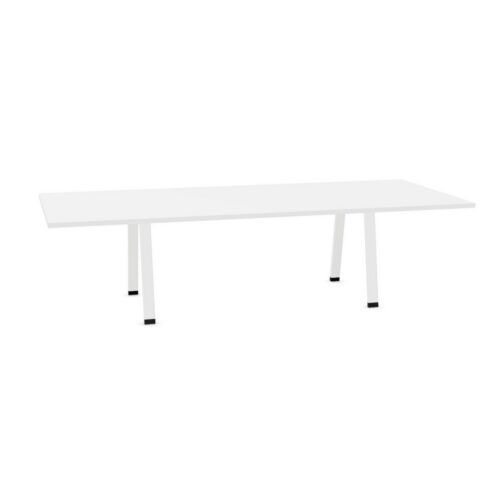


Placing Conference Tables With Beige Bases
Consider the view into the room before deciding how closely the base should match its surroundings. Against a pale floor, beige may create a subtle transition beneath the tabletop. Against a darker floor, the same color can become more noticeable. Neither relationship is automatically preferable; each gives the lower part of the table a different visual role.
Conference tables with beige bases are easiest to assess within the full room composition. Include the chairs in that assessment, since their frames and upholstery can interrupt or reinforce the relationship between the base and floor.
Compare Undertones in the Actual Setting
Beige can appear warmer or cooler beside other colors. A floor that looks neutral on its own may bring out a different aspect of the base once the table is in the room. Review the combination under the lighting used for meetings, including daylight where relevant.
Avoid relying on matching color names across unrelated furnishings. Instead, decide whether a close match or a deliberate difference will look more coherent. This is particularly useful when existing storage and seating already contain several neutral tones that cannot all be matched equally well.
Keep Seating Positions Practical
Base color helps establish the appearance of a meeting area, but it does not explain how the base occupies the space beneath the top. Look at where people will sit and how their chairs will move when joining or leaving a discussion. Check the proposed arrangement with the chairs intended for the room.
For conference tables with beige bases, keep visual coordination and physical planning connected. A base that blends into the floor still needs a seating arrangement that respects its position. Preserve a clear route between the entrance, the meeting area, and other regularly used parts of the room.
